
The UK government has announced its intention to invest £400 million (approximately $541 million) in the Tropical Forests Forever Facility, a Brazil-led fund designed to finance the long-term protection of tropical forests globally, according to a statement published by the UK government on September 3, 2026.
The commitment, structured as a loan rather than a grant, deepens a partnership between the UK and Brazil that has underpinned the Tropical Forests Forever Facility, known as the TFFF, since its launch at the COP30 climate summit in Brazil last year. The facility aims to raise $125 billion in total capital, including an initial target of $25 billion from governments and public institutions, to pay eligible countries annual sums based on how much of their tropical forest cover they successfully preserve.
According to figures cited by Reuters and the World Resources Institute, the TFFF has already secured close to three-quarters of its initial $10 billion public-sector fundraising target, with sources indicating expectations that the goal will be reached by the end of 2026, following pledges from Brazil, Indonesia, France, Germany, Norway and a number of philanthropic institutions.
Unlike many traditional conservation funds, which disburse grants tied to specific projects, the TFFF operates more like an endowment, structured to generate investment returns capable of both repaying its financial backers and rewarding participating countries for measurably preserving their tropical forest cover. That performance-based design is intended to place a direct economic value on forests left standing, rather than relying solely on the promise of future carbon-credit revenue or one-off conservation grants.
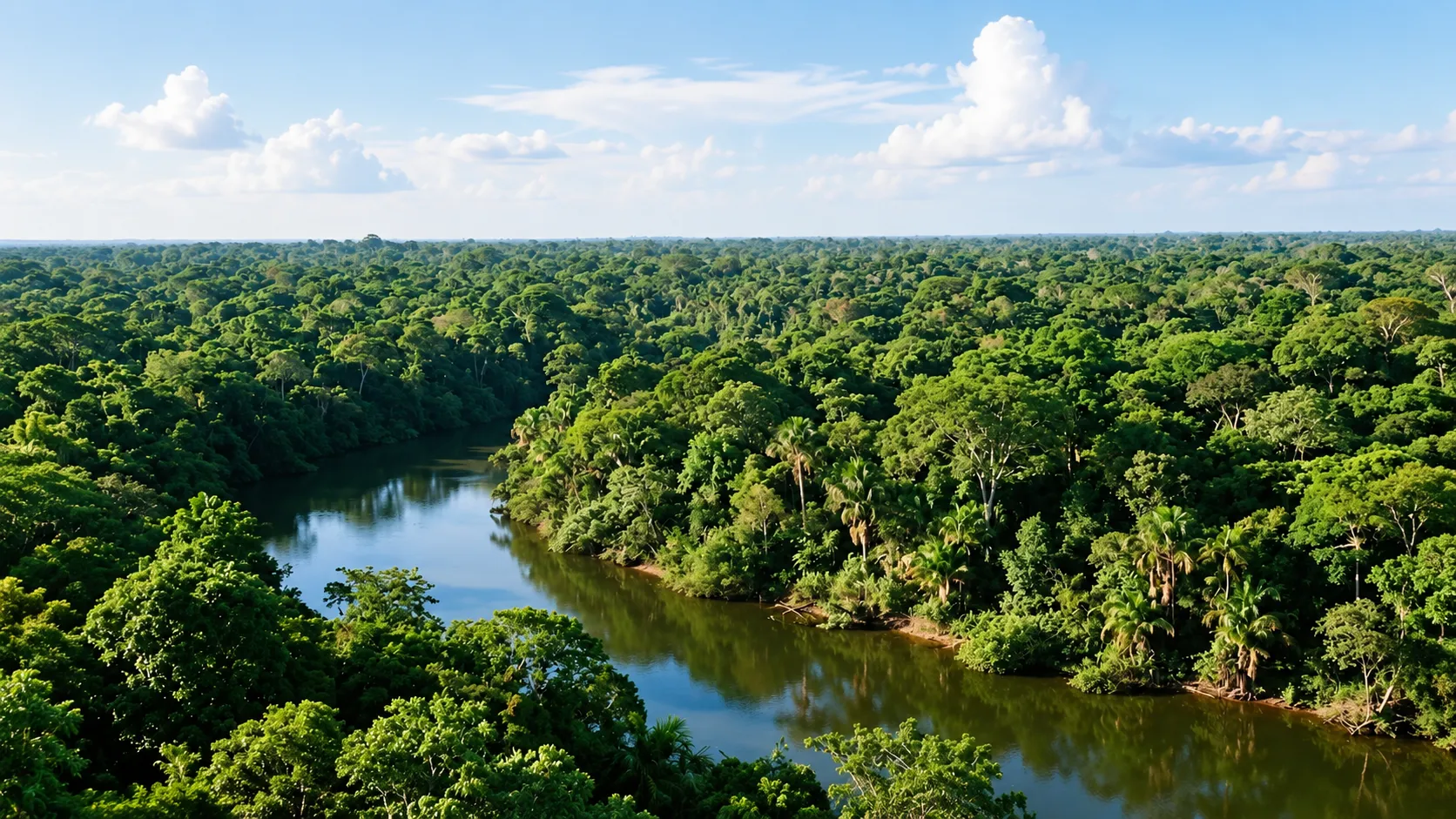
The UK's decision to structure its contribution as a loan rather than a grant reflects a broader shift in the government's climate finance approach under Prime Minister Andy Burnham, who has signalled an intention to deliver more of Britain's international climate commitments through repayable financial instruments rather than direct grants, in part to help fund domestic priorities such as a cap on bus fares. The government has described the approach as acting as "an investor instead of a donor," arguing that a loan structure protects UK taxpayer value while still supporting climate and nature outcomes, since forest countries participating in the facility are not required to repay the funding themselves — repayment instead flows from the facility's own investment returns.
As a condition of its investment, the UK is seeking a role in the TFFF's governance and oversight mechanisms, which the government said would allow it to work alongside other sponsor countries to help shape the facility's priorities while monitoring outcomes on behalf of UK taxpayers and investors, including financial institutions in the City of London. The UK's investment remains subject to final due diligence, including review of the facility's ultimate size, crediting arrangements and loan terms.
"[This] is very significant," said Mauricio Voivodic, executive director of WWF-Brazil, of the UK's commitment, adding that it "reinforces a necessary change in how the world recognizes and finances the conservation of tropical forests."
The announcement has drawn some scrutiny from development and climate finance analysts, who note that the UK's decision to fund its TFFF loan partly through savings reallocated from its climate grant budget has raised questions among Global South governments and development organizations about the net additionality of the UK's climate finance commitments. Supporters of the loan-based approach counter that it allows the UK to deliver additional climate finance through a distinct "financial transactions" budget line, separate from its grant-based aid spending.
For institutional investors and multilateral development finance observers, the UK's participation adds significant weight and credibility to a novel forest-finance model still in its early stages, and will likely be closely watched as a test case for whether performance-based, loan-structured conservation finance can be scaled to meet the TFFF's ambitious $125 billion long-term target.