Britain's government has used its budget to try to ease the burden of energy bills on households and industry, while cutting funding for some of the technologies needed to reach net zero, highlighting the tensions facing governments as energy prices soar.
The budget, presented on Wednesday, October 28, set out what the Chancellor described as a "new course on energy" focused on cheaper bills, with clean power as the main route, according to Carbon Brief. The government said it remains committed to reaching net zero by 2050 and promised a longer-term effort to "break the grip of gas on bills."
Help for households
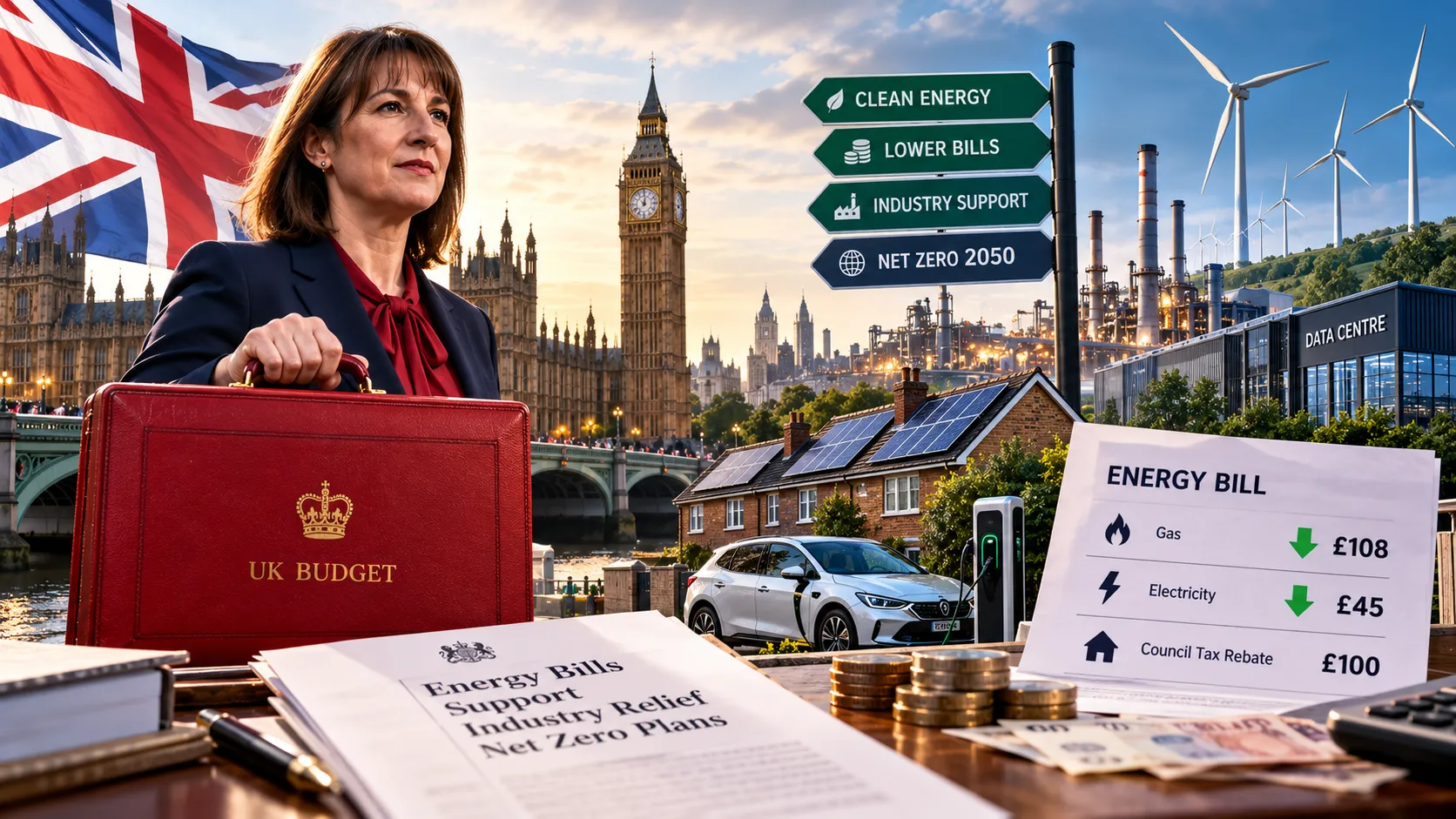
The most visible measure was the removal of the gas standing charge, the fixed daily fee that households pay regardless of how much gas they use. The charge is worth about £108 a year for a typical household. The government said about 60% of households would save around £45 a year.
The budget also extended the removal of VAT on household electricity, worth about £45 a year, by three months to July 2027. English households in council tax bands A to D will receive a £100 council tax rebate, costing £2.6 billion, and local authorities will get an extra £100 million for targeted support.
An energy debt "circuit breaker" starting next year is expected to save bill payers £30 by 2030. Until a new cost-control framework is in place at the 2027 spending review, no new policy costs will be added to energy bills. A levy on gas shippers that funds hydrogen will move into general taxation, so taxpayers rather than bill payers will fund those costs.
Relief for industry
The British industrial competitiveness scheme will be expanded to give 10,000 energy-intensive manufacturers a 20-25% discount on electricity from April 2027. High energy costs have been a major concern for British manufacturers, who pay some of the highest industrial electricity prices in Europe.
Cuts to green programmes
The budget also included cuts to climate programmes. The warm homes plan, which funds home insulation and low-carbon heating, was cut by £1 billion to help fund defence. Analysts warned that a further reallocation of up to £4.7 billion could reduce total funding from the headline £15 billion to as little as £9 billion.
The boiler upgrade scheme, which supports the installation of heat pumps, was held at £400 million in 2027-28, a cut of around £800 million over three years. Analysts estimate this could mean about 100,000 fewer heat pumps installed.
Carbon capture and storage and hydrogen projects lost £700 million in total: £200 million in CCS capital grants and £500 million for low-carbon hydrogen. The Acorn carbon capture cluster in Scotland bears the £200 million cut, while projects in Teesside, Merseyside and North Wales were prioritised.
Motoring
Fuel duty was frozen for the 16th consecutive year, and the 5p-per-litre cut was extended, providing relief to drivers facing high petrol and diesel prices. For electric vehicle drivers, public charging prices at local, lower-powered chargers will be cut, saving around £150 a year, funded by £100 million over two years. However, electricity at public and workplace EV chargers will face 20% VAT from November 1, 2026.
Data centres
The budget introduced a "data-centre covenant" requiring developers to pay for their energy costs, meet high environmental standards and use waste heat where practical. On-site generation will be allowed only for exceptional strategic projects, while grid connections will be accelerated. Environmental groups warned that on-site power could mean gas or diesel generation.
North Sea and the energy wealth fund
The budget announced an energy wealth fund that will invest North Sea oil and gas revenues in low-carbon infrastructure. An oil and gas revenue levy will replace the energy profits levy, the windfall tax introduced after the 2022 energy crisis, by April 2030 at the latest.
The global dilemma
Britain's budget reflects a dilemma facing many governments. Soaring energy prices, driven by conflict in the Middle East, have created a cost-of-living crisis, putting pressure on governments to provide relief. At the same time, constrained budgets and competing priorities, such as defence spending, are squeezing funding for climate programmes.
What it means for India
India faces a similar balancing act between protecting consumers from high energy prices and financing the clean energy transition. India's government has kept retail fuel prices largely stable while state-run fuel retailers absorb losses, and it is seeking about $220 billion of clean energy investment between 2027 and 2030. Britain's experience shows the political and fiscal trade-offs involved.
The UK is a partner country at India's Bharat Renewable Energy Summit in November, and the two countries have deepened cooperation on clean energy as part of their broader trade relationship.
Reaction from industry and campaigners
Energy-intensive industries welcomed the expanded electricity discount, which they have long argued is needed to keep British manufacturing competitive. Consumer groups welcomed the removal of the gas standing charge, which has been criticised for penalising low-energy users. However, environmental groups and the clean energy industry criticised the cuts to home insulation, heat pumps and carbon capture, warning that they could slow progress towards net zero and leave households more exposed to volatile gas prices in the long run.
The tension highlights the difficulty of balancing short-term relief with long-term investment. Insulation and heat pumps reduce energy bills over time, but they require upfront spending, while bill support provides immediate relief.
What comes next
The budget's energy measures will be debated in Parliament, and the government's response to its review of the zero-emissions vehicle mandate is due by the end of 2026. Climate groups will continue to press for the restoration of funding for home insulation, heat pumps and carbon capture, while households will watch whether the measures deliver meaningful relief on bills. For India and other countries balancing similar pressures, Britain's choices will offer lessons on how to protect consumers in an energy crisis without abandoning long-term climate commitments. The outcome of the debate in Parliament and the reaction of households over the winter will show whether the government has struck the right balance.
Clean energy investors will also watch closely for signals about the stability of government support, since sudden changes to funding programmes can deter private investment in projects that take years to plan and build. Clear, long-term policy remains one of the most important factors for investors deciding where to commit capital in the energy transition.