
ImpactStories7 MIN READ

US Regulators Finalise Sweeping Changes That Effectively Dismantle Corporate Transparency Act Reporting Regime

The US Treasury's Financial Crimes Enforcement Network has finalised sweeping changes that effectively dismantle one of the country's newest and most significant anti-money-laundering reporting regimes under the Corporate Transparency Act.

By Nisha Omkumar · Author18 August 2026Analysis
US Regulators Finalise Sweeping Changes That Effectively Dismantle Corporate Transparency Act Reporting Regime

The United States' Financial Crimes Enforcement Network, or FinCEN, has finalised a sweeping set of changes that effectively dismantle one of the country's most significant anti-money-laundering reporting regimes introduced in recent years, according to details confirmed this week. The changes substantially scale back the beneficial ownership reporting requirements established under the Corporate Transparency Act, a law that had required millions of small and mid-sized US businesses to disclose information about their ultimate human owners to federal authorities.

The Corporate Transparency Act, passed with the explicit goal of closing a long-standing loophole that allowed anonymous shell companies to be used for money laundering, tax evasion, sanctions evasion and other illicit financial activity, had represented one of the most consequential expansions of US corporate transparency requirements in decades when it took effect. Law enforcement agencies and anti-financial-crime advocates had championed the law as a critical tool for unmasking the beneficial owners behind shell companies frequently used to obscure the proceeds of criminal activity and to circumvent international sanctions regimes.

FinCEN's finalised changes, however, substantially narrow the scope and enforceability of these reporting obligations, a shift that reflects sustained pushback from small business advocacy groups, which had long argued that the compliance burden imposed by the original rule fell disproportionately on legitimate small businesses with limited compliance resources, while more sophisticated bad actors could still find ways to structure around disclosure requirements. Critics of the original Corporate Transparency Act framework had also raised concerns about the security of the beneficial ownership database itself, questioning whether sensitive ownership information collected from millions of small businesses could be adequately protected from breach or misuse.

ChatGPT Image Aug 18, 2026, 02_02_43 PM.png

Anti-money-laundering advocates and law enforcement-adjacent organisations, by contrast, have expressed significant concern about the scaling back of the regime, warning that the United States risks reverting to a position where it lags behind international peers, including the United Kingdom and European Union jurisdictions that have implemented their own beneficial ownership registries, in the fight against shell-company-enabled financial crime. The timing of the rollback has also drawn scrutiny given the broader global context of intensifying sanctions enforcement related to ongoing geopolitical conflicts, where opaque corporate ownership structures have repeatedly been identified as a mechanism for evading targeted financial restrictions.

For businesses and compliance professionals, the finalised changes bring meaningful practical relief in the form of reduced reporting obligations and associated compliance costs, particularly for smaller entities that had struggled to navigate the original rule's requirements. But the broader policy debate underscores a persistent tension in financial regulation between minimising compliance burden on legitimate businesses and maintaining robust tools to combat the misuse of corporate structures for illicit purposes — a tension that is likely to resurface repeatedly as international pressure around beneficial ownership transparency continues to build, even as the United States moves in the opposite direction with this latest regulatory reset.

The original Corporate Transparency Act had required an estimated tens of millions of US businesses — ranging from small, closely held family enterprises to complex multi-entity corporate structures — to disclose detailed information about individuals who own or control at least a meaningful percentage of the entity, information that was to be maintained in a secure, non-public federal database accessible primarily to law enforcement and, under certain circumstances, financial institutions conducting customer due diligence. Implementation of the reporting requirement had already faced repeated legal challenges and administrative delays even before this latest rollback, reflecting the genuine difficulty of building compliance and enforcement infrastructure capable of accurately processing beneficial ownership information from such a vast and diverse population of reporting entities.
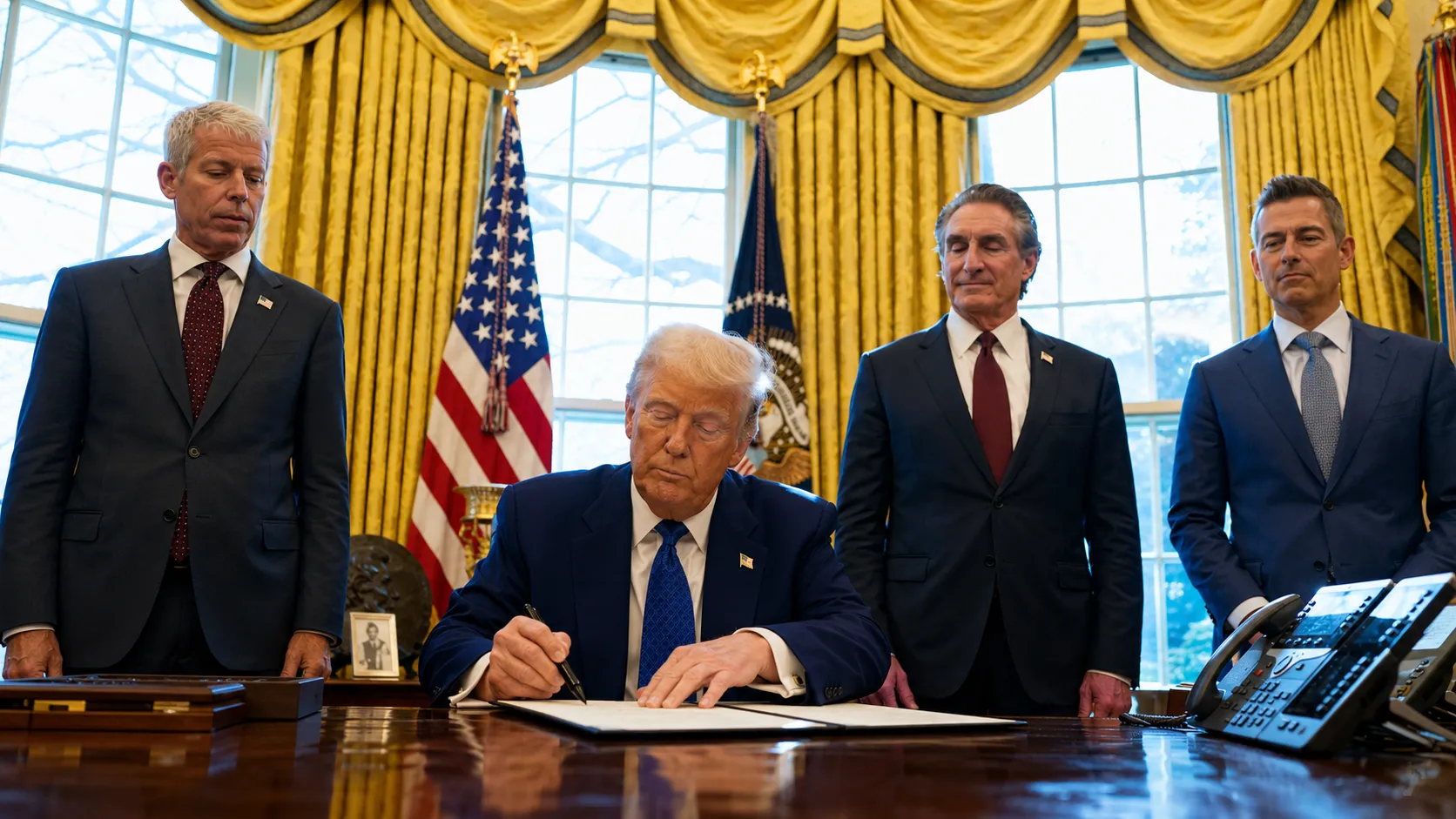

Scaling back beneficial ownership reporting eases the burden on small business, but reopens a question the Corporate Transparency Act was designed to close: who really owns America's shell companies?
TIGI Newsroom Analysis

International context adds further weight to the debate. The Financial Action Task Force, the global standard-setting body for anti-money-laundering policy, had for years identified the absence of a comprehensive US beneficial ownership registry as a significant gap in the country's financial crime prevention framework relative to peer economies, several of which had already implemented similar registries in response to earlier FATF recommendations. The Corporate Transparency Act was widely understood, both domestically and internationally, as the United States' primary policy response to this longstanding criticism — making the current rollback a development likely to draw renewed international scrutiny of US anti-money-laundering policy at a moment when global coordination on financial crime enforcement remains a stated priority for multiple international bodies.

Small business advocacy groups that campaigned for the rollback have consistently framed their opposition around the disproportionate compliance burden facing genuinely small, low-risk businesses — family-owned retail operations, small professional services firms and similar entities with straightforward, easily verifiable ownership structures — that nonetheless fell within the original rule's broad reporting requirements alongside the complex shell company structures the law was principally designed to target. This tension between broad-based reporting requirements designed to close every possible loophole and the practical compliance burden imposed on the vast majority of legitimate businesses that pose minimal financial crime risk reflects a recurring challenge in designing effective anti-money-laundering policy globally.

Looking ahead, the scaled-back regime is likely to remain a contested policy area, with financial crime enforcement advocates continuing to push for restoration of more comprehensive beneficial ownership reporting requirements, potentially through future legislative or regulatory action, while business advocacy groups will likely resist any effort to reintroduce the compliance burden they successfully campaigned to reduce. How this policy tension ultimately resolves will carry meaningful implications not just for US anti-money-laundering enforcement capability, but for the broader international consistency of beneficial ownership transparency standards that FATF and other global bodies have spent years working to establish.

For multinational businesses and financial institutions operating across US and international jurisdictions, the divergence now emerging between a scaled-back American regime and the increasingly robust beneficial ownership registries maintained by the UK, EU and other peer economies is likely to introduce fresh complexity into cross-border compliance programmes, as global institutions must now navigate a meaningfully more fragmented international beneficial ownership disclosure landscape than the one the Corporate Transparency Act was originally designed to help harmonise.

ChatGPT Image Aug 18, 2026, 02_04_57 PM.png

The rollback also carries particular relevance for the global network of business consultants, company formation agents and compliance professionals who advise entrepreneurs, including many from India and the broader diaspora, on establishing US business entities. With reduced disclosure requirements now in effect, this advisory community faces its own recalibration, weighing the reduced compliance burden for legitimate business formation against the reputational and due-diligence considerations that international banking partners and investors may continue to apply even in the absence of a formal federal reporting requirement.

TagsFinCENCorporate Transparency ActAnti-Money LaunderingUnited StatesRegulationPolicyFinancial Crime

Reader reviews

Sign in to rate and review this article.
Loading reviews…