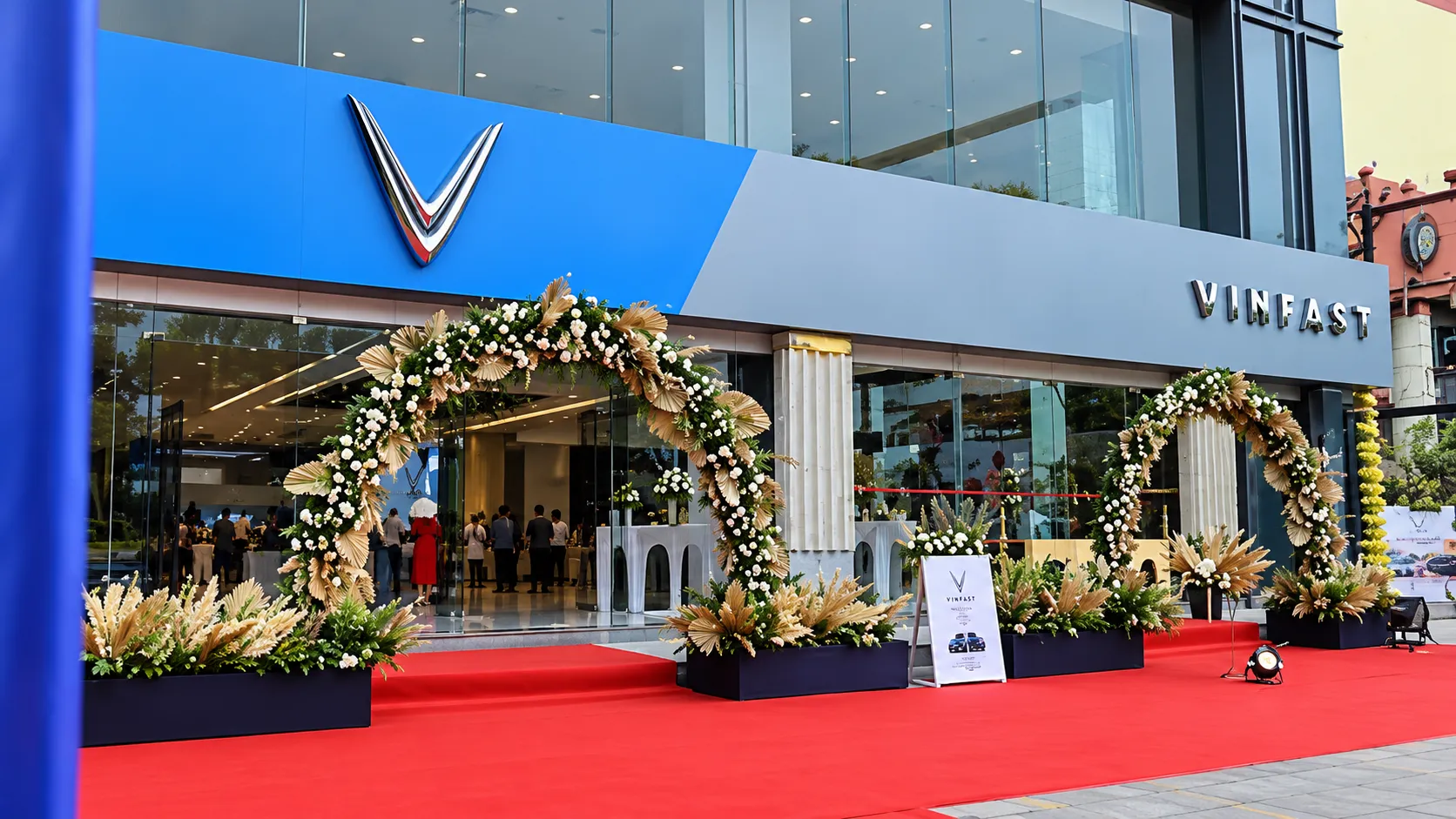
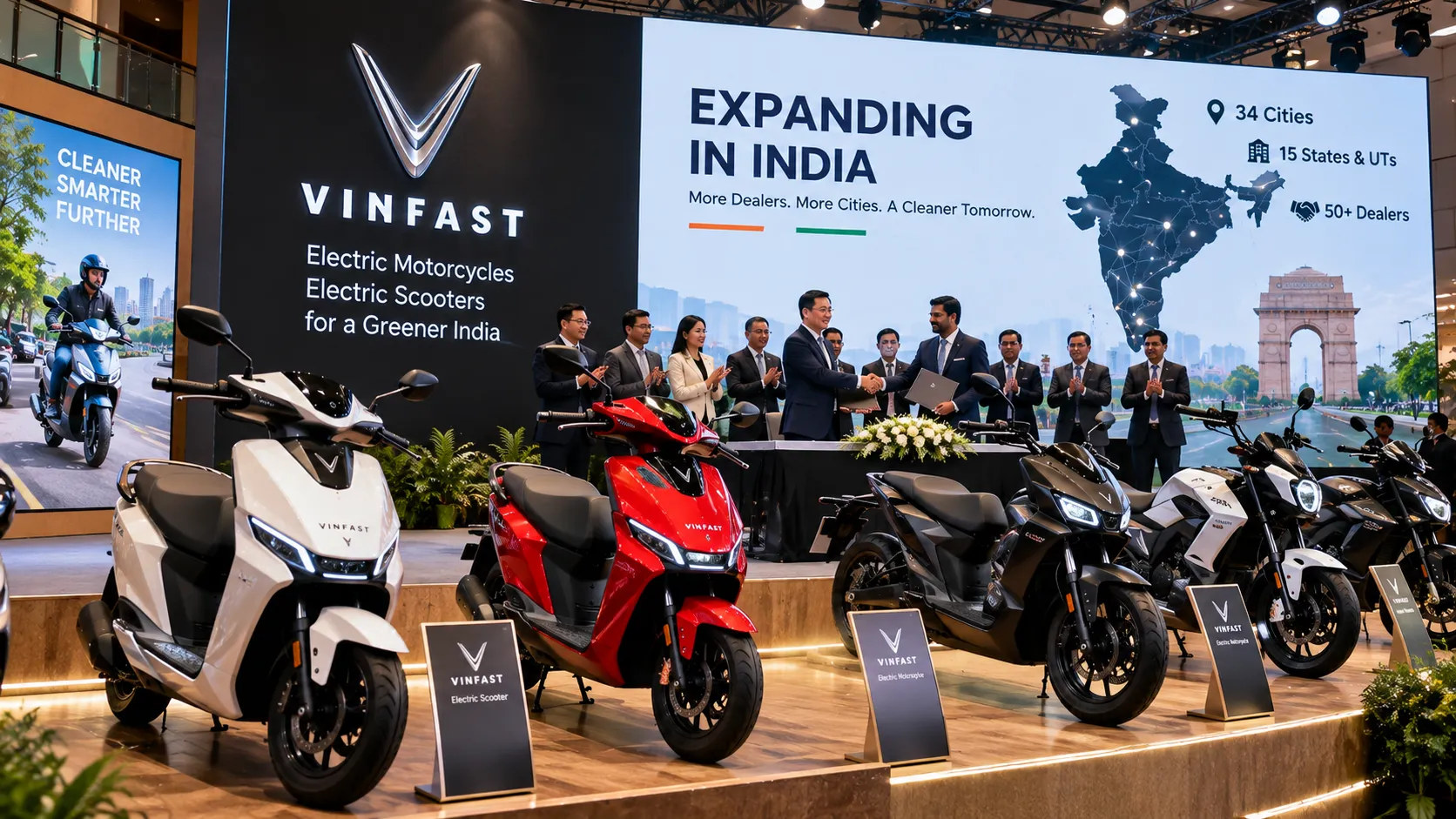
NEW DELHI, Oct 9 — VinFast, the Vietnamese electric vehicle maker, has signed letters of intent with more than 50 dealers to open showrooms for its electric motorcycles and scooters across 34 cities in India, marking its most concrete step yet into the country's two-wheeler market.
The agreements, signed at a ceremony in Hai Phong, Vietnam, cover 15 states and union territories, including Delhi NCR, Rajasthan, Uttar Pradesh, Maharashtra, Karnataka, Tamil Nadu and West Bengal. The company said the network would be supported by charging infrastructure and after-sales service.
The move signals VinFast's intention to compete in the world's largest two-wheeler market at a time when electric adoption is accelerating, competition is intensifying and both legacy manufacturers and start-ups are pouring resources into the segment.
Key facts at a glance
• Agreements: letters of intent with more than 50 dealers
• Coverage: 34 cities across 15 states and union territories
• Key regions: Delhi NCR, Rajasthan, Uttar Pradesh, Maharashtra, Karnataka, Tamil Nadu, West Bengal
• Signing venue: Hai Phong, Vietnam
• Products: electric motorcycles and scooters
• Support: charging infrastructure and after-sales service to be added
• Wider plan: up to $2 billion investment in India; capacity to rise from 50,000 to 1.5 lakh units
• Market backdrop: E2W registrations up 12.2% month on month to 2.07 lakh in September
Building a network from day one
Distribution is one of the hardest problems for any new entrant in India's two-wheeler industry. Incumbents such as Hero MotoCorp, Bajaj Auto and TVS Motor have spent decades building dense dealer and service networks that reach deep into smaller towns. Electric start-ups that relied heavily on online sales have learned that riders still want to test ride a vehicle, see it in person and know where they can get it serviced.
By signing more than 50 dealers before launch, VinFast is attempting to avoid that trap. The geographic spread — from the north and west to the south and east — suggests the company is targeting both large metropolitan markets and emerging urban centres where two-wheeler demand is strong.
The announcement was made by the company's India e-scooter division, led by chief executive Anurag Saxena. Charging and after-sales support are to be built out alongside the showrooms, addressing two of the most common concerns among prospective electric two-wheeler buyers: where to charge, and where to get the vehicle fixed.
VinFast's India story so far
VinFast has made India a priority market as it seeks growth beyond Vietnam. The company has previously outlined plans to invest up to $2 billion in the country and to raise manufacturing capacity in India from 50,000 units to 1.5 lakh units over time, with its plant in Tamil Nadu at the centre of those ambitions.
The car business, however, has had a more uneven start. Earlier this year the company halted some car production in India to reassess costs, and reports have suggested it is developing two India-specific electric vehicles as part of a strategic reset. A strong push into two-wheelers — a much larger market by volume — could offer a faster route to scale and brand recognition.
A crowded field
India's electric two-wheeler market has become one of the most competitive in the world. Registrations rose 12.2% month on month to 2.07 lakh units in September, according to data reported by Inc42, as festive-season demand picked up.
Market leadership has shifted repeatedly. Ola Electric, once the dominant player, has lost ground as established manufacturers have scaled their electric portfolios. TVS Motor and Bajaj Auto have built strong positions with electric versions of familiar brands, while Ather Energy has expanded beyond its southern base. Hero MotoCorp is growing its electric business, and specialist motorcycle start-ups such as Ultraviolette, Oben and Matter are targeting riders who want performance rather than commuter scooters.
VinFast's focus on e-motorcycles as well as scooters puts it in direct c
ompetition with that last group, as well as with mainstream players. Its challenge will be to find a clear positioning on price, performance and design in a market where buyers are highly value-conscious and brand loyalty to established manufacturers runs deep.
Policy tailwinds
Government support continues to shape the market. Central and state incentives, along with tighter emission norms and rising fuel costs, have helped accelerate the shift to electric two-wheelers. Local manufacturing requirements attached to incentive schemes give companies with Indian production capacity, such as VinFast, an advantage over importers.
The rapid build-out of public and private charging points is also easing range anxiety, although infrastructure remains uneven outside major cities. Dealers that offer charging and service support will be critical to winning buyers in tier-two and tier-three markets.
The pricing challenge
Price will likely decide VinFast's fate in two-wheelers more than any other factor. Indian buyers compare not only electric models against each other but against petrol scooters and motorcycles that remain cheaper to buy upfront. Incumbents have spent years driving down battery and component costs through local sourcing, and several have launched lower-priced variants aimed at mass-market commuters. A new entrant needs either a clear cost advantage or a product distinctive enough to justify a premium. VinFast's experience of manufacturing electric two-wheelers in Vietnam, where scooters dominate urban transport, could help on both fronts, but the company will need to adapt designs, pricing and financing options to Indian conditions.
What to watch
The letters of intent are a first step; converting them into operating showrooms, trained service staff and steady sales will take time and investment. VinFast will also need to establish a reliable supply chain for batteries and components, secure eligibility for incentives and build brand awareness in a market where it is still relatively unknown.
For India, the entry of another global manufacturer adds investment, competition and choice to a sector that the government sees as central to its clean mobility and industrial ambitions. For consumers, more competition is likely to mean better products and keener prices.
For VinFast, success in India's two-wheeler market could provide the volume and visibility it needs to strengthen its global position. The coming festive season and the first showroom openings will offer an early indication of whether its India bet is gathering pace.