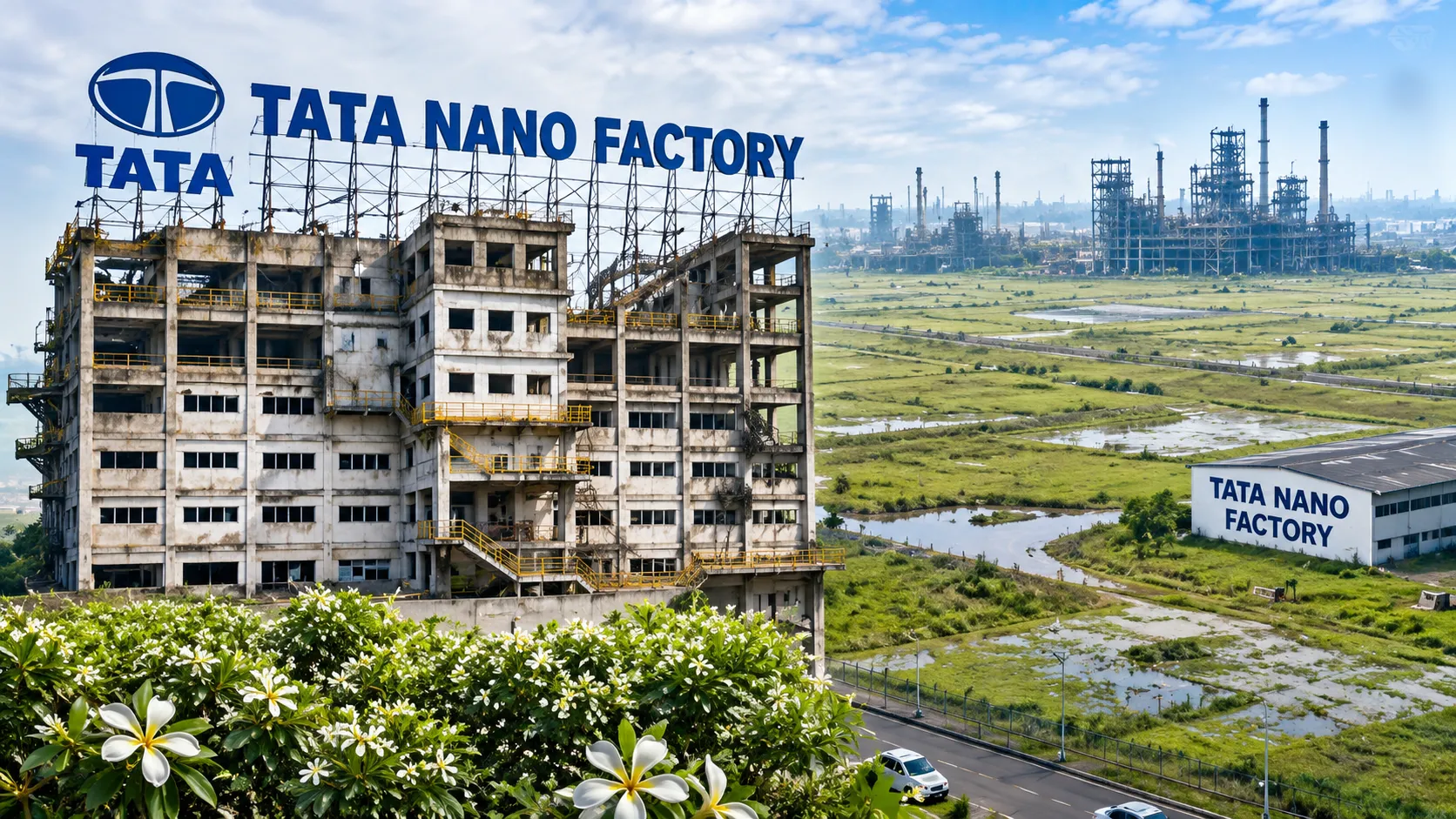
Nearly two decades after Tata Motors abandoned its Nano car factory in Singur, the West Bengal government is trying to bring industry back to the same land.
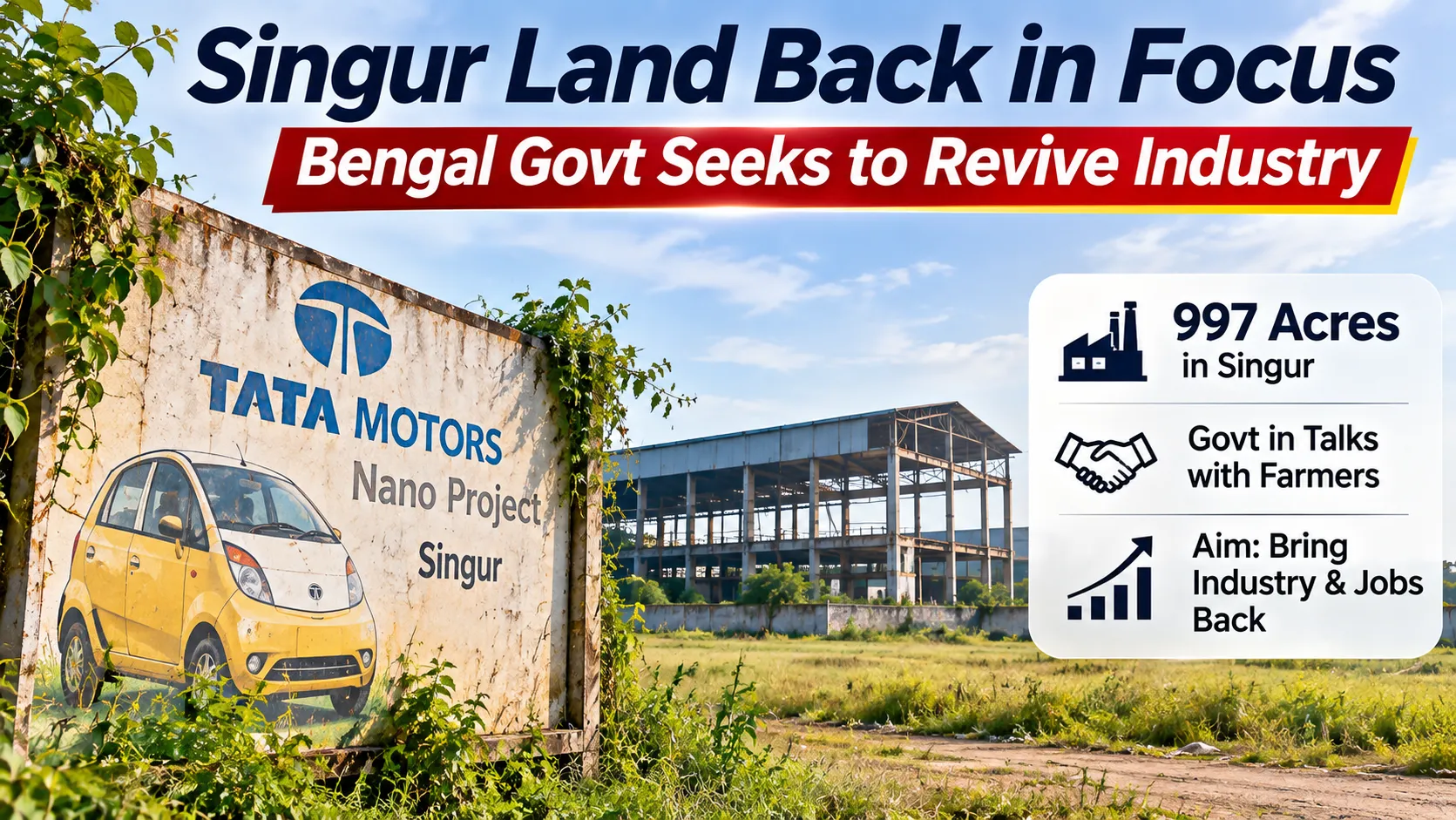
The state government is in talks with farmers to acquire 997 acres in Singur, the site of the abandoned Nano project, Chief Minister Suvendu Adhikari said, according to a Business Standard report published on November 22. The aim is to revive industrial activity at a site that became one of the most potent symbols of the conflict between industrialisation and farmers' rights in India.
The history of Singur
The Singur story began in 2006. The then Left Front government of West Bengal, led by Chief Minister Buddhadeb Bhattacharjee, acquired about 997 acres of farmland in Singur, in Hooghly district about 40 kilometres from Kolkata. The land was leased to Tata Motors to build a factory for the Nano, which was billed as the world's cheapest car.
The acquisition used the colonial-era Land Acquisition Act of 1894. Of the roughly 13,000 farmers affected, about 2,000 refused to accept compensation and launched an agitation, backed by the then opposition leader Mamata Banerjee and her Trinamool Congress party.
The protests intensified in 2008. In October that year, Tata announced that it was moving the Nano project to Sanand in Gujarat. The departure was a major blow to West Bengal's efforts to attract manufacturing investment.
The Singur movement played a central role in the Trinamool Congress's rise to power in 2011, ending more than three decades of Left Front rule. In 2016, the Supreme Court quashed the original acquisition and ordered the land to be returned to its owners.
Land that never recovered
Returning the land did not end Singur's troubles. Much of the land had been levelled and built on during the factory's construction. Farmers found that large parts of it were difficult to cultivate again.
Reports over the years have described a significant portion of the land as barren or uncultivable, leaving many farmers neither able to farm productively nor benefit from the industrial jobs they had once been promised. A generation of young people in the area has grown up without the employment opportunities that the factory might have provided.
That experience has shifted opinion among many local farmers. Some who once opposed the factory now say they would welcome industry if it brought jobs and fair compensation.
A new government, a new push
The political landscape in West Bengal has changed. Suvendu Adhikari, a former Trinamool leader who joined the Bharatiya Janata Party and played a prominent role in the Nandigram land agitation of the same era, is now chief minister.
His government has signalled a fresh industrial push in Singur. Earlier in November, Adhikari said his government had held preliminary discussions with a commercial vehicle manufacturer about the site, a statement welcomed by many farmers in the area.
The latest move to negotiate with farmers for 997 acres suggests the government wants to assemble a large, contiguous land parcel that can be offered to investors. Negotiating directly with landowners, rather than relying on compulsory acquisition, reflects the lessons of the original Singur conflict.
Why land matters for industry
Access to land is one of the biggest obstacles to manufacturing investment in India. Large factories need sizeable, contiguous parcels with clear titles, good connectivity and access to utilities. In densely populated, agriculturally productive states such as West Bengal, assembling such parcels is particularly difficult.
West Bengal has a high proportion of small and marginal farmers, and very little fallow land. That makes any large land acquisition politically sensitive and administratively complex.
The Right to Fair Compensation and Transparency in Land Acquisition, Rehabilitation and Resettlement Act of 2013, which replaced the 1894 law, requires higher compensation and consent from a majority of landowners for certain acquisitions. These provisions were designed partly in response to conflicts such as Singur.
The investment case for West Bengal
West Bengal has several advantages as a manufacturing location. Kolkata is a major port city with access to eastern Indian and Southeast Asian markets. The state has a large workforce, and its location makes it a natural gateway to the northeastern states and neighbouring countries such as Bangladesh, Nepal and Bhutan.
However, the state has struggled to attract large manufacturing investments over the past two decades, partly because of its reputation following Singur. Reviving the site could send a powerful signal to investors that the state is open for business.
Challenges ahead
The government faces several challenges. It must negotiate fair terms with a large number of landowners, some of whom may have competing interests. It must ensure that the land can be made suitable for industrial use, which may require significant investment in levelling and infrastructure.
Attracting a credible anchor investor will be essential. The government will need to offer competitive incentives, reliable infrastructure and assurances of policy stability.
Political opposition is also possible. Singur remains an emotive issue in West Bengal politics, and any new acquisition is likely to be closely scrutinised.
Symbolism and substance
For The Impactful Global Indian's readers, Singur is a case study in the challenges of balancing industrial development with the rights and livelihoods of farmers. The original conflict shaped India's land laws and influenced how companies and governments approach land acquisition across the country.
If the West Bengal government succeeds in bringing industry back to Singur through a negotiated, consent-based process, it could offer a model for resolving similar conflicts elsewhere. It would also mark a symbolic turning point for a state that has long sought to restore its industrial reputation.
The outcome will depend on the terms offered to farmers, the investors the state can attract, and whether the promise of jobs, so long delayed in Singur, can finally be fulfilled.
What farmers want
Local accounts suggest that many Singur landowners now prioritise three things: fair compensation that reflects current land values, jobs for young people in the area, and guarantees that any project will actually be built. Many families still remember the uncertainty of the original dispute, when land was taken, factories were half-built and then abandoned. Any new proposal will need to offer clear timelines, transparent terms and credible commitments from investors to win their trust. Skill training for local youth, which was offered during the original project, could again become an important part of the package.