Every year on November 19, the world pauses to recognise the women who build businesses. In India, the numbers tell a story of remarkable progress, and of work still left to do.
Women's Entrepreneurship Day, observed globally on November 19, was founded by American entrepreneur Wendy Diamond in 2014 to celebrate and support women business owners. It has since been recognised in more than 140 countries and at the United Nations.
The numbers
India has one of the world's largest startup ecosystems, and women are increasingly part of it. Government data show that more than 1 lakh of India's roughly 2.12 lakh startups recognised by the Department for Promotion of Industry and Internal Trade (DPIIT) had at least one woman director as of March 2026.
That means nearly half of recognised startups have women in leadership positions on their boards, a significant shift from a decade ago, when the startup ecosystem was dominated by male founders.
The funding gap
However, the presence of women directors does not mean that women-led companies receive an equal share of investment. Globally and in India, startups founded solely by women receive a small fraction of venture capital funding, often estimated in the low single digits as a percentage of total capital.
Women founders frequently cite access to capital as their biggest challenge. Reasons include the small number of women investment partners at venture capital firms, unconscious bias in investment decisions, smaller professional networks and a tendency for women-led businesses to be concentrated in sectors that attract less venture investment.
Beyond startups
Women's entrepreneurship in India extends far beyond venture-backed startups. Millions of women run micro, small and medium enterprises (MSMEs), from tailoring shops and food businesses to manufacturing units and service companies. Many are in rural areas, often organised through self-help groups.
Government schemes such as the Pradhan Mantri Mudra Yojana, which provides small loans to entrepreneurs, and Stand-Up India, which supports women and marginalised entrepreneurs, have expanded access to credit. A large share of Mudra loans have gone to women borrowers.
Self-help groups under the National Rural Livelihoods Mission have also enabled millions of rural women to start and grow businesses, with access to credit, training and markets.
The barriers
Despite progress, women entrepreneurs face barriers, including social expectations around family responsibilities, limited access to property that can be used as collateral, smaller networks, and limited representation in industry associations and decision-making bodies.
India's female labour force participation rate, although it has risen in recent years, remains lower than in many other countries, limiting the pool of potential women entrepreneurs.
Role models matter
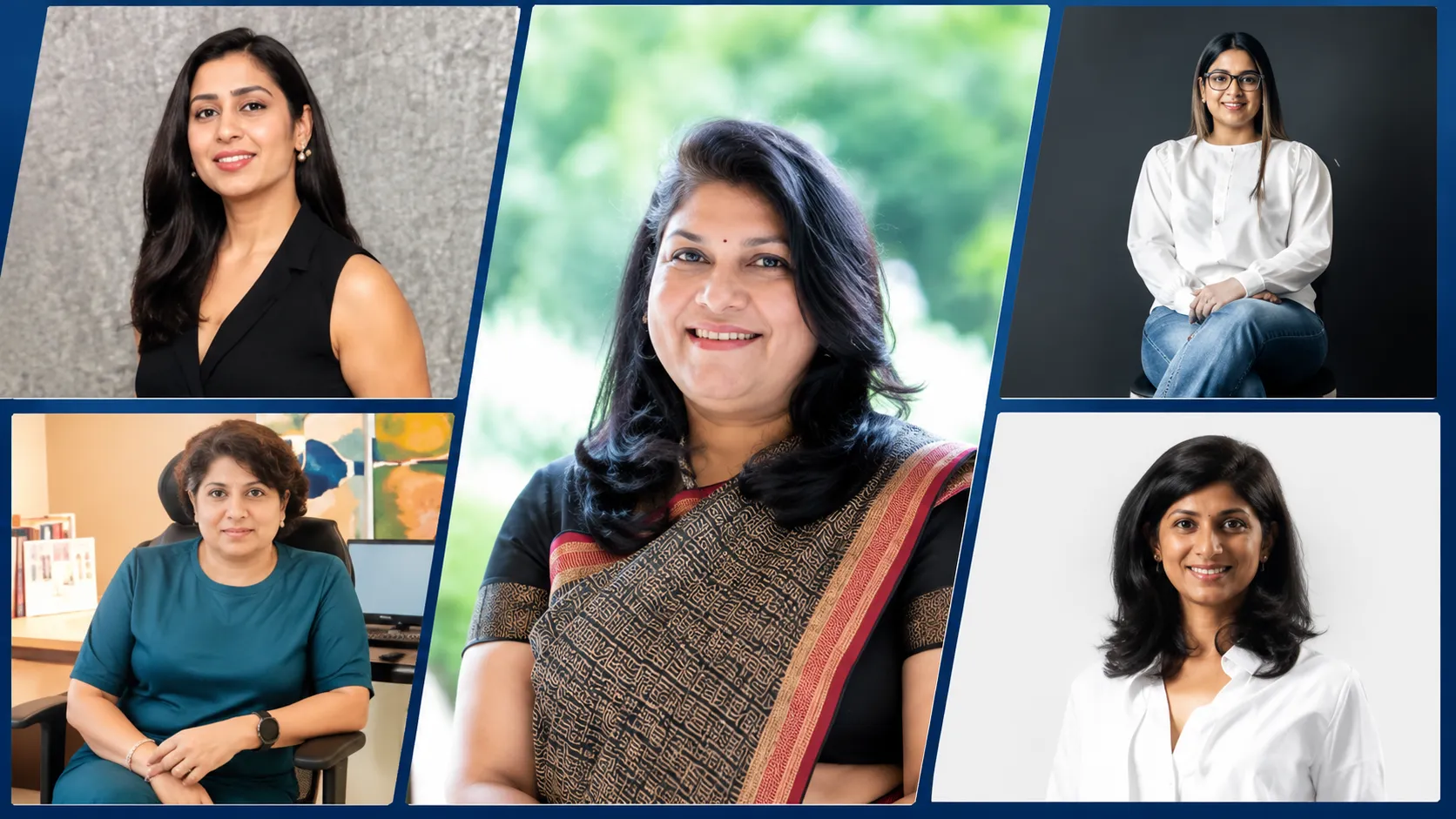
The visibility of successful women entrepreneurs plays an important role in inspiring others. Founders such as Falguni Nayar of Nykaa, Vineeta Singh of Sugar Cosmetics, Upasana Taku of MobiKwik and Ghazal Alagh of Mamaearth have become household names, demonstrating that women can build large, successful companies.
Women are also increasingly prominent in technology and deeptech. This week, Vrinda Kapoor of Bharat Semiconductor and other women founders have been in the spotlight, highlighting women's growing presence in sectors traditionally dominated by men.
What investors are doing
Several venture capital firms and organisations have launched initiatives to support women founders, including dedicated funds, accelerator programmes, mentorship networks and commitments to increase the number of women in investment teams. Some state governments, such as Kerala, Karnataka and Telangana, run programmes specifically for women entrepreneurs, including WE Hub in Hyderabad.