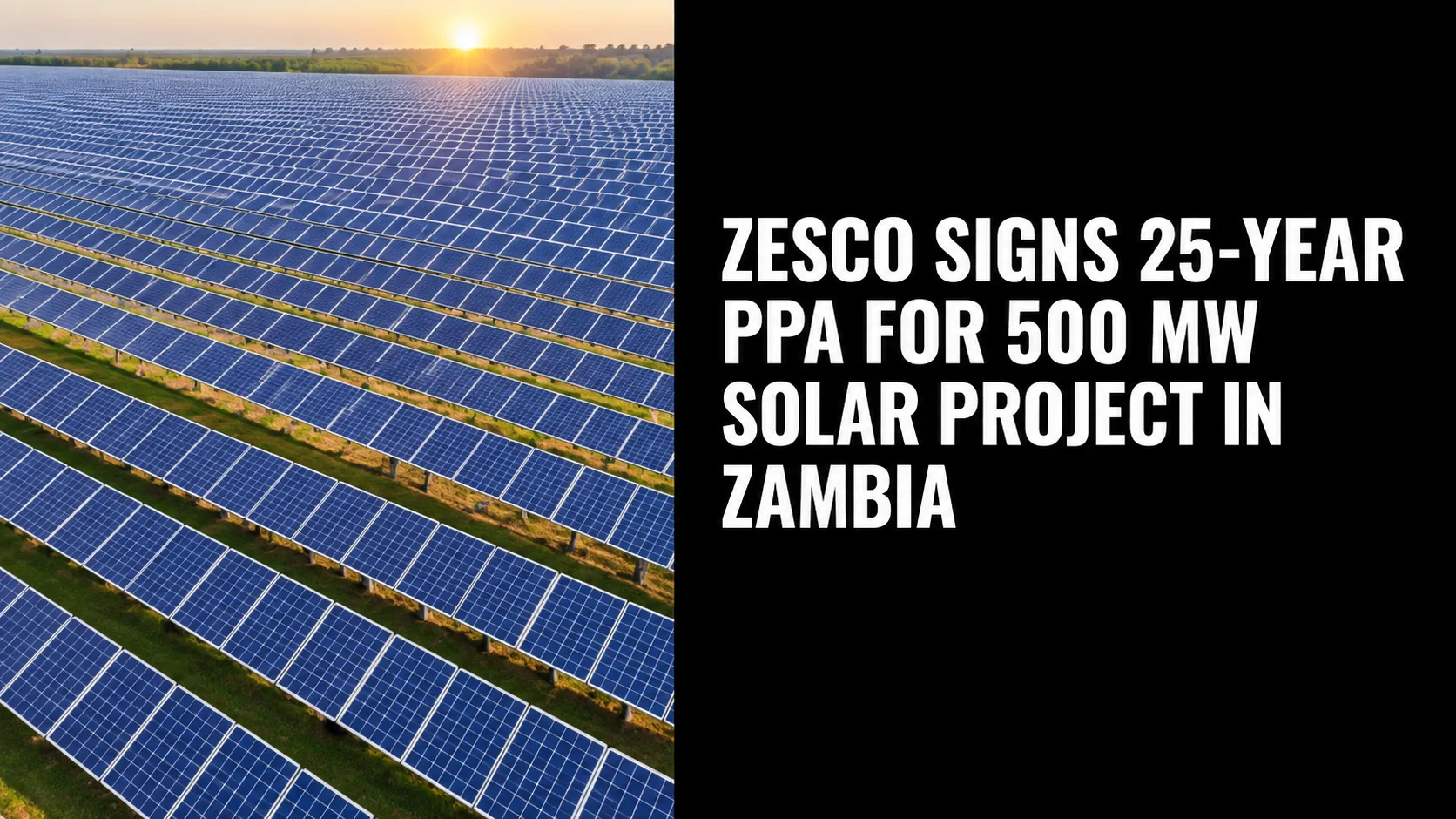
Zambia's national utility, ZESCO, has signed a 25-year power purchase agreement with Hungary-based EnerSynk Group for a planned 500-megawatt solar project in the country's Copperbelt province, according to reports published on September 21, 2026. The agreement allows the project to progress into technical studies, environmental and regulatory review, financing arrangement and implementation planning — the standard sequence of milestones preceding construction for large-scale utility solar projects.
The facility, once operational, is intended to supply renewable electricity directly into Zambia's national grid, adding significant utility-scale solar capacity to a power system that has faced recurring generation shortfalls in recent years, driven substantially by the country's heavy historical reliance on hydropower — a resource increasingly vulnerable to the drought conditions that have become more frequent across Southern Africa amid shifting regional rainfall patterns.
The choice of the Copperbelt province as project location carries particular strategic significance for Zambia's economy. The region is the heartland of the country's copper-mining industry, one of the largest in the world and a sector that consumes enormous quantities of electricity for extraction, processing and smelting operations. Reliable, adequately scaled power supply in the Copperbelt is therefore not merely a matter of household electrification, but a direct input into the productivity and international competitiveness of an industry that represents a substantial share of Zambia's export revenue and broader economic output.
Zambia's recent experience with prolonged, hydropower-driven electricity shortages — the country recorded more than 385 consecutive days without adequate supply reliability by early June 2026, according to industry tracking — has intensified government and utility focus on diversifying the national generation mix away from near-total dependence on hydroelectric sources toward a more balanced portfolio that includes solar and potentially other renewable technologies.
Zambia's broader push toward renewable-energy diversification also reflects lessons drawn from neighbouring countries across Southern Africa that have faced similar hydropower-driven electricity crises in recent years, as regional rainfall patterns have grown increasingly unpredictable amid broader climate-related shifts. Utilities across the region have increasingly concluded that a generation mix overly concentrated in any single technology, however historically reliable, carries unacceptable risk in an era of more volatile weather patterns.
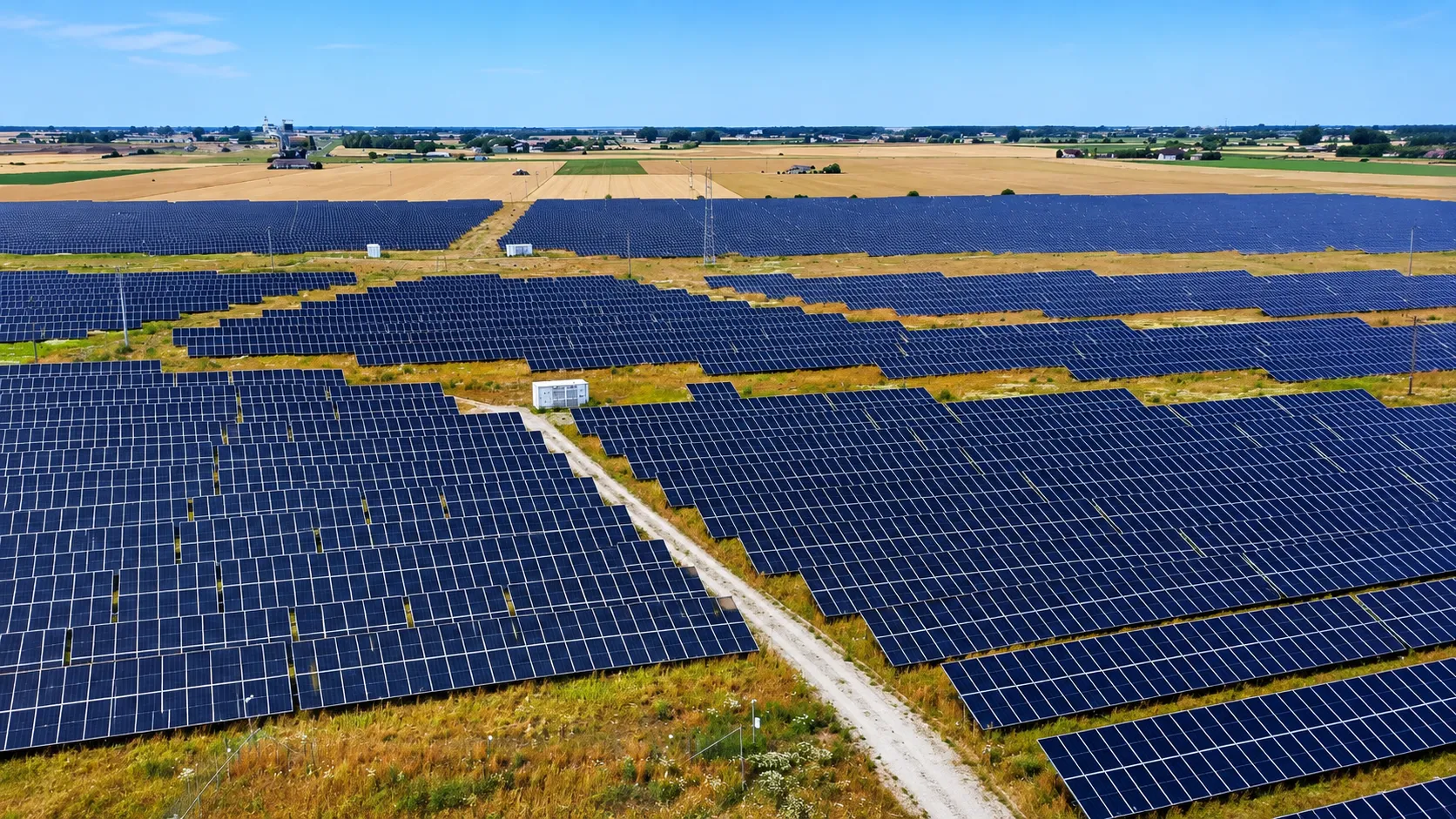
The 25-year power purchase agreement structure itself reflects standard practice for large-scale renewable-energy project financing globally, providing the long-term revenue certainty that project developers and their lenders typically require to secure the substantial upfront capital investment associated with utility-scale solar construction. For EnerSynk Group, the agreement represents a significant expansion of its project pipeline into Southern Africa, a region that has attracted growing international renewable-energy developer interest as several national utilities have moved to diversify away from fossil-fuel and drought-vulnerable hydropower generation.
The project's progression through technical, environmental and financing milestones over the coming months will determine the ultimate construction timeline, though signed power purchase agreements of this scale typically signal a multi-year path toward commercial operation, reflecting the substantial planning, permitting and financing work required before ground is broken on projects of this magnitude.
The Copperbelt project's eventual construction timeline will also depend significantly on Zambia's broader progress in strengthening its national transmission infrastructure, since utility-scale solar generation of this magnitude requires correspondingly robust grid capacity to absorb and distribute the additional power reliably, particularly given solar's inherently variable output profile compared with the baseload generation Zambia has historically relied upon from its hydropower fleet.
For Zambia's broader energy strategy, the Copperbelt solar agreement represents a meaningful step toward a more diversified and climate-resilient national generation mix — one that, if successfully realised, could help insulate both the country's mining sector and its broader population from the kind of prolonged hydropower-driven electricity shortages that have characterised much of the past several years.