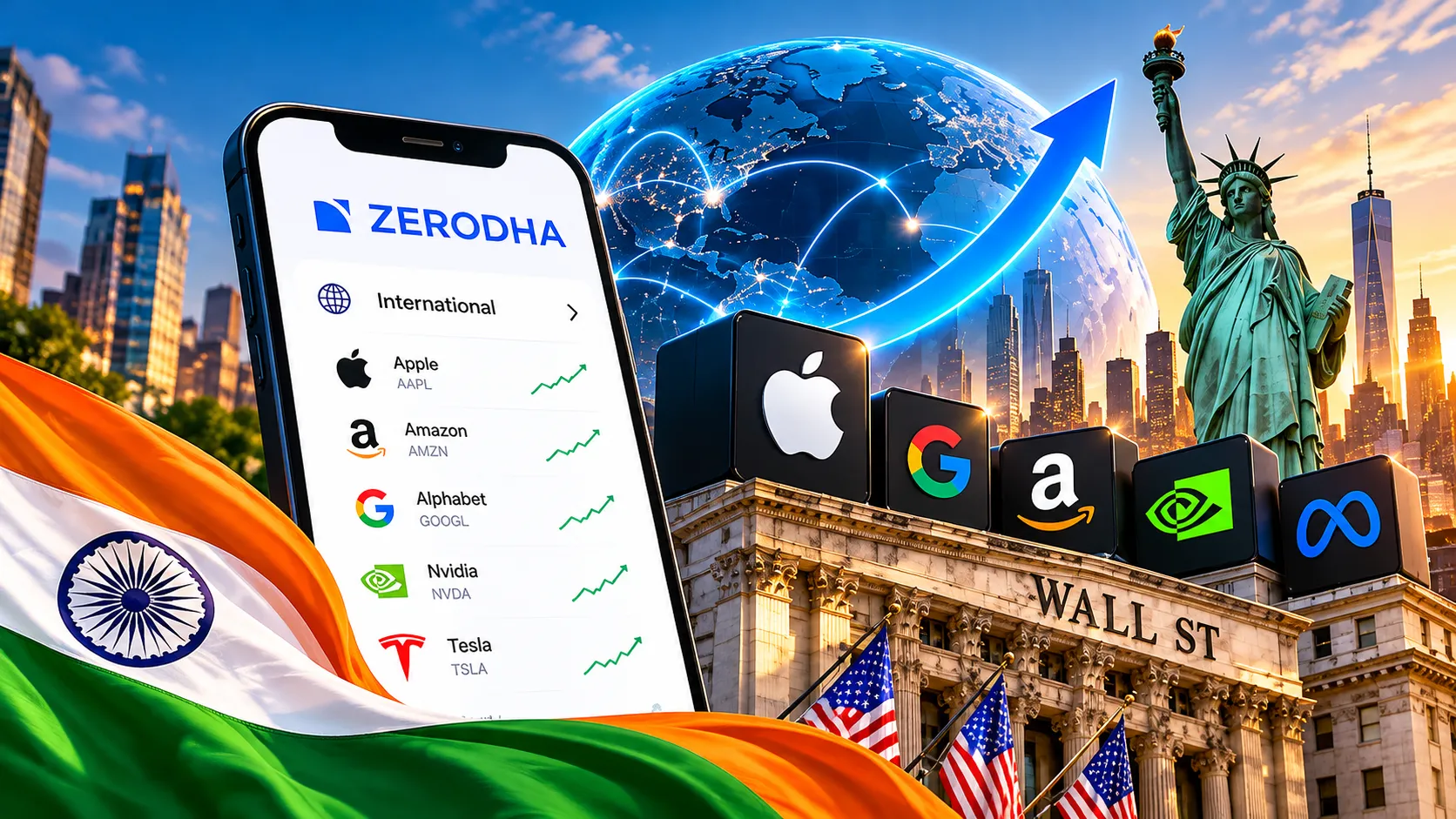
Zerodha, India's best-known discount stockbroker, has opened a direct route to Wall Street for its millions of customers. The Bengaluru-based firm has launched US stock investing in beta on its Kite trading platform, allowing resident Indian individuals to buy shares of US-listed companies and exchange-traded funds, according to a report by Inc42 on October 19.
Users can invest in up to 2,000 US-listed companies and about 1,000 ETFs, with fractional investing starting at just $1. That means an investor can buy a small fraction of a high-priced share, such as those of large US technology companies, without needing to purchase a whole share.
The launch marks a significant expansion for a company that built its business on Indian equities and derivatives, and it intensifies competition among Indian brokers to capture growing demand for global diversification.
How it works
Zerodha's US investing service is routed through BSE's India INX Global Access platform at GIFT City, India's international financial services centre in Gujarat. The US securities are held through a US brokerage partner rather than in an Indian demat account.
Customers can activate an international segment within Kite without opening a separate demat account. Money moves from a linked Indian bank account into a dollar-denominated wallet. At launch, wallets can be funded only through netbanking from supported Indian banks; UPI, debit cards and credit cards are not supported.
The service supports long-term delivery investing, fractional ownership and systematic investment plans (SIPs) in eligible US stocks. It does not support intraday trading, margin trading or participation in US IPOs, reflecting a focus on long-term investing rather than speculation.
Investments made by resident Indians in overseas securities fall under the Reserve Bank of India's Liberalised Remittance Scheme, which caps total overseas remittances per individual each financial year.
What it costs
Zerodha charges brokerage of 0.1% of trade value, with a minimum of $0.01 and a maximum of $10 per executed order, plus 18% goods and services tax on brokerage. A turnover fee of 0.005% of trade value is levied by the International Financial Services Centres Authority (IFSCA), and US regulatory transaction fees apply to sell orders.
Currency conversion is another cost. According to Zerodha's guide, investors pay a negotiated bank markup of 0.5% to 1.2% over the RBI reference rate when converting rupees to dollars. For small, frequent investors, conversion costs can be as significant as brokerage, so investors are likely to compare total costs carefully across platforms.
A crowded race to Wall Street
Zerodha is not alone. In June, IFSCA approved Zerodha, Groww, Angel One and Upstox to offer international and US stocks through GIFT City. Groww launched its offering in September in partnership with Alpaca Securities, giving access to more than 10,000 US stocks and ETFs with fractional investing. Upstox also launched in September, offering more than 8,000 US-listed stocks and over 2,000 ETFs, with fractional investing from $1. INDmoney and HDFC Securities already offer US investing.
Zerodha's initial selection of 2,000 companies is narrower than some rivals, but it covers the large and well-known US companies that most Indian investors are likely to want. The firm's advantage lies in its vast existing customer base and its reputation for low costs and a clean user experience, which could allow it to win share quickly despite arriving later than some competitors.