
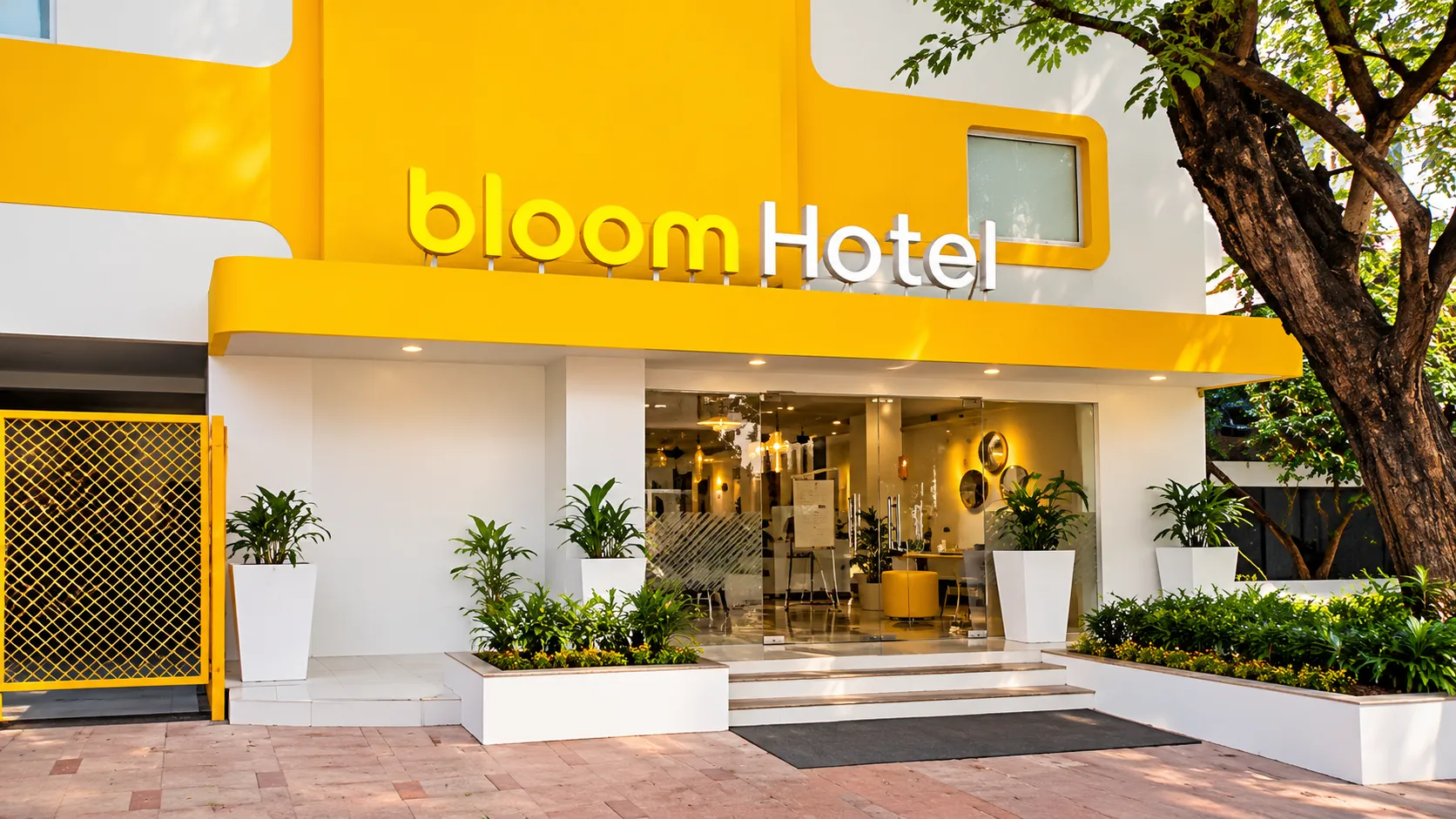
Hospitality brand Bloom Hotels has raised $75 million in a funding round led by private equity firm Kedaara Capital, Entrackr reported on November 24. The investment comes as India's hotel industry enjoys strong demand from domestic travellers, business trips, weddings and events, and as investors look for branded mid-market chains that can expand into smaller cities.
<p>India's travel boom is attracting large investments not only in luxury hotels and airlines, but also in the clean, reliable, reasonably priced hotels that serve the country's growing ranks of middle-class travellers.</p><p>Bloom Hotels, a hospitality brand focused on the mid-market segment, has raised $75 million in a funding round led by Kedaara Capital, Entrackr reported on Tuesday, November 24.</p><p>The company has not yet disclosed further details of the round, including valuation or how the funds will be used.</p><h2>Who Bloom is</h2><p>Bloom Hotels operates hotels under its own brand across Indian cities, targeting business travellers, families and leisure tourists looking for modern, well-run accommodation at moderate prices. The company has previously been backed by Samena Capital, a Dubai-based investment firm, which acquired a significant stake in the business in earlier rounds, according to past reports.</p><p>The mid-market segment sits between budget hotels and premium or luxury properties. It typically offers standardised rooms, reliable service, good locations and amenities such as Wi-Fi and breakfast, at prices accessible to a broad range of travellers.</p><h2>Kedaara Capital</h2><p>Kedaara Capital is one of India's leading homegrown private equity firms, founded by Manish Kejriwal, a former senior executive at Temasek. It invests in companies across consumer, healthcare, financial services and technology, and closed its fourth fund at $1.74 billion, according to earlier reports.</p><p>Kedaara's investment in Bloom signals confidence in the long-term growth of Indian hospitality and in the potential of branded mid-market hotel chains to consolidate a fragmented market.</p><h2>India's hotel boom</h2><p>India's hotel industry has experienced a strong recovery and expansion since the pandemic. Demand has been driven by domestic leisure travel, business travel, the wedding and events market, religious tourism, and large conferences and exhibitions.</p><p>Hotel occupancy rates and room rates have risen to record levels in many cities, as demand has grown faster than the supply of new hotel rooms. This has created strong profitability for hotel operators and attracted investment into the sector.</p><p>Listed hotel companies such as Indian Hotels, which operates Taj, Vivanta and Ginger, as well as Lemon Tree, Chalet Hotels and EIH, have seen strong growth in revenue and profits.</p><h2>The mid-market opportunity</h2><p>The mid-market segment is seen as one of the most promising areas of growth. Rising incomes are creating millions of new travellers who want better accommodation than budget lodges but cannot afford luxury hotels. Improved air and road connectivity, including new airports under the government's regional connectivity scheme and expanded highways, has opened up travel to smaller cities and tourist destinations.</p><p>Much of India's hotel supply in smaller cities is unbranded, with inconsistent quality and service. Branded chains that offer standardised experiences can win customers and charge a premium over unbranded competitors.</p><h2>Asset-light expansion</h2><p>Many hotel companies in India are pursuing asset-light growth, operating hotels under management or franchise agreements rather than owning the properties. This allows them to expand quickly without large capital investment, earning fees from property owners.</p><p>Investors typically favour asset-light models because they offer higher returns on capital. The mix of owned and managed hotels in Bloom's portfolio will be a key factor in how the company deploys its new funding.</p><h2>The role of technology</h2><p>Technology has transformed how Indians book hotels. Online travel agencies such as MakeMyTrip, Booking.com and Agoda, and platforms such as OYO, have made it easy for travellers to compare prices and read reviews. Hotel brands increasingly invest in direct booking channels, loyalty programmes and revenue management systems to improve profitability.</p><img src="/api/files/1795591013843-62b16cb600d5795f016edca5.webp" alt="1ab3fd6d-0014-4600-8a7b-cc74f3f8c7de.webp"><h2>Competition</h2><p>Bloom competes with a range of hotel brands, including Ginger from Indian Hotels, Lemon Tree's mid-market brands, international chains such as Marriott's Fairfield, Hilton's Hampton and IHG's Holiday Inn Express, and OYO's premium offerings. Competition for good locations and hotel management contracts is intense.</p><h2>Tourism and the economy</h2><p>Tourism is an important contributor to India's economy and employment, supporting jobs in hotels, restaurants, transport and related services. The government has promoted tourism through initiatives such as the development of religious and heritage circuits, improved infrastructure and campaigns to attract both domestic and international visitors.</p><h2>What it means for the diaspora</h2><p>Members of the Indian diaspora are an important source of travel demand, visiting family, attending weddings and exploring India. Better branded mid-market hotels in more cities can improve the experience for diaspora travellers, who often travel beyond the major metros.</p><h2>The wedding economy</h2><p>India's wedding market is one of the largest in the world, with millions of weddings each year generating demand for hotels, banquet halls and catering. Destination weddings and multi-day celebrations have become increasingly popular, benefiting hotels in leisure destinations and smaller cities.</p><p>Mid-market hotels with event spaces can capture a significant share of this demand, particularly for families seeking quality venues at reasonable prices.</p><h2>Supply constraints</h2><p>Industry reports suggest that the supply of new hotel rooms in India has lagged demand, partly because hotel construction is capital-intensive and slow. This imbalance has supported strong room rates and occupancy, making hotel investments more attractive.</p><p>As new supply comes online over the next few years, competition may intensify, rewarding operators with strong brands and efficient operations.</p><h2>Private equity's appetite</h2><p>Private equity firms have shown growing interest in Indian hospitality, investing in hotel owners, operators and related businesses. The sector's recovery and strong cash flows make it attractive for investors seeking exposure to India's consumption story.</p><h2>Tier 2 and Tier 3 cities</h2><p>Much of the growth in Indian hotel demand is coming from smaller cities, driven by new airports, highways, industrial investment and religious tourism. Cities such as Ayodhya, Varanasi, Indore, Coimbatore and Bhubaneswar have seen rising visitor numbers and hotel development.</p><p>Branded mid-market chains are particularly well suited to these markets, where travellers want reliable quality but room rates are lower than in the metros.</p><h2>Technology in hotel operations</h2><p>Hotel chains increasingly use technology for dynamic pricing, digital check-in, guest messaging and energy management. Investment in these systems can improve margins and guest satisfaction, giving technology-savvy operators an edge in a competitive market.</p><p>Funding rounds such as Bloom's often include investment in these capabilities. Analysts expect the sector's strong performance to continue as travel demand keeps growing.</p><h2>What comes next</h2><p>Bloom is expected to use the funding to expand its network of hotels across Indian cities. Investors will watch the pace of new openings, occupancy and room rates, and whether the company can scale while maintaining consistent quality.</p>
“We are witnessing the birth of ‘Statist Silicon’—where the location of a transistor’s manufacture is as important as its clock speed.”
The Rise of Regional Fabric
