
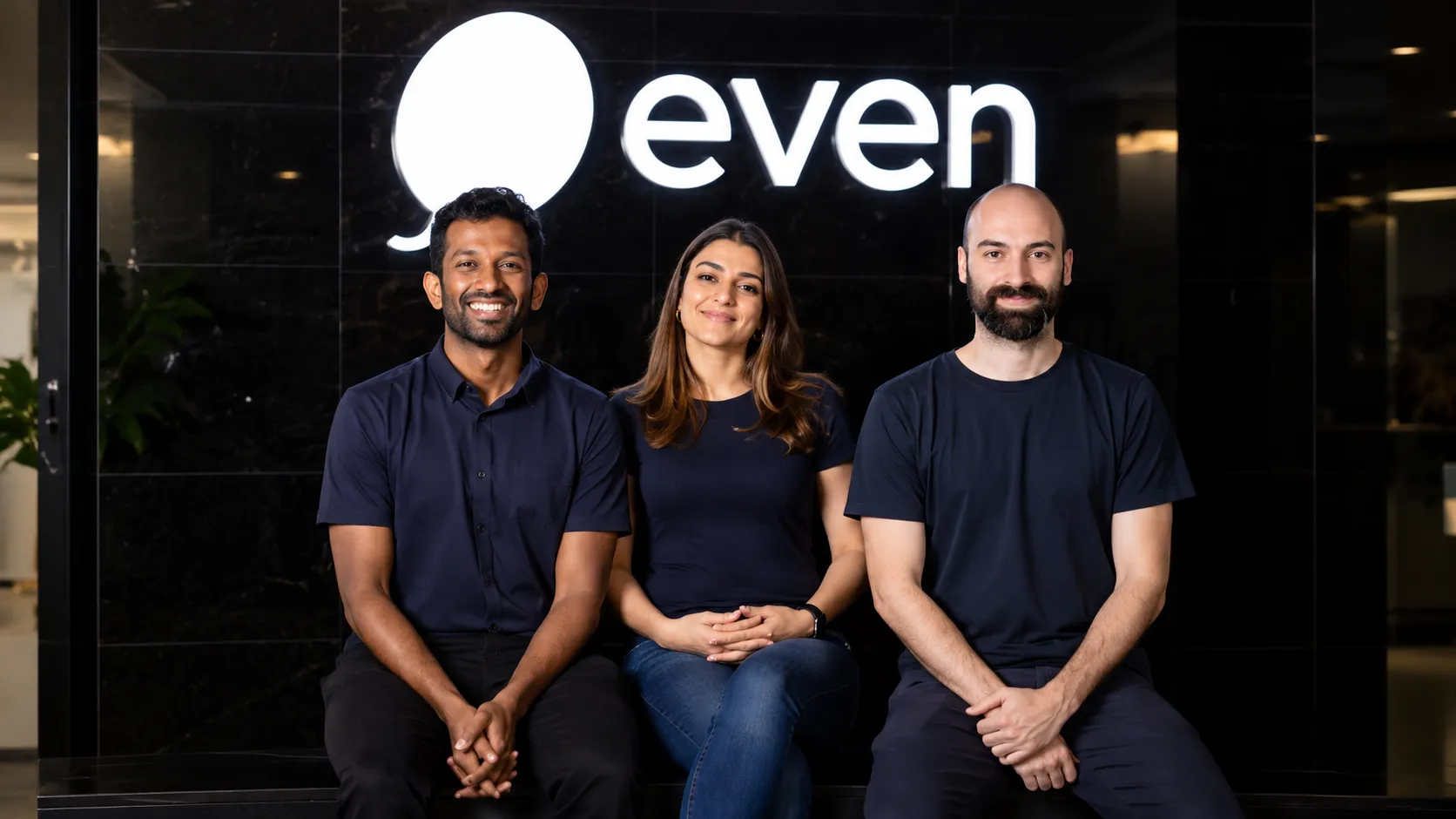
Bengaluru-based Even Healthcare has raised $50 million in an all-equity Series B led by Khosla Ventures, with Alpha Wave participating, at a valuation reported at about $300 million, triple its level 18 months ago. The company, which combines health coverage with its own hospitals, plans to open five new Bengaluru hospitals in six months.
<p>Even Healthcare, a Bengaluru startup trying to rebuild how Indians pay for and receive medical care, has raised $50 million in fresh funding to expand its network of hospitals, in one of the largest healthtech rounds in India this year.</p><p>The all-equity Series B round, announced on October 19, was led by existing investor Khosla Ventures, with participation from Alpha Wave. According to reports citing TechCrunch, the round values the company at roughly $300 million, about three times its valuation 18 months ago. Total funding raised by Even now exceeds $120 million.</p><p>The company plans to use the capital to open five new hospitals in Bengaluru over the next six months, starting with a facility in Indiranagar. It currently operates two hospitals in the city, both of which it says are profitable, although it has not disclosed detailed financials.</p><h2>From health plan to hospital operator</h2><p>Even began as a managed-care company, offering members a health plan that combined coverage with access to a network of doctors and hospitals. Over time, it has moved increasingly towards operating hospitals itself.</p><p>The logic is to align the financial incentives of the healthcare system with patients' wellbeing. In much of India's private healthcare system, hospitals earn more when they perform more procedures, run more tests and keep patients longer. Insurers, meanwhile, try to limit payouts. Even's model aims to bring both functions under one roof, so that the company is rewarded for keeping members healthy and treating them efficiently rather than for the volume of billable services.</p><p>By controlling insurance relationships, technology, clinicians, facilities and the patient experience, Even hopes to deliver better outcomes at lower cost. It is an approach inspired in part by integrated care organisations in the United States, such as Kaiser Permanente, which combine insurance and care delivery.</p><img src="/api/files/1792494298077-65bf58ccd20d243c099c563b.webp" alt="500ed2f2-3f87-4db3-bef5-b89b75d45ebd.png"><h2>Why investors are backing it</h2><p>The round comes at a time when Indian venture investors are concentrating capital in fewer, larger deals. Total venture funding in India reached $10.9 billion between January and mid-October 2026, roughly flat on a year earlier, but the number of rounds fell by more than a third. Healthcare, with its large addressable market and clear social need, has continued to attract interest.</p><p>Khosla Ventures' decision to lead a second round signals confidence in the company's execution. The Silicon Valley firm, founded by Vinod Khosla, has a long track record of backing companies that seek to transform large, inefficient industries, including healthcare. Alpha Wave, a global investor that has been active in India, adds further weight.</p><p>A valuation of around $300 million, triple the level of 18 months ago, suggests investors believe the model can scale beyond Bengaluru. The fact that the company's existing hospitals are reported to be profitable is important at a time when investors are demanding clear paths to profitability.</p><h2>The scale of India's healthcare challenge</h2><p>India's healthcare system faces enormous challenges. Out-of-pocket spending, in which patients pay directly for treatment, remains high, and a serious illness can push families into debt. Health insurance coverage has expanded through government schemes such as Ayushman Bharat, which provides coverage for hospitalisation to hundreds of millions of lower-income Indians, but many middle-class households remain underinsured.</p><p>Private hospitals provide a large share of care in Indian cities, but quality and pricing vary widely. Patients often struggle to navigate the system, compare costs or understand what their insurance will cover. Even's pitch is to simplify that experience by offering members a single point of contact for coverage and care.</p><p>Bengaluru, with its large population of young professionals and technology workers, is a natural testing ground. Many residents are covered by employer-provided insurance but face gaps in coverage and long waits for specialist care.</p><h2>The risks of an integrated model</h2><p>The approach is ambitious and carries significant risks. Building and running hospitals is capital-intensive and operationally complex. Recruiting and retaining doctors and nurses in a competitive market is difficult, and quality must be maintained as the network grows. Opening five hospitals in six months is an aggressive pace that will test the company's management and systems.</p><p>Integrating insurance and care also creates regulatory considerations. India's insurance regulator oversees health coverage products, and any model that combines coverage with care delivery must comply with rules on solvency, claims and consumer protection.</p><p>On the other hand, the integrated model could prove difficult for lighter healthtech competitors to copy. Companies that only offer telemedicine, diagnostics booking or insurance aggregation do not control the cost and quality of care in the same way.</p><h2>A wider wave of healthcare investment</h2><p>Even's funding comes amid broader investor interest in Indian healthcare. Hospital chains have expanded rapidly, attracting private equity and strategic investment. Diagnostics companies, pharmacies and healthtech platforms have also consolidated, with larger players acquiring smaller ones to expand their reach.</p><p>At the same time, innovation in preventive care, chronic disease management and digital health records is reshaping how patients interact with the system. The government's Ayushman Bharat Digital Mission aims to create a digital health ecosystem in which patient records can be shared securely across providers.</p><h2>Lessons from global integrated care</h2><p>Integrated care models have a long history in the United States, where organisations that combine insurance and care delivery have shown that aligning incentives can improve preventive care and reduce unnecessary hospital admissions. Their success, however, has depended on scale, strong primary care, investment in data systems and careful management of physician networks.</p><p>Translating that model to India involves different challenges. Most Indians still pay for outpatient care out of pocket, primary care is fragmented, and health records are often paper-based. Even's approach will depend on whether it can build trust with members, recruit and retain skilled clinicians and use technology to coordinate care efficiently across its growing network. If it can, it may offer a template for how private healthcare in Indian cities could evolve.</p><h2>What to watch</h2><p>Over the next six months, the key test for Even will be whether it can open its new hospitals on schedule and maintain the profitability it reports at its existing facilities. Investors and observers will watch membership growth, patient outcomes and the company's ability to keep costs under control as it scales.</p><p>If the model works in Bengaluru, Even could expand to other Indian cities, offering an alternative to the fragmented, fee-for-service system that dominates private healthcare. For millions of Indian families worried about the cost of falling ill, an approach that rewards keeping people healthy rather than treating them more would be a welcome change.</p>
“We are witnessing the birth of ‘Statist Silicon’—where the location of a transistor’s manufacture is as important as its clock speed.”
The Rise of Regional Fabric
