
Singapore-based Blue Whale Energy has raised $4 million in seed funding from new investors Wavemaker Partners, SG Growth Capital and ADB Ventures, alongside existing backers, to build a distributed battery network that eases local grid constraints. The company expects capacity to increase tenfold within six to eight weeks as projects under construction come online.
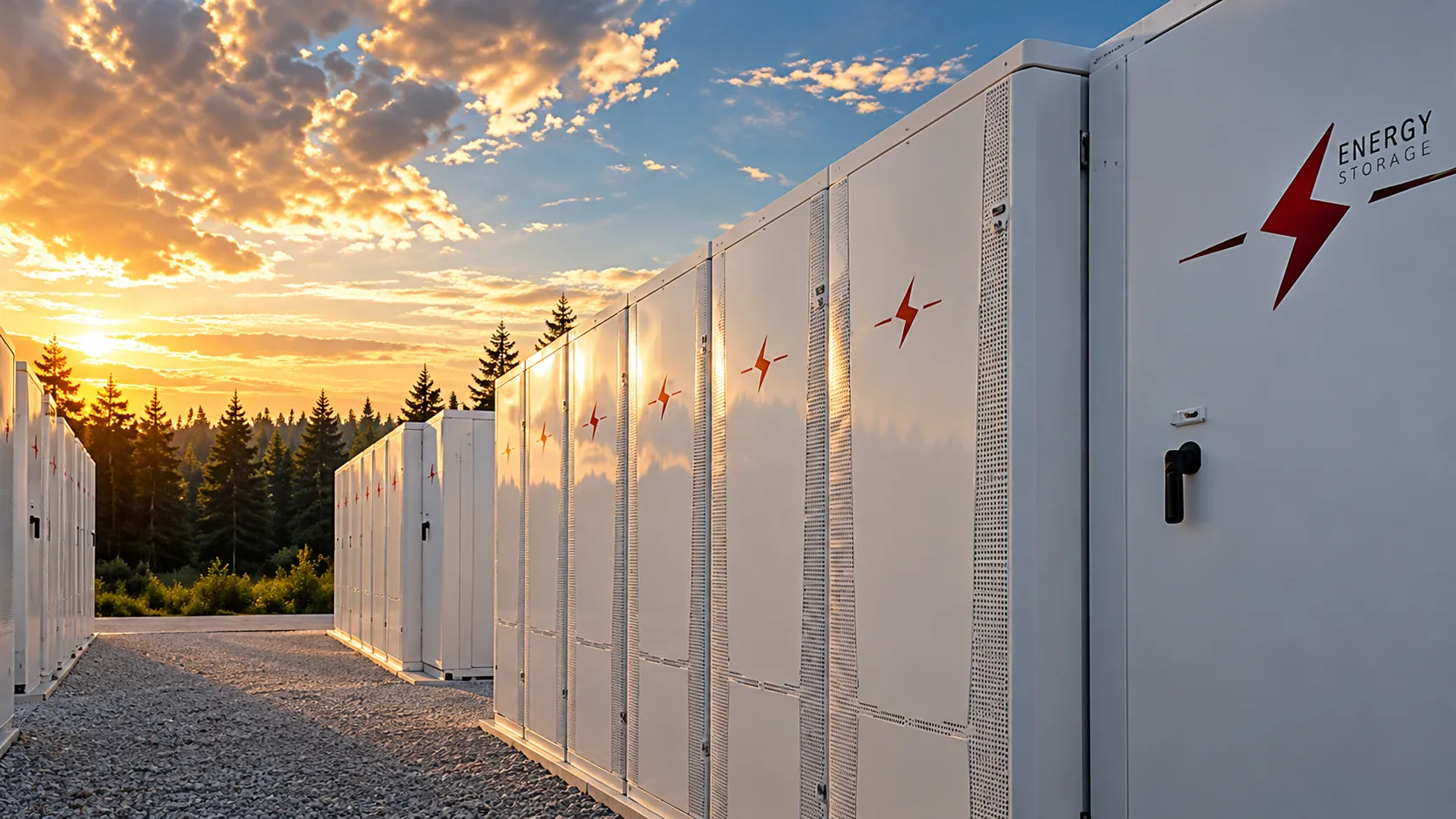
<p>As electricity grids around the world strain under rising demand from data centres, electric vehicles and renewable energy, a young Singapore company is betting that networks of smaller batteries placed close to where power is used can relieve some of the pressure. Blue Whale Energy has raised $4 million in seed funding to scale that approach, according to a report published on October 19.</p><p>The round brought in new investors Wavemaker Partners, SG Growth Capital and ADB Ventures, the venture arm of the Asian Development Bank. Existing investors Analog Ventures, Monk's Hill Ventures and UntroD Capital also participated.</p><p>Blue Whale Energy is building a distributed battery network designed to ease local grid constraints. The company says projects currently under construction are expected to increase its capacity tenfold within six to eight weeks.</p><h2>The grid problem</h2><p>Around the world, the energy transition is running into a bottleneck that has little to do with how much clean energy can be generated. Instead, the constraint is increasingly the grid itself: the transmission lines, substations and distribution networks that carry electricity from where it is produced to where it is consumed.</p><p>Grids designed for a world of large, centralised power plants are struggling to accommodate thousands of solar and wind projects, rapid growth in electricity demand from data centres and electric vehicles, and the variability of renewable generation. In many countries, new projects face waits of years for grid connections. In the United Kingdom, for example, Microsoft recently withdrew from an agreement to use a planned AI data centre after grid operators reportedly said sufficient power would not be available until the 2030s.</p><p>Upgrading grids is expensive and slow, requiring years of planning, permitting and construction. Batteries offer a faster way to manage some constraints. By storing electricity when demand is low or renewable output is high, and releasing it when demand peaks, batteries can reduce strain on local networks and defer the need for costly upgrades.</p><h2>Why distributed batteries</h2><p>Many battery storage projects are large, utility-scale installations connected to the transmission grid. Blue Whale Energy's approach focuses instead on a distributed network: smaller batteries located closer to points of consumption or at constrained points in local distribution networks.</p><p>Distributed batteries can address local bottlenecks directly, providing capacity where the grid is most stressed. They can be deployed more quickly than large projects, often without lengthy grid connection processes, and can be aggregated and controlled by software to operate as a single resource, sometimes described as a virtual power plant.</p><p>Such networks can earn revenue in several ways: by helping utilities manage peak demand, providing services that keep grid frequency stable, allowing businesses to reduce electricity bills by avoiding peak charges, and storing cheap renewable power for later use.</p><img src="/api/files/1792478353264-7bbe51434253ae8a0f7bb5fa.webp" alt="a151ae3b-993e-4cf1-9946-a2d98fdeb580.png"><h2>Southeast Asia's opportunity</h2><p>Southeast Asia is a particularly promising market for grid solutions. Electricity demand in the region is growing rapidly, driven by economic growth, urbanisation, manufacturing and a boom in data centre construction in countries such as Singapore, Malaysia and Indonesia. Governments across the region have set targets to expand renewable energy, but many grids are not yet equipped to integrate large amounts of variable generation.</p><p>The participation of ADB Ventures signals interest from development finance institutions in climate technologies that can accelerate the energy transition in Asia. The Asian Development Bank has made climate finance a major priority, and its venture arm invests in early-stage companies with solutions relevant to developing Asia.</p><p>Singapore itself has limited land and renewable resources, making efficient use of the grid and storage particularly important. The city-state has set targets for energy storage deployment and has positioned itself as a hub for climate technology companies serving the wider region.</p><h2>A wider wave of storage investment</h2><p>Battery storage has become one of the fastest-growing segments of clean energy investment globally. Falling battery costs, driven largely by Chinese manufacturing, have made storage economically viable in more applications. A Reuters analysis published the same day found that battery storage accounts for 29% of Global South spending on Chinese clean energy technology, which has exceeded $235 billion since 2024.</p><p>In India, battery energy storage is also expanding rapidly. Indian states and central agencies have run tenders for large battery projects, and regulators are developing rules for grid-connected storage. Gujarat's electricity regulator recently notified regulations for grid-interactive battery storage systems, and companies are commissioning battery projects in Rajasthan and elsewhere. India's renewable energy targets will require substantial storage capacity to manage the variability of solar and wind power.</p><h2>Challenges ahead</h2><p>For a seed-stage company, scaling a physical infrastructure business presents challenges. Batteries require significant capital, and Blue Whale Energy will need to secure larger financing, potentially including project finance or debt, as it expands. Regulatory frameworks for distributed storage vary across markets and are still evolving in many countries. Safety, maintenance and battery degradation must also be carefully managed.</p><p>Competition is growing, with utilities, independent power producers and other startups all targeting the storage market.</p><h2>Software as the secret ingredient</h2><p>The value of a distributed battery network depends heavily on software. Individual batteries must be monitored and controlled in real time, charging and discharging in response to grid conditions, electricity prices and customer needs. Aggregating many small batteries into a single coordinated resource requires sophisticated forecasting, optimisation and communication systems.</p><p>Companies that master this software layer can extract more value from each battery and offer grid operators a reliable, flexible resource. That is why many energy storage startups describe themselves as technology companies as much as infrastructure businesses, and why investors from the venture capital world, rather than only traditional infrastructure funds, have been drawn to the sector.</p><h2>What comes next</h2><p>With its new funding, Blue Whale Energy aims to expand its battery network rapidly, with a tenfold increase in capacity expected within weeks. Its progress will be watched as a test of whether distributed storage can provide a practical, scalable answer to grid congestion in Asia's fast-growing economies.</p><p>For the energy transition, the company's model highlights an important shift in focus: from simply building more clean power to ensuring that grids can deliver it where and when it is needed.</p><p>Blue Whale Energy's progress will also be closely watched by other climate technology founders in Southeast Asia, where early-stage funding for hardware-heavy businesses has historically been scarcer than in the United States or Europe. Backing from a development bank's venture arm and established regional venture firms suggests investors see growing opportunities in the infrastructure of the region's energy transition.</p>
“We are witnessing the birth of ‘Statist Silicon’—where the location of a transistor’s manufacture is as important as its clock speed.”
The Rise of Regional Fabric
