
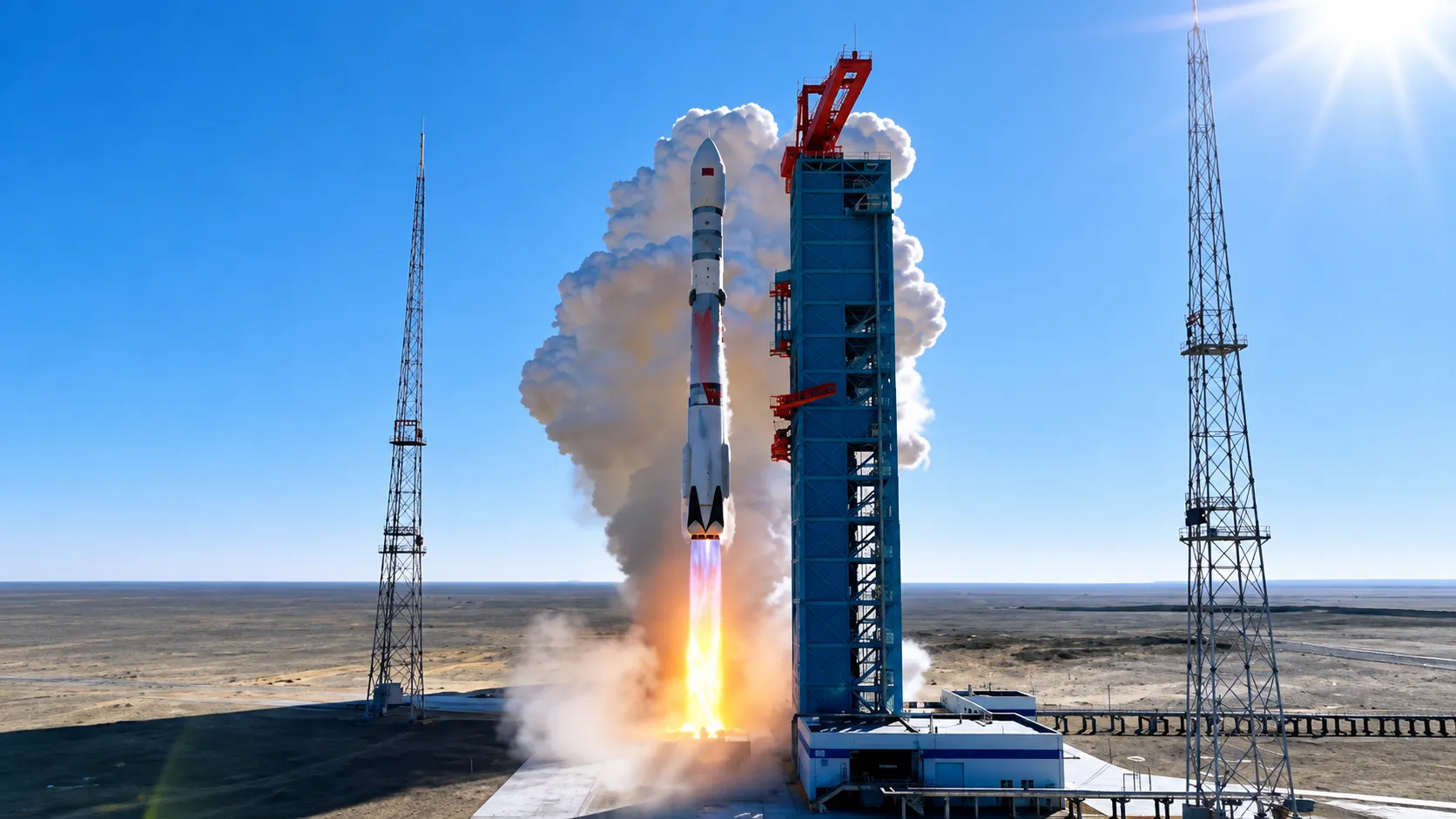
A Chinese private space company has successfully sent a reusable-class rocket into orbit, a milestone in the country's push to build a competitive commercial spaceflight industry.
<p>A Chinese private space company has successfully launched a reusable-class rocket into orbit, marking a significant milestone in the country's fast-developing commercial spaceflight sector and its broader ambitions to build domestic launch capability that can compete with established international players. The launch represents a meaningful technical step for China's private space industry, which has been rapidly scaling its capabilities over recent years as Beijing has encouraged private capital and entrepreneurship in a sector traditionally dominated by state-run programmes.</p><p>Reusability has become a defining competitive battleground in global commercial spaceflight, following the dramatic cost reductions achieved by reusable rocket systems pioneered internationally over the past decade. China's private space sector has been working aggressively to close the technological gap in this specific area, recognising that the ability to recover and reuse launch vehicles is central to achieving the launch cost economics necessary to compete for both domestic and international commercial satellite launch contracts.</p><p>The successful orbital launch adds to a growing list of achievements by China's private space companies, which have benefited from a combination of government policy support, access to domestic launch infrastructure, and a deep pool of aerospace engineering talent drawn from the country's established state space programme. As global demand for satellite launch capacity has surged, driven substantially by the proliferation of low-earth-orbit satellite constellations for communications and earth observation, Chinese private launch providers have positioned themselves to capture a growing share of that expanding market.</p><p>For China's broader space industry strategy, the development of a competitive private launch sector serves multiple strategic objectives simultaneously: reducing reliance on the country's traditional state-run launch programme for routine commercial missions, building domestic capacity that can support China's own ambitious satellite constellation plans, and establishing credible international commercial launch service offerings that could compete for contracts currently dominated by other major spacefaring nations' launch providers.</p><p>The milestone also reflects the intensity of the current global race in reusable launch technology, an area where a small number of companies worldwide have successfully demonstrated commercially viable reusable systems. China's progress in this specific technical domain carries implications well beyond its own domestic space ambitions, potentially reshaping the competitive dynamics of the global commercial launch services market as an increasing number of providers achieve the cost economics that reusability enables.</p><p>Industry analysts tracking the global space sector note that successful demonstration of reusable orbital launch capability typically represents only the initial step in a longer process toward achieving the launch cadence and reliability needed to compete commercially at scale. The path from a single successful demonstration flight to routine, cost-competitive commercial launch operations has historically taken multiple years even for the most successful international programmes, suggesting China's private space companies still face a substantial development runway ahead.</p><p>Nonetheless, the achievement adds meaningfully to China's credibility as an emerging force in commercial spaceflight, at a moment when the global satellite launch market continues to expand rapidly, driven by mega-constellation deployments and growing demand for earth observation and communications infrastructure across both commercial and government customers worldwide. China's ability to offer competitively priced, reliable commercial launch services could reshape procurement decisions for satellite operators currently reliant on a limited set of international launch providers.</p><p>As China's private space sector continues to build on this milestone, subsequent launches and demonstrated reliability over time will be the true test of whether the country's reusable rocket ambitions can translate into a genuinely competitive commercial launch business. For now, the successful orbital launch stands as a clear signal of intent, and of technical progress, in one of the most closely watched and strategically significant areas of the global space industry.</p><p>Space industry analysts note that China's rapid progress in private reusable launch technology reflects a broader national strategy of cultivating commercial space capability alongside its established state programme, mirroring, though on a different timeline, the trajectory that transformed reusable rocket technology from experimental demonstration to routine commercial operation in other major spacefaring nations over the preceding decade.</p><img src="/api/files/1788506489176-6a849545f6cf631d723e14f3.webp" alt="ChatGPT Image Sep 4, 2026, 12_51_18 PM.png"><p>For global satellite operators evaluating launch service providers, the emergence of additional credible commercial launch options, including from China's expanding private space sector, could meaningfully affect launch pricing and availability over the coming years, particularly as demand for satellite launch capacity continues to be driven by large-scale low-earth-orbit constellation deployments worldwide.</p><p>As China's private space companies continue building on this milestone, sustained launch cadence and demonstrated reliability across multiple missions will be the true measures of whether the country's reusable rocket ambitions translate into a genuinely competitive international commercial launch business, rather than remaining a symbolically significant but commercially limited technical achievement.</p><p>Looking ahead, China's private space sector is expected to pursue additional orbital launches in the coming months as it works to establish a consistent launch cadence, a critical milestone on the path toward genuinely competitive commercial launch services. International satellite operators and launch service brokers will be watching closely to assess how quickly Chinese providers can translate this technical milestone into reliable, commercially available launch capacity.</p><p>For readers following the global space industry, China's reusable rocket milestone is a reminder that the competitive landscape for commercial launch services continues to broaden well beyond the small handful of companies that have dominated headlines to date, with meaningful implications for how satellite operators worldwide plan their future launch procurement strategies.</p><p>It is also worth noting that China's investment in commercial space capability has accelerated meaningfully over the past several years as part of a broader national technology self-sufficiency push, with reusable launch technology specifically identified by Chinese policymakers as a strategic priority given its outsized impact on the overall cost economics of satellite deployment and space-based infrastructure development.</p><p>Ultimately, China's successful reusable rocket launch adds meaningful momentum to the country's broader ambitions within the global commercial space industry, with implications that extend well beyond its own domestic launch needs into the increasingly competitive international market for satellite deployment and space infrastructure services.</p><p>Sustained progress across additional missions, rather than a single successful flight, will ultimately determine how meaningfully this milestone reshapes the competitive balance within the global commercial launch industry.</p>
“We are witnessing the birth of ‘Statist Silicon’—where the location of a transistor’s manufacture is as important as its clock speed.”
The Rise of Regional Fabric
