
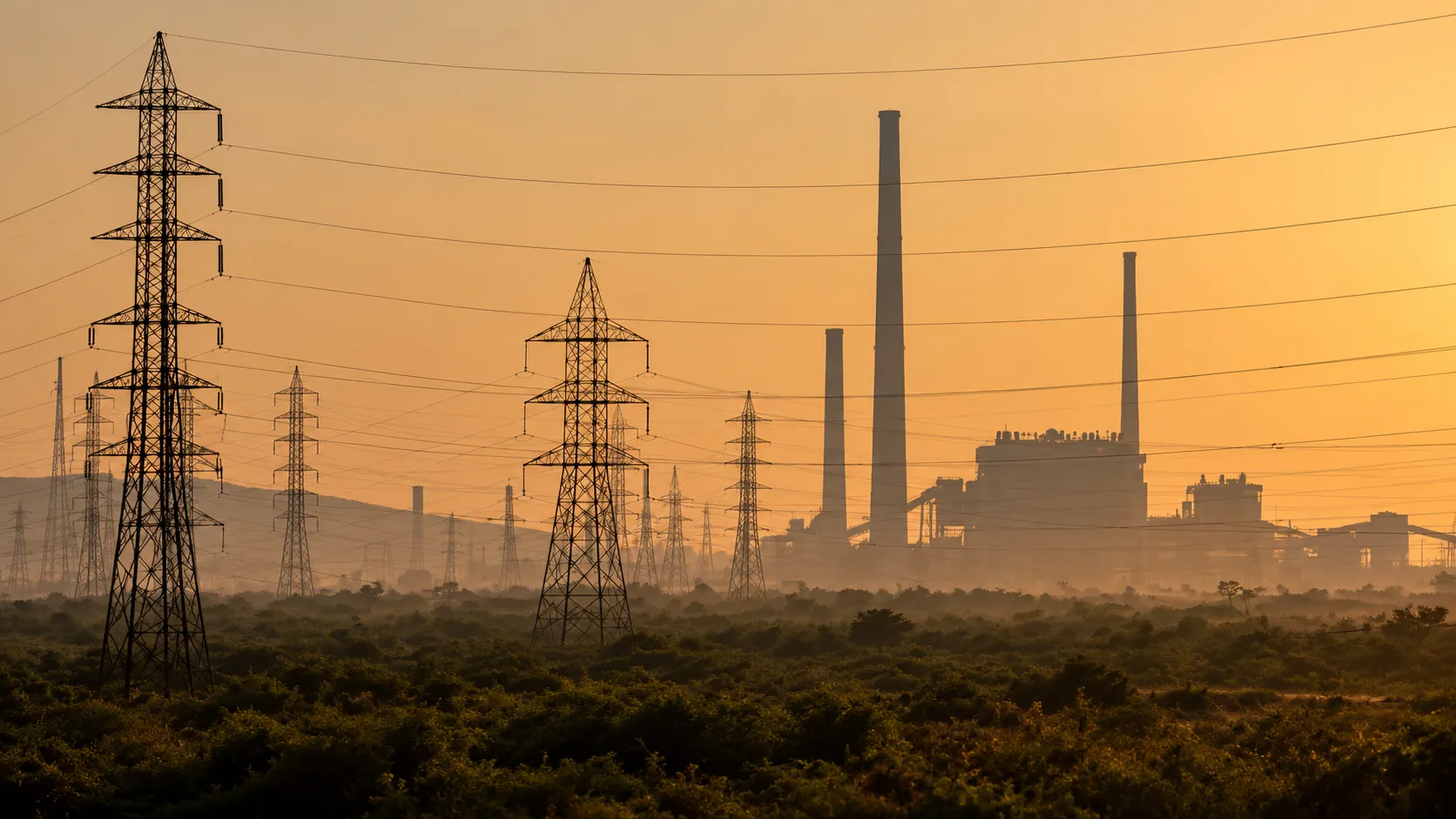
Countries in the Global South have spent more than $235 billion on Chinese-made clean energy technology since 2024, according to a Reuters analysis published on October 19. They now account for over half of global spending on Chinese transformers, switchgear and solar arrays, while electric vehicle imports have jumped from $6 billion in 2023 to $73.2 billion in 2026.
<p>The developing world is building its energy transition with Chinese hardware. Countries in the Global South have spent more than $235 billion on Chinese-made clean energy technologies since 2024, according to a Reuters analysis published on October 19, highlighting how China's manufacturing dominance and falling prices are reshaping energy systems across Asia, Africa, Latin America and the Middle East.</p><p>The analysis found that the Global South now accounts for more than half of global spending on Chinese-made transformers, switchgear and solar arrays, the equipment needed to generate clean electricity and connect it to the grid.</p><p>Electric vehicles have been one of the fastest-growing categories. Imports of Chinese EVs by Global South countries rose from $6 billion in 2023 to $73.2 billion in 2026, more than a twelvefold increase. Battery storage accounts for 29% of spending, according to the analysis.</p><h2>Why developing countries are buying Chinese</h2><p>The surge reflects a combination of price, availability and need. China produces the vast majority of the world's solar panels, battery cells and many key components of wind turbines and electric vehicles. Intense competition among Chinese manufacturers, combined with overcapacity, has driven prices down dramatically over the past few years.</p><p>For developing countries facing rising electricity demand, high fuel import bills and frequent power shortages, cheap Chinese solar panels and batteries offer an affordable way to expand electricity supply quickly. In several countries, households and businesses have installed rooftop solar systems on a large scale, often without waiting for governments or utilities.</p><p>Pakistan has become one of the most prominent examples, with imports of Chinese solar panels surging in recent years as consumers sought relief from high electricity tariffs and unreliable grid supply. Similar trends have been seen in parts of Africa, the Middle East and Southeast Asia.</p><h2>The shift in trade flows</h2><p>The rise in Global South purchases also reflects a shift in China's export markets. As the United States and the European Union have imposed tariffs and trade restrictions on Chinese clean energy products, including electric vehicles and solar panels, Chinese manufacturers have redirected exports towards developing countries.</p><p>That has helped Chinese companies maintain output despite trade barriers in wealthy markets, while giving developing countries access to cheaper technology. China's trade surplus is heading towards a record in 2026, driven in part by exports of manufactured goods to emerging markets.</p><p>At the same time, China has begun to tighten control over some of its technological advantages. On October 16, China's commerce ministry and science ministry proposed adding 12 solar photovoltaic technologies to its export-restricted catalogue, with public consultation running until November 15. That move could complicate efforts by other countries to build their own solar manufacturing industries using Chinese know-how.</p><img src="/api/files/1792478895640-9921e32cd6da0698b0aa5cc5.webp" alt="f4ca922a-5f0b-4bc9-a072-989104249826.png"><h2>Benefits and risks</h2><p>For the Global South, the benefits are significant. Cheaper clean energy technology allows countries to expand electricity access, reduce dependence on imported fossil fuels, cut air pollution and lower greenhouse gas emissions. It can also improve energy security, as solar and wind resources are domestic, even if the equipment is imported.</p><p>But there are risks. Heavy dependence on a single supplier for critical energy infrastructure raises concerns about supply chain vulnerability, quality, cybersecurity and geopolitical leverage. Transformers and switchgear, which form the backbone of electricity grids, are particularly sensitive. Some governments have begun to scrutinise Chinese equipment in critical infrastructure.</p><p>Local manufacturing is another concern. A flood of cheap imports can make it difficult for domestic manufacturers to compete, limiting the development of local industries and jobs. Many developing countries would like to capture more of the value of the energy transition by producing equipment themselves.</p><h2>India's different path</h2><p>India occupies a distinctive position. It is one of the largest Global South markets for clean energy, with ambitious targets for renewable capacity, but it has also sought to reduce its dependence on Chinese imports. The government has imposed duties on imported solar cells and modules, introduced a list of approved models and manufacturers, and offered production-linked incentives to build a domestic solar manufacturing industry.</p><p>Those policies have helped India build significant module manufacturing capacity, and increasingly cell manufacturing as well. Even so, India still relies on China for more than half of its solar cells and modules, along with critical materials such as polysilicon and wafers, according to industry estimates. China's proposed export controls on solar technologies could affect Indian manufacturers seeking to upgrade their production.</p><p>India has also restricted Chinese investment in sensitive sectors and has been cautious about Chinese equipment in its power grid. At the same time, Indian companies are positioning themselves as alternative suppliers of solar modules, transformers and other equipment to markets seeking to diversify away from China, including the United States.</p><h2>A broader sustainability picture</h2><p>The Reuters analysis was one of several notable sustainability developments on October 19. Sweden awarded SEK 9.3 billion in state support for projects to capture and store biogenic carbon dioxide, and Singapore-based Blue Whale Energy raised $4 million to build a distributed battery network. In the United Kingdom, think tank E3G estimated that the government's £15 billion Warm Homes Plan could cut household energy bills by about £1 billion a year.</p><h2>The price collapse that changed everything</h2><p>The cost of solar panels has fallen by roughly 90% over the past decade, and battery prices have declined sharply as well, driven by technological improvements and the massive scale of Chinese manufacturing. Those price declines have transformed the economics of clean energy, making solar power the cheapest source of new electricity in many parts of the world.</p><p>For developing countries, the price collapse has been especially significant. Solar systems that were once affordable only with subsidies or development aid are now within reach of households and small businesses. Combined with batteries, they can provide reliable electricity in places where grid supply is weak or non-existent, bringing power to communities that have long gone without it.</p><h2>What it means for the world</h2><p>The scale of Global South spending on Chinese clean energy technology suggests that the centre of gravity of the energy transition is shifting. While debates about climate policy often focus on wealthy countries, the fastest growth in clean energy deployment is increasingly taking place in developing economies, and much of it is powered by Chinese manufacturing.</p><p>For policymakers, the challenge is to balance the benefits of cheap technology with concerns about dependence and local industry. For businesses, including Indian manufacturers, the trend presents both competition and opportunity in markets that will define the future of global energy demand.</p>
“We are witnessing the birth of ‘Statist Silicon’—where the location of a transistor’s manufacture is as important as its clock speed.”
The Rise of Regional Fabric
