
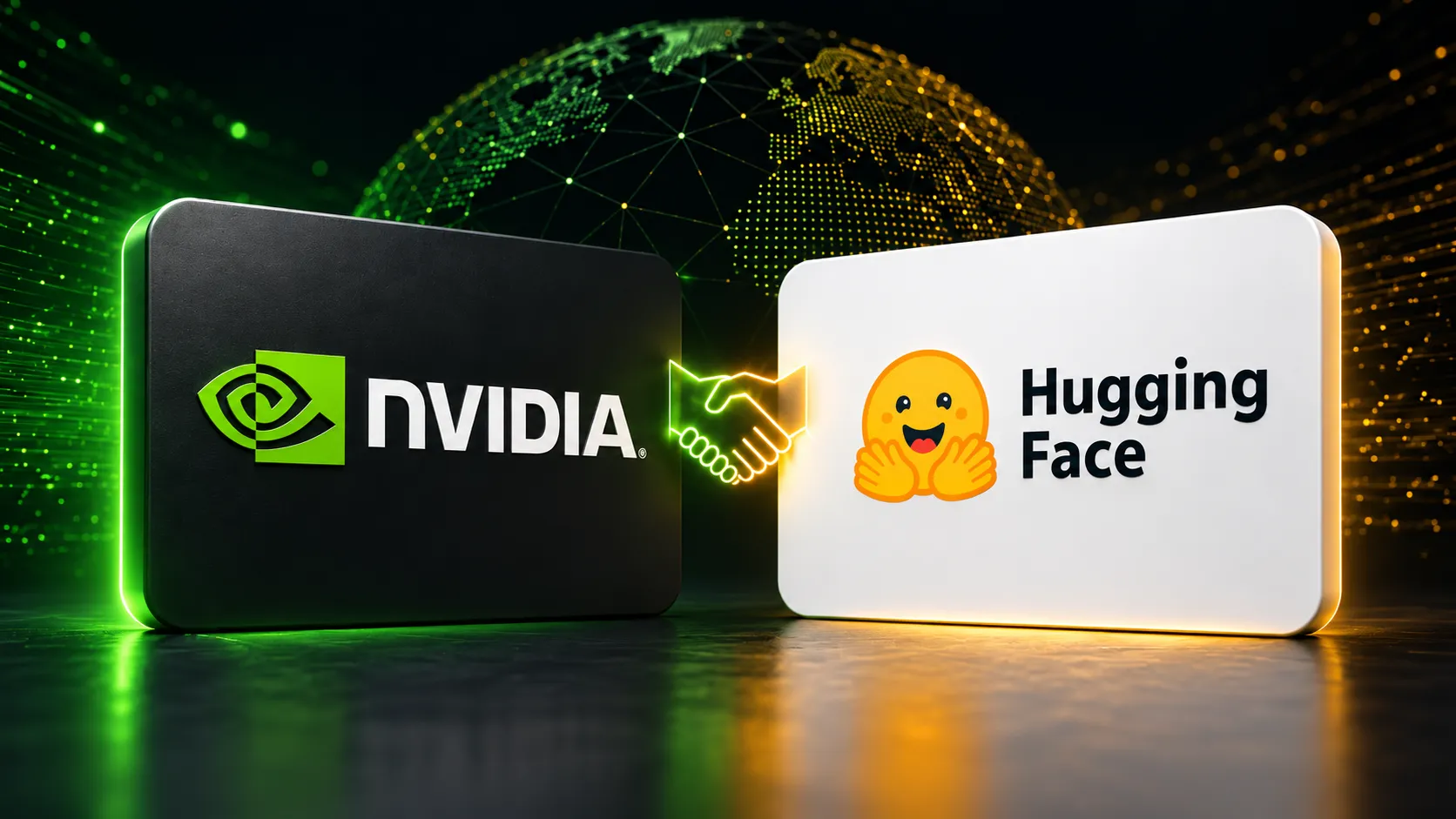
Nvidia has agreed to acquire AI model-hosting platform Hugging Face for $12.93 billion, its largest acquisition to date, as the chipmaker deepens its control over the AI development stack.
<p>Nvidia has agreed to acquire Hugging Face, the widely used open-source AI model repository and development platform, in a deal valued at $12.93 billion, marking the chip giant's largest acquisition to date by a considerable margin. The transaction, announced as part of a broader wave of consolidation reshaping the artificial intelligence infrastructure landscape, positions Nvidia to extend its influence well beyond the hardware layer where it has built its dominant market position, into the software and community platforms that increasingly determine how AI models are built, shared and deployed.</p><p>Hugging Face has, over the past several years, established itself as a central meeting point for the global AI development community, hosting hundreds of thousands of open-source models, datasets and collaborative tools used by researchers, startups and large enterprises alike. Its position as a kind of GitHub for machine learning has made it an increasingly strategic asset, one that offers whoever controls it significant visibility into, and influence over, the direction of open AI model development worldwide.</p><p>For Nvidia, the acquisition represents a deliberate strategic extension beyond its core semiconductor business, which has generated extraordinary revenue growth as the company's graphics processing units have become the default hardware for training and running large AI models. By acquiring Hugging Face, Nvidia gains a direct foothold in the software layer where developers actually build and deploy AI applications, potentially allowing it to more tightly integrate its hardware and software offerings in ways that could deepen customer dependence on its broader ecosystem.</p><p>The deal also arrives at a moment of intensifying competition among the world's largest technology companies to control critical chokepoints across the AI value chain, from raw compute capacity and specialised chips to foundation models, developer tooling and distribution platforms. Nvidia's move to acquire a platform as central to open-source AI development as Hugging Face is likely to draw close scrutiny from competitors and regulators alike, given the potential implications for how open the broader AI development ecosystem remains under new ownership.</p><p>Industry observers note that the scale of the deal, at nearly $13 billion, reflects both Hugging Face's genuine strategic value and the broader inflation in valuations across the AI infrastructure sector, where companies commanding critical developer mindshare or infrastructure control points have commanded increasingly extraordinary prices. The transaction places Nvidia among a small group of technology giants making the largest acquisitions in the company's history specifically to secure position within the rapidly consolidating AI ecosystem.</p><p>For Hugging Face's existing user base of researchers and developers, the acquisition raises immediate questions about how the platform's traditionally open, community-driven ethos will evolve under ownership by one of the industry's most dominant and, to many open-source advocates, most commercially aggressive companies. Nvidia has indicated its intention to maintain Hugging Face's open-source commitments, though the broader AI community will be watching closely for any signs of strategic shifts that favour Nvidia's own hardware and software ecosystem over platform neutrality.</p><p>The acquisition comes against a backdrop of extraordinary capital flows into AI infrastructure more broadly, with global venture and strategic investment in the sector reaching record levels through the first half of 2026. Nvidia's willingness to commit such a substantial sum to a single acquisition underscores the company's continued conviction that controlling as much of the AI development and deployment stack as possible, from silicon through to developer tooling, represents the clearest path to sustaining its current market leadership.</p><p>As the deal moves toward completion, subject to the usual regulatory review processes across major jurisdictions, its ultimate impact on the broader AI development ecosystem, and on Hugging Face's relationships with Nvidia's chip competitors who have also relied on the platform for distribution, will become clearer. For now, the transaction stands as one of the clearest signals yet that the battle for control over AI infrastructure has expanded decisively beyond the data centre and into the software layer where models are actually built and shared.</p><img src="/api/files/1788507738123-dde6d6ecfd9982224de4aaab.webp" alt="ChatGPT Image Sep 4, 2026, 01_12_11 PM.png"><p>Antitrust and competition policy specialists are likely to scrutinise the transaction closely, given growing regulatory sensitivity globally toward large technology companies acquiring platforms that hold significant influence over developer ecosystems, a concern that has intensified as AI infrastructure consolidation has accelerated sharply across the industry over the past year.</p><p>For Nvidia's chip competitors, several of whom have relied on Hugging Face as a neutral distribution platform for models optimised to run across multiple hardware architectures, the acquisition raises legitimate strategic concerns about whether the platform's historical neutrality can be sustained under ownership by the industry's dominant chip supplier, potentially reshaping competitive dynamics across the broader AI hardware and software ecosystem.</p><p>As the deal progresses toward closing, the AI development community's response, and Nvidia's specific commitments regarding platform governance and continued openness, will be closely watched as an early indicator of how the acquisition reshapes one of the most influential and widely used platforms underpinning global AI model development and deployment.</p><p>Looking ahead, the regulatory review process for the Nvidia-Hugging Face transaction is expected to unfold over multiple months across several major jurisdictions, given the deal's scale and its implications for competitive dynamics across the broader AI infrastructure and developer tooling ecosystem. How regulators in the United States, European Union and other major markets approach their review will offer an important signal of how closely AI infrastructure consolidation is likely to be scrutinised going forward.</p><p>For global technology industry observers, Nvidia's Hugging Face acquisition crystallises just how central control over AI infrastructure, spanning hardware, software and developer platforms alike, has become to the competitive strategies of the industry's largest players, a dynamic that readers should expect to see repeated as other major technology companies pursue their own platform-level acquisitions in the months ahead.</p><p>It is also worth noting that Nvidia's acquisition follows a broader pattern of the company systematically expanding beyond its core chip business into adjacent software, networking and now developer platform layers, a vertical integration strategy that has drawn increasing attention from competition regulators globally even as it has, to date, continued to receive regulatory clearance for its major transactions.</p>
“We are witnessing the birth of ‘Statist Silicon’—where the location of a transistor’s manufacture is as important as its clock speed.”
The Rise of Regional Fabric
