
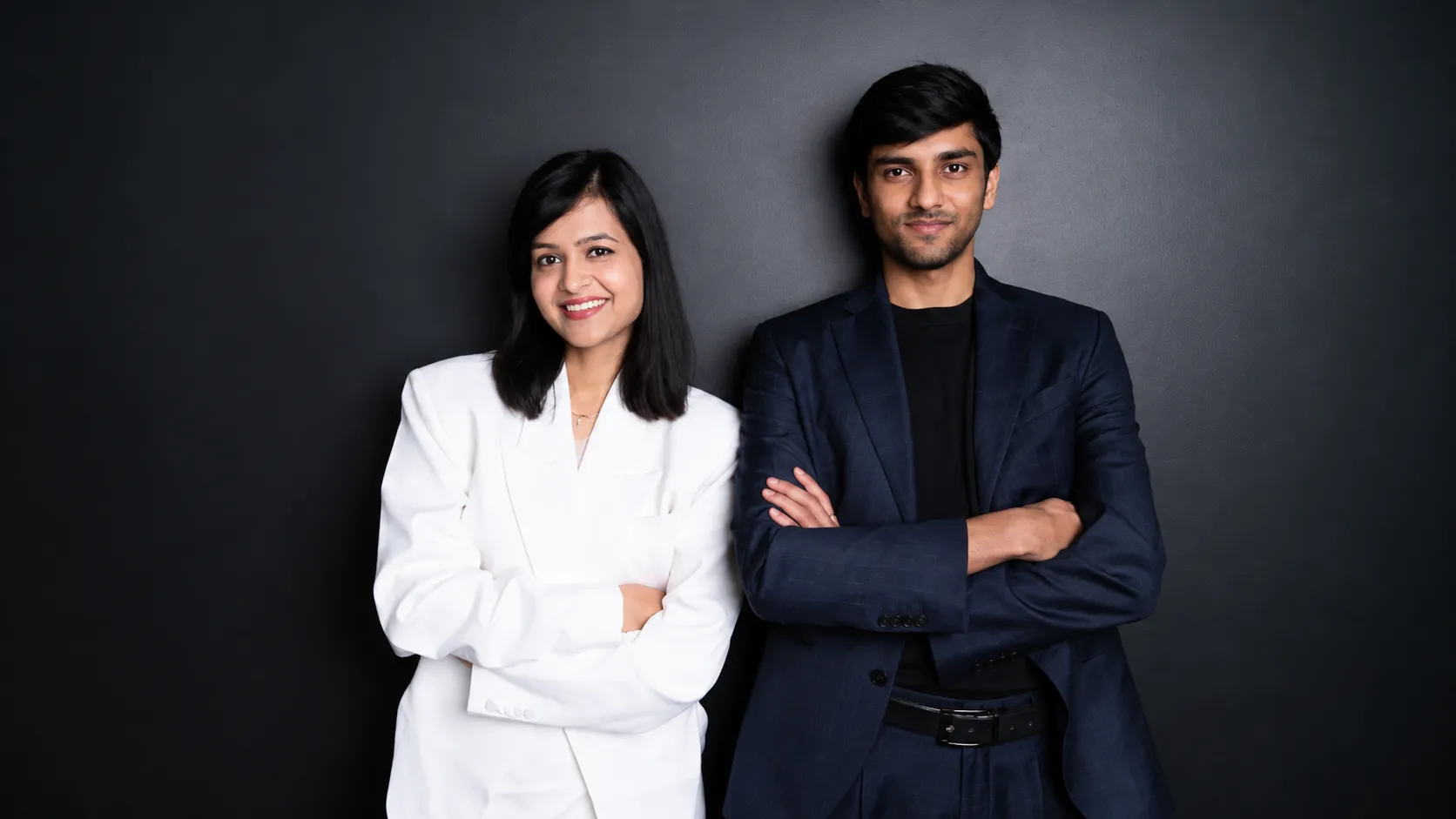
So/Facet, a fashion-led lab-grown diamond jewellery brand co-founded this year by Aarushi Agrawal Naulakha and Abhishek Naulakha, has raised ₹10 crore in seed funding led by Sauce. The brand plans an online launch in November and more than 30 premium stores over three years.
<p>A new Indian jewellery brand is betting that the next generation of diamond buyers wants pieces that feel playful, personal and modern, and that the stones inside them can be grown in a laboratory. So/Facet, a fashion-led lab-grown diamond jewellery label co-founded this year by former Unilever executives Aarushi Agrawal Naulakha and Abhishek Naulakha, has raised ₹10 crore, or about $1 million, in seed funding.</p><p>The round, announced on October 19, was led by consumer-focused venture firm Sauce. Other investors include Mokobara co-founders Sangeet Agrawal and Navin Parwal, the Chona family office, Kedar Lele and Moonshot co-founder Devaiah Bopanna. The valuation was not disclosed.</p><p>The company will use the funds for brand building, design, technology, hiring and an omnichannel rollout. It plans to open its online store in November 2026, ahead of the festive and wedding season, followed by more than 30 premium retail stores over the next three years.</p><h2>Founders from the world of consumer brands</h2><p>Both founders previously held senior roles at Unilever, one of the world's largest consumer goods companies, giving them deep experience in brand building, consumer insight and retail distribution. That background is visible in So/Facet's positioning, which emphasises design, storytelling and customer experience rather than price alone.</p><p>Aarushi Agrawal Naulakha joins a growing cohort of women co-founding consumer brands in India, particularly in categories such as beauty, fashion and jewellery, where women make up a large share of customers. Women founders and co-founders remain underrepresented in Indian venture funding overall, but consumer categories have been one of the areas where their presence has grown most visibly.</p><h2>Design-first collections</h2><p>So/Facet's jewellery is designed in-house and uses diamonds certified by the International Gemological Institute (IGI). The brand plans six launch collections, three of which have been named. So/Me features star and butterfly shapes, So/Pop combines diamonds with stackable enamel charms, and So/Icon offers sculptural statement pieces.</p><p>The company says customers will be able to buy a piece online or in a store and upgrade it later, an approach designed to encourage repeat purchases and long-term relationships with customers. It also says it has a waitlist of more than 200 people ahead of launch, a figure provided by the company.</p><p>The emphasis on fashion and self-expression marks a shift in how lab-grown diamonds are being marketed. Early brands in the category often positioned them mainly as a more affordable alternative to mined diamonds. Newer entrants are increasingly building distinct identities around design, everyday wearability and values such as traceability.</p><img src="/api/files/1792483615648-0c2d2a0840a7362d0b16edf6.webp" alt="e2214f3f-1158-46b5-848e-e7ff3a3e2104.png"><h2>A booming category</h2><p>Lab-grown diamonds are chemically, physically and optically identical to mined diamonds but are produced in controlled environments using high-pressure, high-temperature or chemical vapour deposition processes. They typically cost a fraction of the price of comparable mined stones, and their prices have fallen sharply in recent years as production has scaled up.</p><p>India is at the centre of this industry. Surat in Gujarat, long the world's leading hub for cutting and polishing diamonds, has become a major centre for growing lab diamonds as well. The government has supported the sector, and lab-grown diamonds have become an important export category as demand for mined diamonds has softened globally.</p><p>Domestically, a wave of brands has emerged to sell lab-grown diamond jewellery directly to consumers. Investors have taken notice. GIVA raised ₹530 crore in June 2025. Limelight Lab Grown Diamonds raised ₹275 crore in July 2026, while Aukera raised ₹90 crore in debt from Alteria Capital in July 2026, following a $15 million equity round led by Peak XV Partners. Onya raised ₹5.5 crore in a pre-seed round led by Zeropearl VC last year.</p><h2>Why young buyers are open to lab diamonds</h2><p>Several factors are driving demand. Younger consumers, particularly millennials and Gen Z, tend to be more open to alternatives to traditional luxury products and more interested in value and design. Many buy jewellery for themselves rather than only for weddings or special occasions, creating demand for everyday pieces at accessible price points.</p><p>Ethical and environmental considerations also play a role. Mined diamonds have faced long-standing concerns over working conditions and environmental damage in some producing regions. Lab-grown diamonds avoid mining, although their production is energy-intensive, and their environmental footprint depends heavily on the source of electricity used.</p><p>In India, where jewellery carries deep cultural significance and gold remains the dominant choice, lab-grown diamonds are still a small part of the market. But rising gold prices, which have reached record levels in 2026, have made gold jewellery more expensive, potentially encouraging some buyers to consider diamond pieces as alternatives.</p><h2>Building a brand in a trust-driven category</h2><p>Jewellery is a category where trust is everything. Buyers want assurance about the authenticity and quality of stones and metals, fair pricing and reliable after-sales service, including exchanges and buybacks. Traditional jewellers built that trust over generations through family relationships and local reputation.</p><p>New brands must earn it differently: through certification, transparent pricing, strong return policies and consistent customer experiences across online and offline channels. So/Facet's use of IGI-certified diamonds and its upgrade programme are designed to address those concerns. Its founders' background in consumer brand building at Unilever may also help, as creating a recognisable brand identity is crucial in a market crowded with lookalike products.</p><h2>The road ahead</h2><p>So/Facet faces a crowded and competitive market. Established jewellery groups, including Titan, have entered the lab-grown segment, alongside well-funded startups. Building a brand, opening premium stores and managing inventory will require significant capital, and the company will need to show strong early sales to raise larger rounds.</p><p>Key metrics to watch will include sales at launch, the share of buyers coming from beyond the initial waitlist, average order values and repeat purchases, and the timing and performance of its first stores.</p><p>For Aarushi Agrawal Naulakha and her co-founder, the seed round provides the resources to test whether a design-led, fashion-forward approach can carve out a distinctive place in India's fast-growing lab-grown diamond market. If it succeeds, So/Facet could help redefine what diamond jewellery means for a new generation of Indian consumers.</p><p>The seed round, while modest by the standards of the category's largest players, is enough to test the concept: launch the collections, learn from early customers and refine the product before committing to an expensive store rollout. Many successful Indian consumer brands began in exactly this way, building a loyal following online before expanding into physical retail. So/Facet's founders will hope their experience at Unilever helps them make those decisions with discipline, especially in a category where inventory carries real value and design choices can quickly date.</p>
“We are witnessing the birth of ‘Statist Silicon’—where the location of a transistor’s manufacture is as important as its clock speed.”
The Rise of Regional Fabric
