
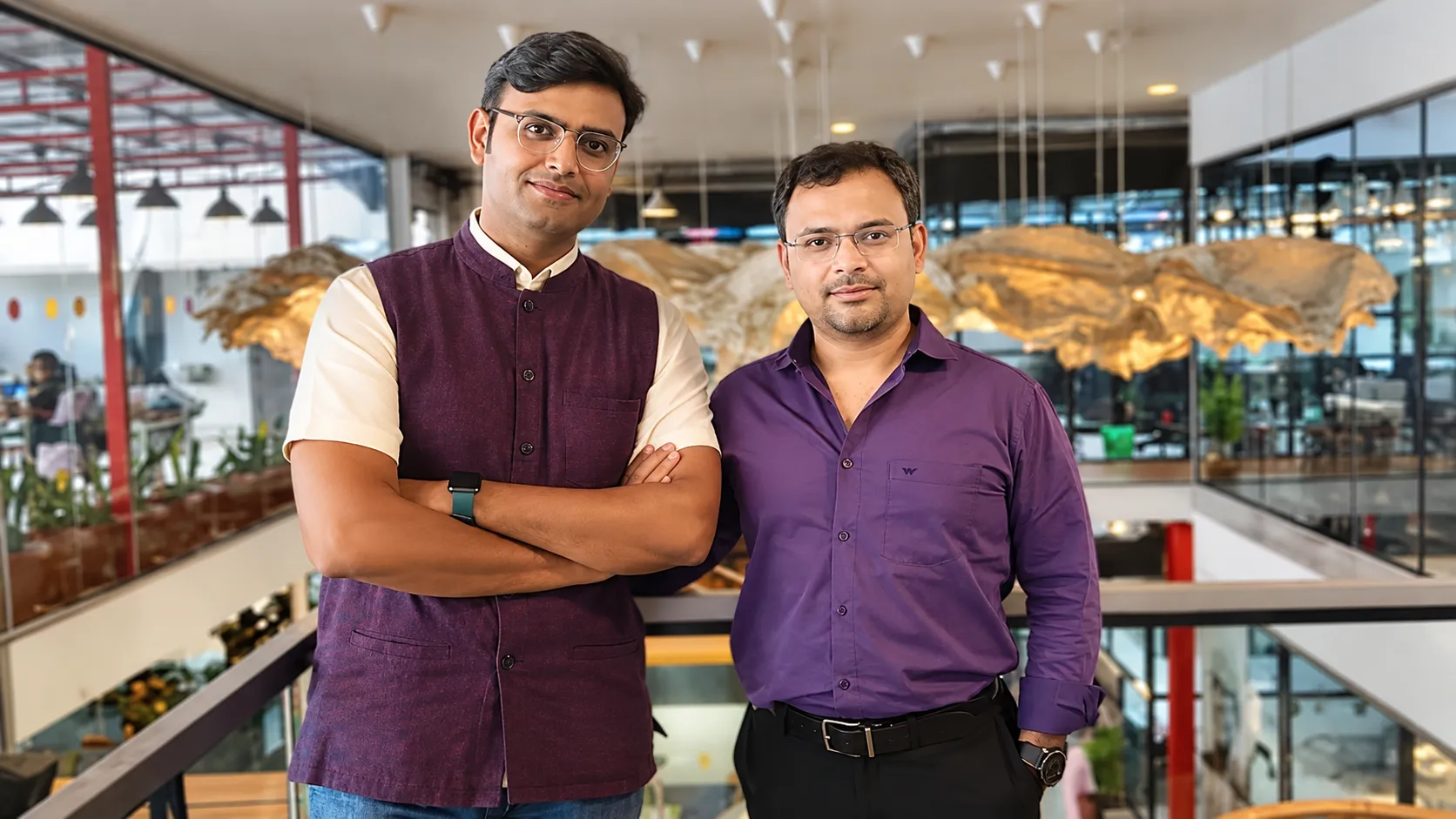
Bengaluru-based Hunar.AI has raised ₹40 crore (about $4.2 million) in a Series A led by Blume Ventures to scale conversational AI agents that recruit, onboard and train frontline workers in more than 20 languages. Its agents handled over 1.5 crore conversations through September for clients including Swiggy, Zepto and Starbucks.
<p>India's frontline workforce, the delivery riders, store associates, warehouse staff, field sales agents and customer service workers who keep the economy running, is enormous, mobile and notoriously hard to recruit and retain. Hunar.AI, a Bengaluru startup, believes artificial intelligence agents that speak workers' own languages can transform how companies hire and manage them, and it has raised fresh capital to prove it.</p><p>The company announced on October 19 that it has raised ₹40 crore, or about $4.2 million, in a Series A round led by Blume Ventures. Hyderabad Angels Fund, Together Fund, Seedstars and AVNM Ventures also participated, along with PhysicsWallah co-founders Prateek Maheshwari and Alakh Pandey and MediaMint co-founder Aditya Vuchi. The valuation was not disclosed, although Entrackr reported that the round lifted the company's valuation by about 71%.</p><p>Hunar.AI will use the funds to strengthen its AI infrastructure, develop its products and expand its go-to-market efforts.</p><h2>Voice agents for a voice-first workforce</h2><p>Founded in 2022 by Krishna Khandelwal, who serves as chief executive, and Shantanu Bhattacharyya, Hunar.AI builds conversational AI agents that automate tasks across the frontline worker lifecycle, from hiring and onboarding to training and retention.</p><p>The company's focus on voice is deliberate. Many frontline workers in India prefer to communicate by phone rather than through written applications or apps, and many are more comfortable in regional languages than in English or Hindi. Hunar's voice AI operates in more than 20 languages, including Tamil, Telugu and Kannada.</p><p>In practice, a company looking to hire hundreds of delivery partners or store staff can use Hunar's agents to call applicants, screen them, answer their questions, schedule interviews and guide them through onboarding, all without a human recruiter making each call. The agents can also check in with workers after they join, identify those at risk of leaving and deliver training.</p><p>Hunar's agents handled more than 1.5 crore conversations through September 2026, according to the company, with volumes doubling quarter on quarter.</p><h2>Blue-chip customers</h2><p>The startup counts some of India's largest employers of frontline workers among its customers, including food delivery platform Swiggy, quick commerce company Zepto, Aditya Birla Capital, Bajaj Finserv, electronics retailer Croma, diagnostics chain Dr Lal PathLabs, online pharmacy 1mg and Starbucks.</p><p>These companies share a common challenge: they need to recruit large numbers of workers across many locations, often at short notice, and they face high attrition. Quick commerce companies, for example, have expanded dark stores across Indian cities at breakneck speed, requiring a constant flow of pickers, packers and delivery riders. Retailers and financial services companies need field staff and store associates in hundreds of towns.</p><p>Traditional recruitment for these roles relies heavily on agencies, job fairs, referrals and large teams of recruiters making phone calls. The process is slow, costly and difficult to scale. Hunar argues that AI agents can cut hiring time significantly while improving the candidate experience.</p><p>"Frontline workforce management is one of the largest yet most underserved opportunities in enterprise AI," Khandelwal said.</p><h2>A growing gig workforce</h2><p>The opportunity is set to grow. NITI Aayog, the government's policy think tank, projects that India's gig workforce will grow from about 1 crore workers in FY25 to 2.35 crore by FY30. Gig and platform work, from ride-hailing and food delivery to home services and logistics, has become one of the fastest-growing sources of employment in urban India.</p><p>Beyond the gig economy, India's retail, logistics, manufacturing, healthcare and financial services sectors employ millions of frontline workers in formal jobs. As companies digitise their operations, demand for tools that help manage this workforce at scale is rising.</p><img src="/api/files/1792493596644-5ba56150e45ac36f9debeb95.webp" alt="7275090c-f294-4d1a-9e05-ba3b7e4fd1f0.png"><h2>The rise of agentic AI in Indian enterprise</h2><p>Hunar is part of a wave of Indian startups building AI agents for specific business functions. Rather than general-purpose chatbots, these companies are designing agents that perform defined tasks, such as recruiting, customer support, collections or sales, often integrating with companies' existing systems.</p><p>Investors have been drawn to such businesses because they can show measurable returns for customers, such as reduced hiring costs or faster response times. Blume Ventures, one of India's leading early-stage venture firms, has backed numerous enterprise software and AI companies.</p><p>The participation of PhysicsWallah's founders is also notable. Their edtech company built a huge following among students in smaller towns by communicating in accessible language and at low cost, an approach that resonates with Hunar's focus on reaching workers in their own languages.</p><h2>Challenges ahead</h2><p>Automating recruitment raises important questions. AI systems used in hiring must be designed to avoid bias, protect candidates' personal data and comply with India's data protection framework. Workers may also be wary of speaking with machines rather than people, particularly when decisions about their livelihoods are involved.</p><p>There is also competition. Recruitment platforms, staffing firms and other AI startups are targeting the same market, and large customers may build their own tools. Hunar will need to show that its agents deliver consistently better outcomes across languages, regions and industries.</p><h2>The hiring problem in numbers</h2><p>For companies employing large frontline workforces, recruitment is a constant, costly cycle. Attrition among delivery riders, warehouse workers and retail staff is high, and companies often need to replace a significant share of their workforce every year. Each hire involves sourcing candidates, screening them, verifying documents, scheduling interviews and onboarding, steps that traditionally require large teams of recruiters and agency partners.</p><p>Automating the repetitive parts of that process could allow companies to fill positions faster and redirect human recruiters towards higher-value tasks, such as final interviews and retention efforts. For workers, faster responses and clearer communication in their own language can make the difference between taking a job and moving on to another opportunity. That combination of cost savings for employers and a better experience for candidates is at the heart of Hunar's pitch.</p><h2>What comes next</h2><p>With the new funding, Hunar aims to deepen its product, expand to more customers and potentially move into new markets. Its growth will be closely tied to the expansion of quick commerce, retail and gig platforms in India, as well as companies' willingness to entrust critical workforce functions to AI.</p><p>For India's frontline workers, the rise of AI recruiters could mean faster responses and easier access to jobs, provided the technology is used responsibly. For employers, it promises a way to tackle one of their most persistent operational headaches.</p>
“We are witnessing the birth of ‘Statist Silicon’—where the location of a transistor’s manufacture is as important as its clock speed.”
The Rise of Regional Fabric
