Indian travellers can now receive a UAE entry visa free of charge when booking a qualifying holiday in Abu Dhabi, under a new tourism initiative launched by the Department of Culture and Tourism – Abu Dhabi (DCT Abu Dhabi). The programme will run until October 31, 2026, and is designed to support up to 20,000 visas during its initial phase, representing roughly $1.5 million in direct travel subsidies aimed squarely at one of the emirate's most important source markets.
To qualify, travellers must book a return flight from India and reserve at least three nights in an Abu Dhabi hotel through one of the programme's participating travel partners — a structure designed to convert the visa subsidy directly into extended hotel stays and broader tourism spending, rather than simply lowering the cost of a short layover or day visit.
“By covering the cost of UAE entry visas, we are making it simpler for Indian travellers to choose Abu Dhabi,” said DCT Abu Dhabi's director of international operations, framing the initiative as part of a wider effort to deepen the emirate's tourism relationship with India specifically, rather than the Gulf region's broader inbound travel market. India is not merely a growth market for Abu Dhabi tourism; Indians are the UAE's largest expatriate community by a wide margin, comprising roughly 35 percent of the country's population, with an estimated 800,000 Indian residents in Abu Dhabi alone. That scale gives the visa initiative a dual logic — it is designed to draw new Indian leisure travellers, while also serving as a gesture of goodwill toward the resident Indian community whose family members frequently travel to the emirate to visit them.
Indians remain the single largest professional community in the UAE more broadly, with an estimated 3.5 million Indian nationals living and working across the seven emirates, according to figures from the UAE's Ministry of Human Resources and Emiratisation. That resident population has grown alongside a series of UAE immigration and mobility reforms introduced through 2026, including new visa categories such as an AI Specialist Visa, an expanded visa-on-arrival regime for Indian nationals holding valid residence permits from countries including the US, UK, Canada, Australia, Japan, Singapore and South Korea, a higher sponsorship age for dependent sons, and the removal of the minimum property-value threshold for the UAE's two-year property investor visa.
Against that backdrop, Abu Dhabi's free-visa tourism push functions as one more layer in a broader pattern of policy and commercial initiatives across the UAE aimed at strengthening ties with its Indian population — not only as workers and residents, but as consumers, investors and, increasingly, as a source of high-value leisure tourism. Dubai has long dominated headlines as the UAE's most visible tourism draw for Indian travellers, but Abu Dhabi's cultural and leisure infrastructure — including major attractions on Saadiyat Island and Yas Island — has expanded significantly in recent years, and initiatives like this visa subsidy are explicitly designed to redirect a larger share of Indian outbound tourism toward the capital.
For India's own outbound travel industry, the initiative lowers a concrete cost barrier at a moment when Indian leisure travel to the Gulf continues to grow steadily, driven by rising disposable incomes, expanding low-cost and full-service flight connectivity between Indian cities and the UAE, and the practical convenience of visiting a market where an extensive Indian community, familiar cuisine and, for many travellers, family members already living locally combine to make Abu Dhabi and the wider UAE one of the most accessible international travel destinations available to Indian tourists.
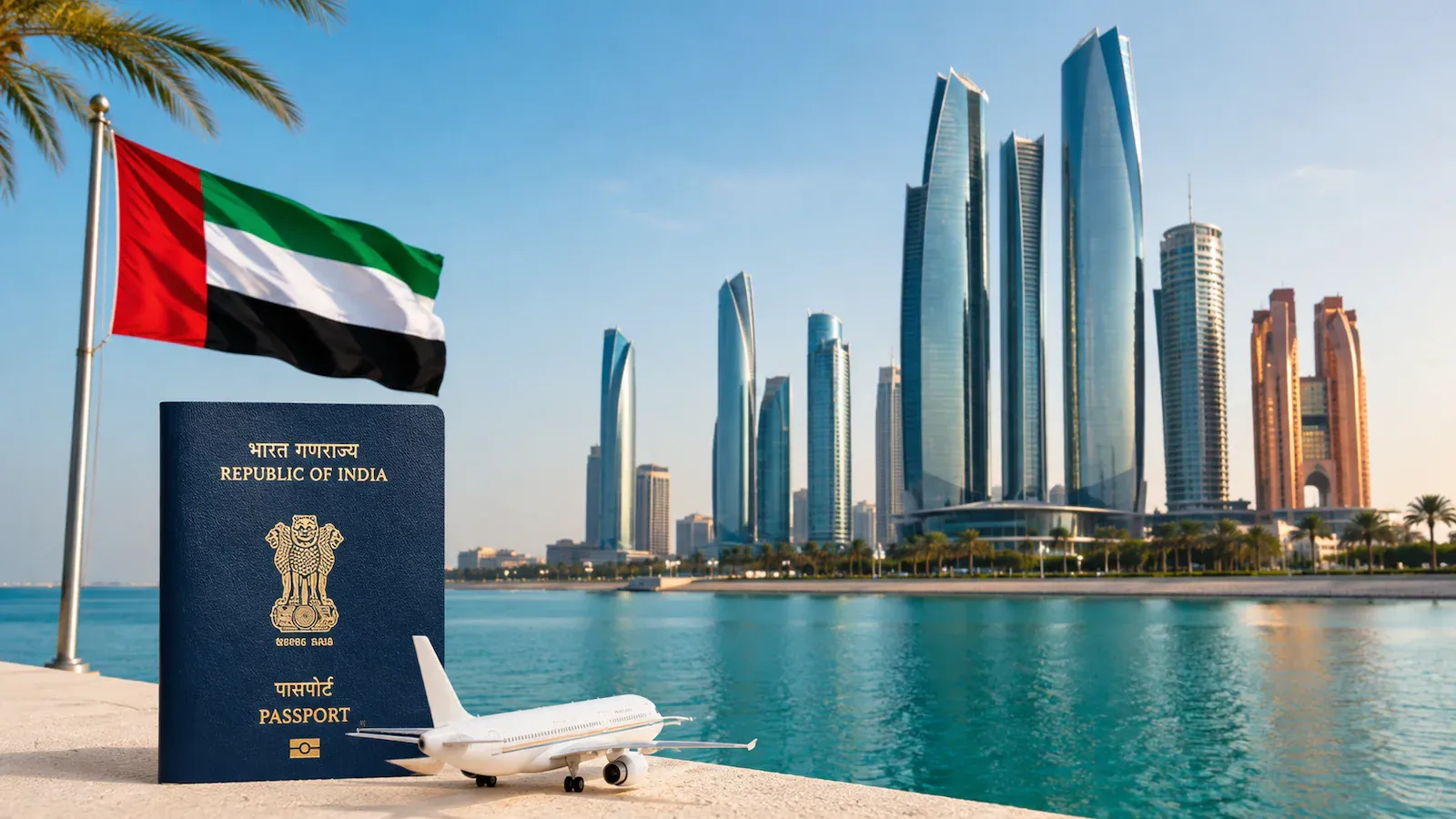
As the initial 20,000-visa allocation runs through the end of October, DCT Abu Dhabi's approach — tying visa cost directly to extended hotel stays booked through vetted travel partners — offers a template that could plausibly be extended or expanded if early uptake among Indian travellers proves strong, further cementing India's position as one of the most strategically important source markets in Abu Dhabi's long-term tourism growth plans.
The initiative also arrives amid a broader recalibration of how Gulf destinations compete for Indian outbound travellers, a market that has grown steadily more sophisticated and price-sensitive even as its overall size continues to expand. Where Gulf tourism boards once competed primarily on flight connectivity and hotel pricing, visa-cost subsidies have emerged as an increasingly common lever precisely because they address a specific, quantifiable friction point in the booking decision — the upfront visa fee — rather than a broader, harder-to-message value proposition such as cultural attractions or culinary offerings. By explicitly tying the subsidy to hotel bookings of three nights or more, DCT Abu Dhabi's structure is also designed to filter for higher-value, longer-stay visitors rather than transit passengers or day-trippers, aligning the cost of the incentive with a commensurate increase in on-the-ground tourism spending.
For India's Gulf-facing outbound travel and hospitality sector, the initiative adds to a broader set of positive signals for Indian tourism to the UAE this year, including continued expansion of direct flight capacity between Indian metros and both Abu Dhabi and Dubai, and steady growth in Indian visitor numbers to the emirate's expanding cultural and entertainment infrastructure. Abu Dhabi's positioning has increasingly diverged from Dubai's over the past several years, with the capital investing heavily in cultural tourism — anchored by institutions on Saadiyat Island — alongside family-oriented entertainment developments on Yas Island, giving Indian travel agents and tour operators a distinct set of attractions to market to Indian families and multi-generational travel groups specifically, as opposed to Dubai's more retail- and nightlife-oriented positioning.
For the roughly 800,000 Indian residents of Abu Dhabi and the wider 3.5-million-strong Indian community across the UAE, the visa initiative carries an additional, more personal dimension: it lowers the cost for extended family members back in India to visit, at a time when many Indian expatriate households in the UAE maintain close, frequent contact with relatives who have not themselves relocated. Tourism policy aimed at leisure travellers and policy aimed at strengthening ties with a resident expatriate community are, in this instance, effectively the same initiative — a dual-purpose design that reflects how central the Indian community has become to Abu Dhabi's broader economic and social fabric, well beyond its role as a source of skilled and unskilled labour.