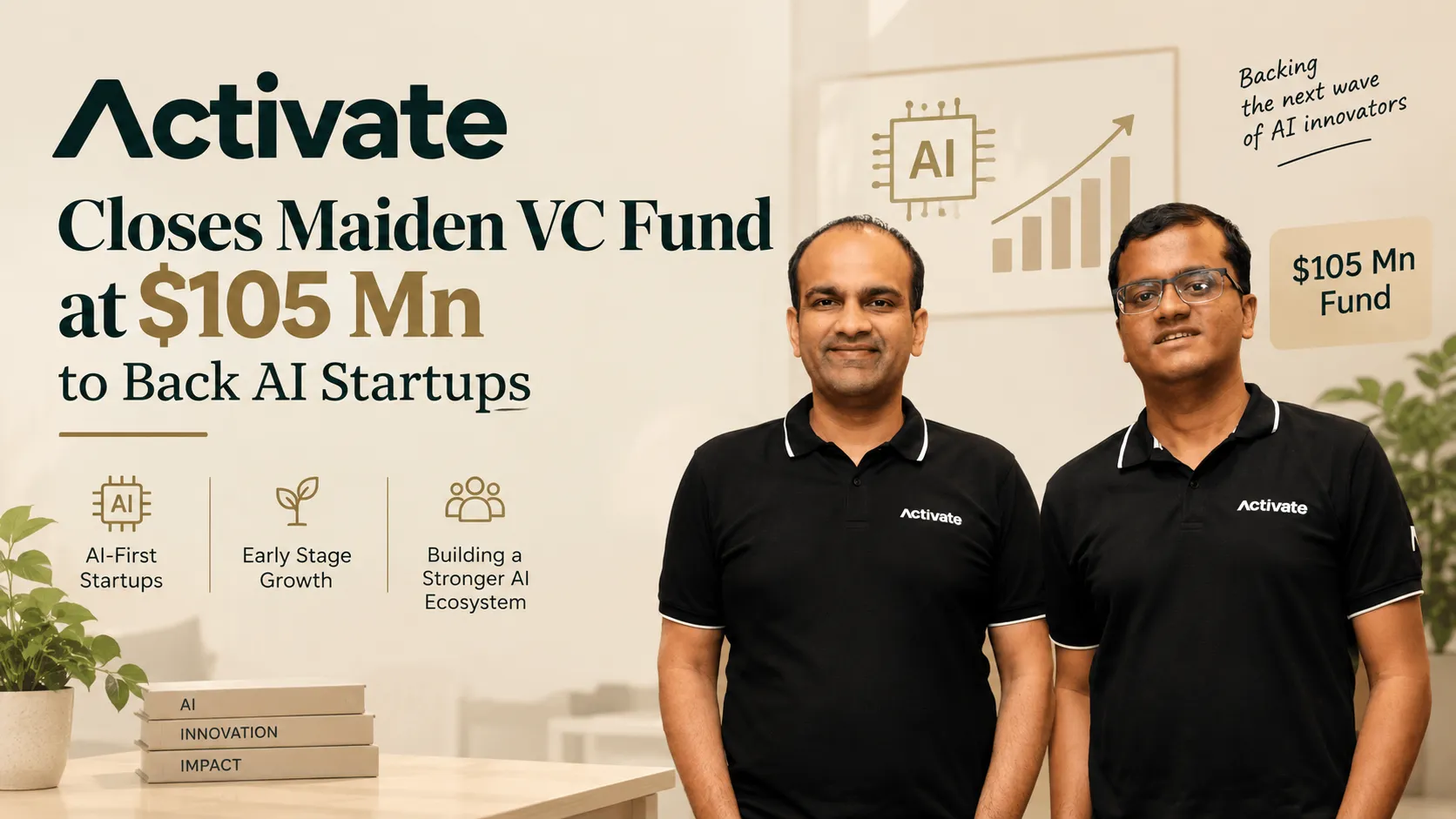
Activate, the venture capital firm led by Aakrit Vaish, has closed its maiden fund at $105 million, the firm confirmed on September 16, 2026, positioning it as one of the more meaningfully capitalised new entrants dedicated specifically to backing AI startups in India. The fund's close arrives amid a broader wave of specialist AI-focused venture vehicles being raised across the Indian market in 2026, as investors increasingly conclude that the AI opportunity is large and differentiated enough to justify dedicated funds rather than treating AI simply as a theme layered across generalist early-stage portfolios.
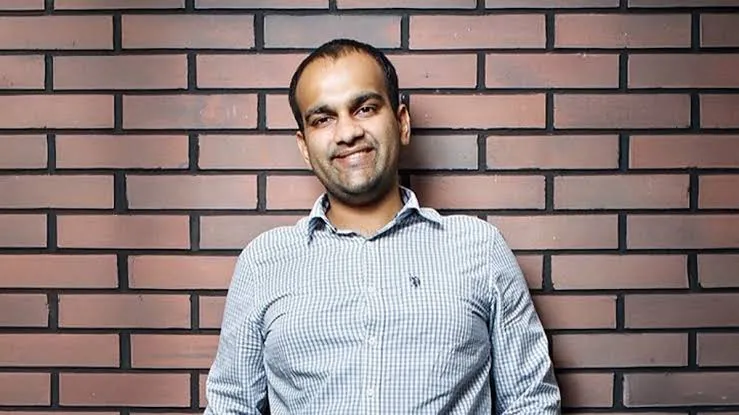
Vaish brings a founder's perspective to Activate's investment approach, having previously built and scaled Haptik, a conversational AI company he co-founded that was later acquired by Reliance Jio, giving him direct operating experience navigating the AI product and go-to-market challenges that many of Activate's future portfolio companies are likely to face. That founder-to-investor trajectory has become increasingly common among India's newer generation of venture capital firms, with several successful technology founders choosing to recycle both capital and hard-won operating lessons into dedicated funds rather than joining established, generalist venture platforms.
The $105 million fund size places Activate among the larger dedicated AI-focused vehicles to close in India this year, at a moment when the broader Indian venture capital market has bifurcated sharply by stage and sector. While overall deal volume across Indian startups has declined in 2026 as growth-stage investors have become more selective, capital continues to flow toward AI-focused funds and startups at a pace that stands in contrast to the broader slowdown, reflecting investor conviction that AI represents a genuinely transformative, rather than cyclical, investment theme. Activate's positioning as a dedicated early-stage AI fund allows it to write cheques into founders building AI-native products from inception, rather than competing for allocation in later, more crowded growth-stage AI rounds where valuations have climbed considerably over the past two years.
India's AI startup ecosystem has matured rapidly through 2026, moving beyond an initial wave of companies applying large language models to existing enterprise workflows toward a more differentiated set of startups building AI-native products across sectors including healthcare, financial services, legal technology, semiconductor design and industrial automation. That diversification has created a broader opportunity set for AI-focused investors like Activate, who are no longer confined to backing a narrow set of horizontal AI-tooling companies but can instead deploy capital across a wide range of vertical AI applications where Indian founders have begun building genuinely differentiated products rather than simply localising technology developed elsewhere.
The fund's close also reflects growing confidence among India's limited-partner community — the institutional and family-office investors who commit capital to venture funds — in dedicated, thesis-driven vehicles led by operators with direct domain expertise, rather than generalist funds spreading capital thinly across unrelated sectors. That shift in limited-partner preference has been a notable feature of India's venture capital landscape in 2026, as several newer funds led by former founders and operators have successfully closed meaningful first-time vehicles despite a broader environment in which fundraising for new venture managers has become considerably more difficult than it was during the venture capital boom of the earlier part of the decade.