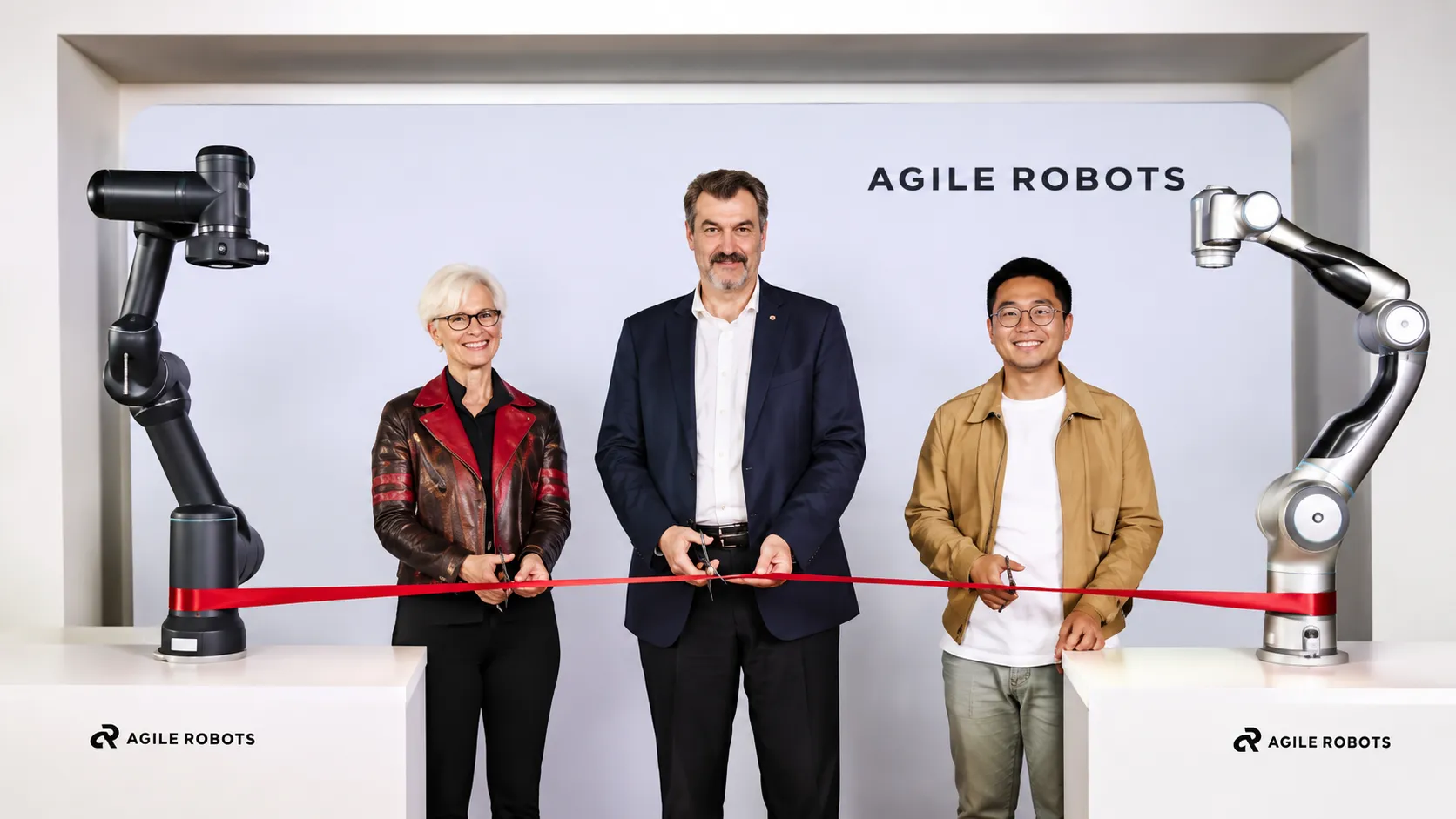
Europe's most valuable robotics startup has secured fresh backing from some of the biggest names in technology as the race to put artificial intelligence into physical machines intensifies.
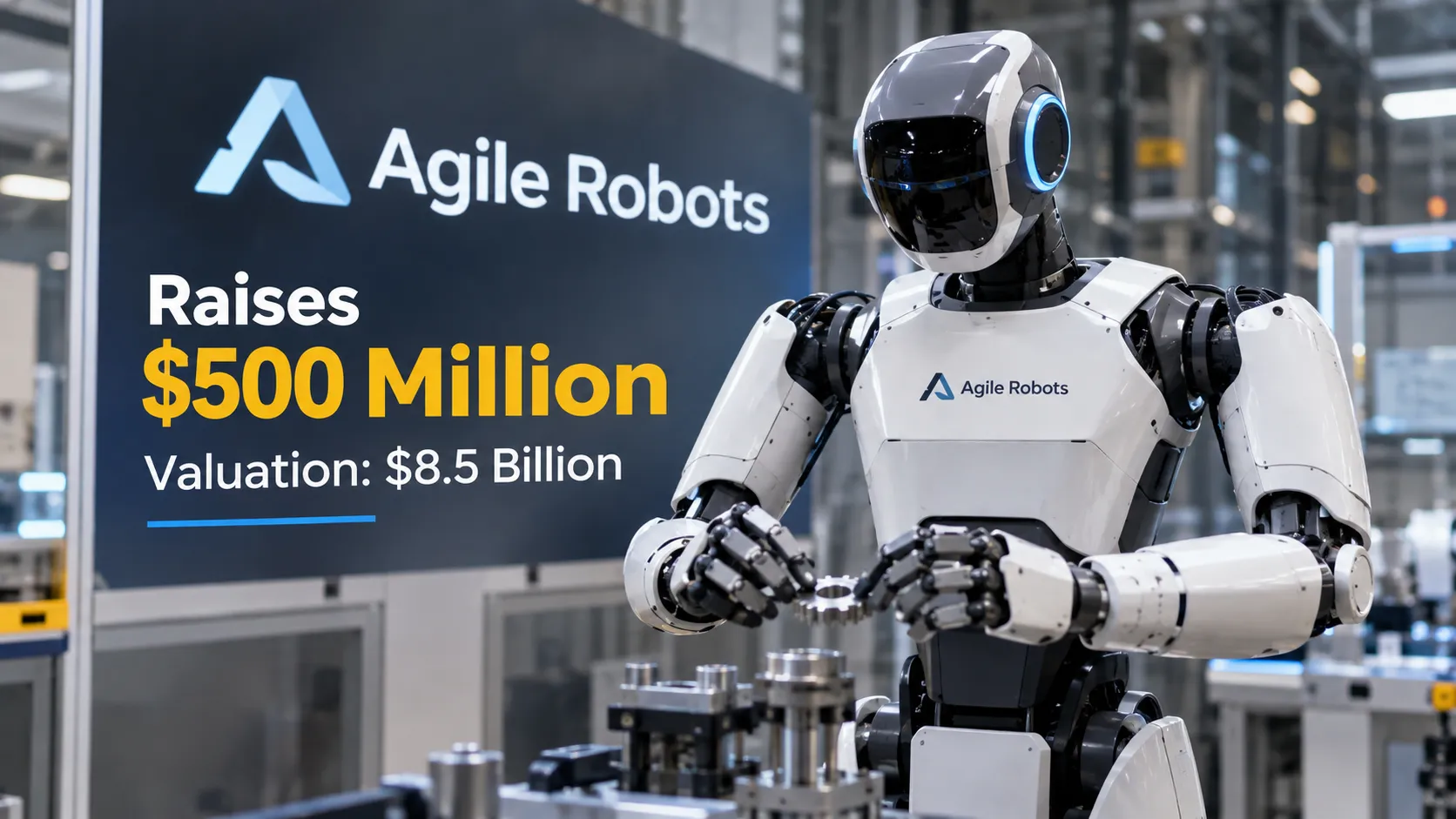
Agile Robots, based near Munich, announced on Thursday, November 12, that it had raised $500 million in a Series F round led by SoftBank Group, with participation from Nvidia, Hitachi and T Capital, at a valuation of $8.5 billion, according to SiliconANGLE. The company has now raised a total of $2 billion.
Tech Funding News described Agile Robots as Europe's most valuable robotics startup. SoftBank had been reported by Bloomberg earlier this year to be in early talks to back a round of up to $800 million.
"Physical AI will fundamentally change how the world builds, moves and makes things," said founder and chief executive Zhaopeng Chen. "We bring Physical AI out of the lab and into industrial production."
From research lab to factory floor
Agile Robots was founded in 2018 as a spin-off from the German Aerospace Center (DLR), one of Europe's leading research institutions in robotics. Its core technology is force-sensitive manipulation, which allows robots to control precisely how much force they apply, making them suitable for delicate tasks such as assembling electronics or handling fragile parts.
The company has deployed about 20,000 industrial robotic systems for customers in automotive, consumer electronics, logistics and other sectors, according to SiliconANGLE. Its flagship Diana 7 robotic arm has torque sensors in all seven of its joints.
Building a robotics group
Agile Robots has grown partly through acquisitions. Its subsidiaries include Franka Robotics, which supplies manipulation technology widely used in research, Idealworks, a maker of mobile robots and coordination software, and BÄR Automation and Krause Automation, which build and integrate automation systems.
This combination gives the company capabilities across hardware, software and system integration, allowing it to offer complete automation solutions rather than individual robots.
The humanoid bet
Like many robotics companies, Agile Robots is betting on humanoid robots, machines with human-like bodies designed to work in environments built for people. It publicly unveiled its Agile One humanoid in November 2025, featuring dexterous hands, advanced perception and the ability to work alongside humans.
The company has since introduced the Agile One S, a compact humanoid platform for research labs, universities and developers, and the Agile One SN, equipped with five-fingered hands and preconfigured for Nvidia's Isaac GR00T AI models for robots.
Agile Robots opened a production facility in Fürstenfeldbruck, near Munich, in early 2026, capable of producing up to 10,000 legged and wheeled humanoid robots a year, according to SiliconANGLE.
Why SoftBank and Nvidia are investing
SoftBank's founder Masayoshi Son has long championed robotics and has made physical AI, the application of AI to machines that interact with the physical world, a central theme of his investment strategy. Nvidia has invested in numerous robotics companies and is developing platforms such as Isaac and GR00T to become the computing foundation for robots, as it is for AI data centres.
Hitachi, a Japanese industrial conglomerate, brings expertise in manufacturing and industrial systems, and could be a partner in deploying Agile Robots' technology.
Competition
Agile Robots competes with established industrial robot makers such as Universal Robots, ABB, FANUC and Yaskawa, as well as humanoid developers such as Figure AI, Apptronik and Agility Robotics, according to SiliconANGLE. Chinese companies, backed by government support and a large domestic market, are also moving rapidly in humanoid robots, and China's humanoid robot industry has attracted billions of dollars in investment this year.
Europe has been seen as lagging in AI, making Agile Robots' success notable as an example of a European company competing at the frontier of physical AI.
Plans for the funding
Agile Robots will use the funding to expand into the United States, hire more engineers and accelerate the development of intelligent robotics applications, according to SiliconANGLE. The US is the world's largest market for many types of automation, and expanding there could bring Agile Robots closer to major manufacturers and logistics companies.
"Our vision is intelligent robots working alongside people in factories and warehouses everywhere," Chen said.
Labour and productivity
The push for robots is driven partly by labour shortages in ageing societies such as Germany, Japan and South Korea, and by companies' desire to increase productivity and bring manufacturing closer to customers. Robots that can work safely alongside humans and adapt to different tasks could help manufacturers automate processes that were previously too complex or variable for traditional industrial robots.
However, the deployment of humanoid robots at scale remains in its early stages, and questions remain about their cost, reliability and the tasks they can perform better than specialised machines.
What it means for India
India is seeking to expand its manufacturing sector through the Make in India and production-linked incentive schemes, and automation will play a growing role. Indian factories in automotive and electronics already use industrial robots, and adoption is likely to increase as labour costs rise and quality requirements become more demanding. Indian robotics startups such as Addverb, backed by Reliance, are developing industrial and humanoid robots, and the global investment boom in physical AI could encourage more funding for the sector in India.
Europe's robotics champion
Germany has long been a leader in industrial automation, home to some of the world's most advanced manufacturing companies and a strong base of robotics research. Agile Robots' emergence from the German Aerospace Center reflects the depth of that research ecosystem, and its success in raising capital from Asian and American investors shows growing international confidence in European physical AI.
The company's founder, Zhaopeng Chen, built the business by combining academic research with a focus on industrial applications, an approach that has helped Agile Robots win customers in demanding sectors such as automotive and electronics manufacturing.
The capital race in robotics
Investment in robotics startups has surged as investors look for the next frontier of AI after large language models. Humanoid robot developers in the United States and China have raised billions of dollars, and valuations have risen rapidly, even though commercial deployments remain limited.
What comes next
Agile Robots will focus on scaling production of its humanoid robots, expanding in the United States and winning large industrial customers. Investors will watch whether humanoid robots can move from demonstrations to widespread commercial deployment, and whether Agile Robots can justify its valuation in a fiercely competitive global market.