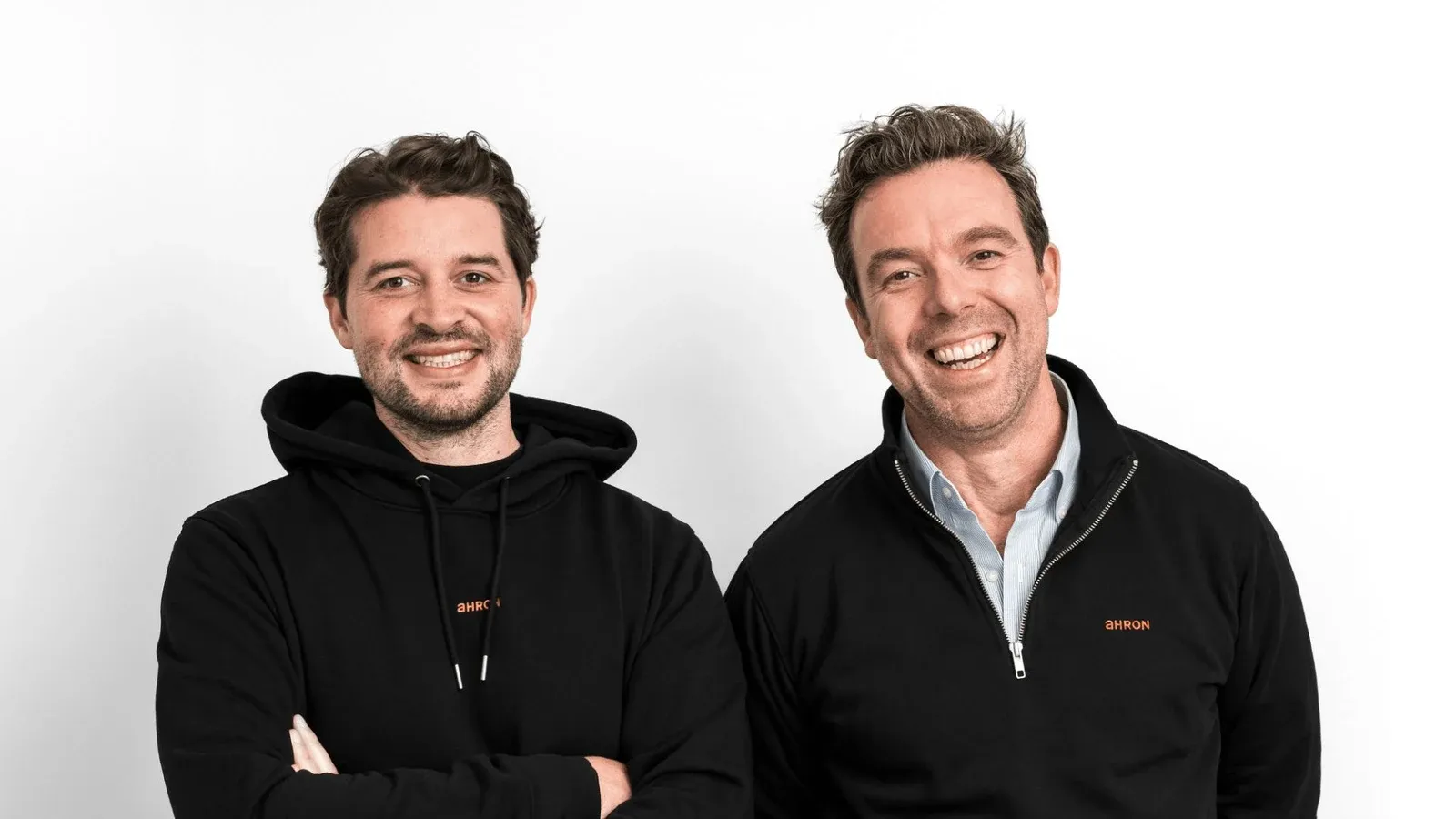
Ahron, a Munich-based HR technology startup, has raised €2.2 million to build artificial intelligence agents that automate human resources processes across the many software systems companies already use. The round, announced on 30 September 2026, was led by Cusp Capital, with participation from HR-focused angel investors including Sabine Kohleisen, a former member of the board responsible for human resources at Mercedes-Benz.
The company was founded in late 2025 and says it has already generated more than €1 million in annual recurring revenue since the start of the year, with signed customers in both the United States and Europe. That is an unusually fast start for a company less than a year old, although the figure is self-reported.
A layer on top, not a replacement
Most large and mid-sized companies run their HR operations on a patchwork of software: one system for recruiting, another for core employee records, a third for payroll, others for learning, performance management and benefits. These systems often do not communicate well, forcing HR teams to transfer data manually and coordinate processes by email and spreadsheets.
Many HR software vendors have tried to solve that problem by offering all-in-one suites that replace existing tools. Ahron takes the opposite approach. It acts as an agent-based automation layer that connects to a company's existing HR systems rather than replacing them.
The company uses Celonis Process Intelligence to create a digital representation of how a company's HR processes actually work. That map gives Ahron's AI agents the context they need to carry out tasks across recruiting, onboarding, payroll and other workflows, with policy-based controls to ensure they act within defined rules.
Celonis, also based in Munich, is one of Europe's most valuable software companies and a leader in process mining, a technique that analyses data from business systems to reveal how processes run in practice. Building on Celonis gives Ahron a ready-made way to understand complex organisations, which is often the hardest part of automating enterprise workflows.
Why HR is a target for AI agents
HR departments handle large volumes of repetitive, rules-based work: scheduling interviews, collecting documents from new hires, setting up accounts, updating records, answering employee questions about policies and processing changes to pay or benefits. Much of that work is time-consuming but follows clear procedures, making it well suited to automation.
Earlier generations of automation, such as robotic process automation, could handle simple, repetitive tasks but struggled with exceptions and changes in systems. AI agents, powered by large language models, can interpret instructions, handle more variation and work across different applications, which has renewed interest in automating back-office work.
Ahron is one of several startups pursuing this opportunity. On the same day, recruiting platform Metaview raised $60 million to expand its own agentic recruiting products, while 50skills raised $6 million earlier in September for AI agents that run HR processes. Investors see HR as one of the first enterprise functions where AI agents can show clear returns.
Governance is central
Automation in HR carries particular sensitivities. HR systems contain highly personal data about employees, including salaries, health information and performance records, and decisions about hiring, pay and employment can have serious consequences for individuals.
In Europe, those concerns are reinforced by regulation. The General Data Protection Regulation imposes strict rules on processing personal data, and the EU's AI Act classifies AI systems used for recruitment and employment decisions as high-risk, requiring transparency, human oversight and robust risk management.
Ahron's emphasis on policy-based controls reflects that environment. By defining exactly what agents are allowed to do and keeping humans responsible for key decisions, the company aims to give HR leaders the confidence to automate routine work without losing oversight.
The involvement of Sabine Kohleisen, who has overseen HR at one of Germany's largest industrial companies, brings credibility with large corporate customers and an understanding of how HR operates at scale, including the role of works councils in German companies.
Where the money will go
Ahron plans to use the funding for product development and international expansion. Having already signed customers in the United States, it can pursue growth in the world's largest enterprise software market while building on its European base.
Cusp Capital, the round's lead investor, focuses on European technology companies, and its backing provides both capital and support for scaling a business across markets.
Europe's enterprise AI ambitions
Ahron's round is also part of a wider effort by European startups to build competitive positions in enterprise AI. While the largest AI models are developed mainly in the United States, European companies are seeking to win in applications, particularly in areas such as compliance, process automation and regulated industries, where European expertise and regulation can be an advantage.
Munich, home to Celonis, Personio and a dense cluster of industrial companies, has become one of the continent's most important centres for enterprise software. Ahron fits into that ecosystem by building on one local champion's technology to sell into the HR departments of large organisations.
The economics for customers
For employers, the case for HR automation is largely about capacity. HR teams in many organisations have been asked to support growing workforces, more complex regulation and higher employee expectations without proportional increases in headcount. Automating the administrative layer can free HR professionals to spend more time on work that requires judgement and human contact, such as employee relations, leadership development and workforce planning. For multinational companies operating across several countries, each with its own employment rules and payroll systems, the potential savings from coordinating processes automatically are even larger.
What comes next
The key test for Ahron will be whether its early revenue can be sustained and expanded as it moves from early adopters to a broader base of customers. Enterprise sales cycles can be long, and integrating with many different HR systems is technically demanding.
But its strategy of working with, rather than replacing, existing systems addresses one of the biggest barriers to adoption: companies' reluctance to rip out software they have spent years implementing. If AI agents can deliver real productivity gains on top of existing infrastructure, the potential market is very large, and Ahron's fast start suggests demand is already there.