AIDIN Robotics, a South Korean robotics-sensing company based in Anyang, Gyeonggi-do, has closed a KRW16 billion strategic financing round with participation from HD Hyundai Robotics and Samsung Venture Investment, according to funding disclosures confirmed on September 11. The deal deepens the young company's ties to two of the industrial conglomerates most heavily invested in South Korea's push to become a global robotics manufacturing power.
HD Hyundai separately confirmed that it invested KRW13 billion of the total round for an equity stake in AIDIN Robotics, making it the anchor investor in the transaction. The formal round label has not been disclosed, with the company and its backers characterising the raise as a strategic financing rather than assigning it a traditional venture funding series designation — a structure not uncommon when large industrial players take meaningful stakes in specialist component suppliers they intend to integrate into their own product lines.
AIDIN develops force-torque and tactile sensors that allow robots to detect precisely how much pressure they are applying when they make contact with an object — a capability that is foundational to any robot expected to handle delicate materials, perform assembly tasks, or operate safely alongside humans. Beyond the sensors themselves, the company also builds associated robot-control software and surface-processing systems that translate raw sensor data into usable feedback for a robot's control loop.
The technology sits at what many robotics engineers consider one of the hardest unsolved problems in the field: giving machines a functional sense of touch. While computer vision and navigation have advanced rapidly over the past decade, tactile sensing has lagged, in part because the engineering challenge involves not just hardware miniaturisation but also the software required to interpret noisy, high-frequency force data in real time. Companies that can solve this reliably and at scale are increasingly viewed as holding a defensible position within the broader robotics supply chain, regardless of which humanoid or industrial robot manufacturers ultimately win the platform race.
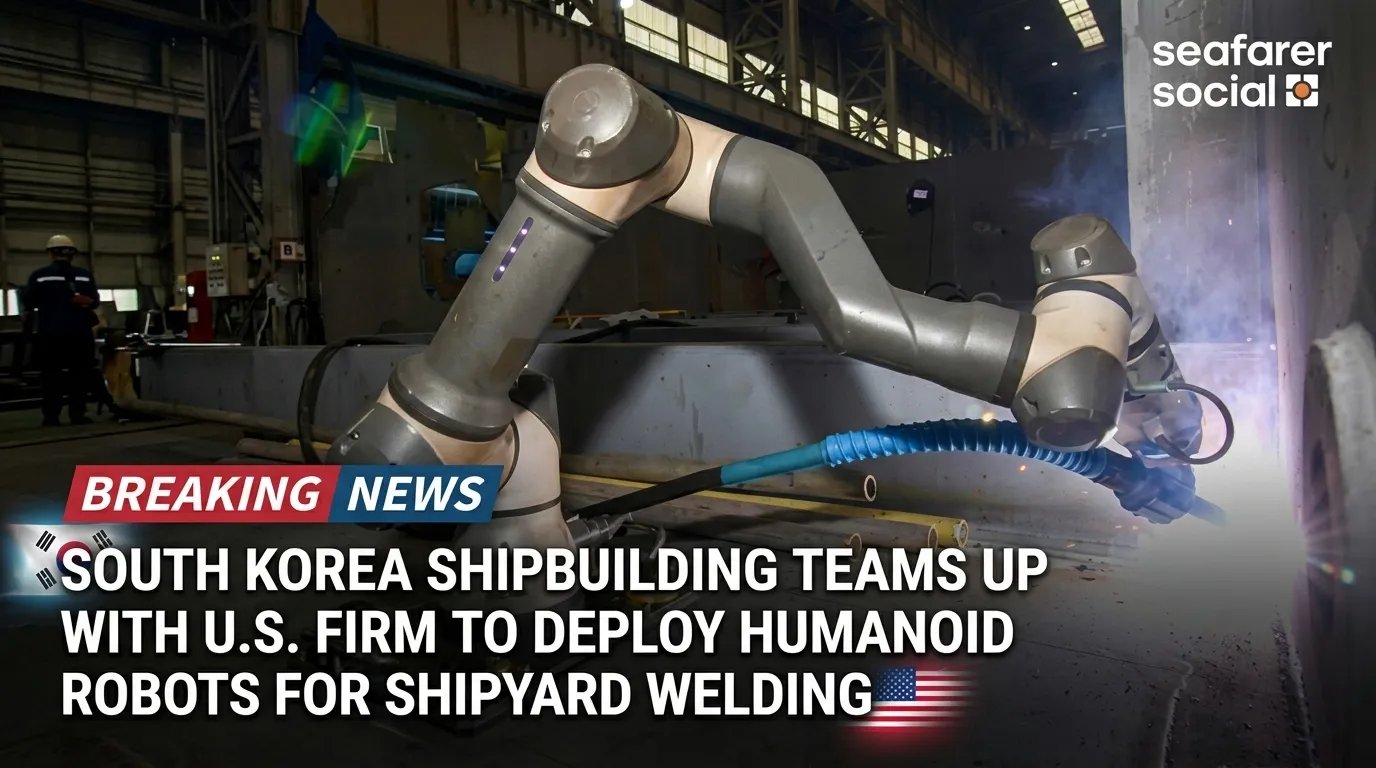
For HD Hyundai, the investment fits a clear strategic logic. The conglomerate's robotics division has been expanding aggressively as South Korea's shipbuilding, construction and manufacturing sectors face mounting labour shortages, and reliable tactile feedback is considered essential for any industrial robot expected to perform tasks currently done by skilled human workers — welding, precision assembly, or handling irregularly shaped components on a production line. A direct equity stake in a specialist sensor maker offers HD Hyundai a faster path to proprietary tactile capability than developing the technology internally from scratch.
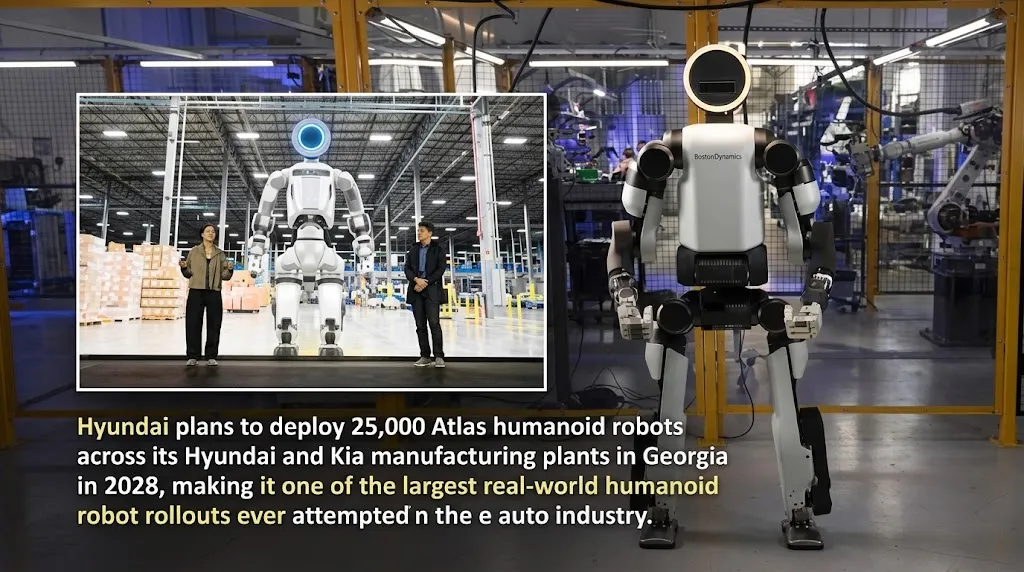
Samsung Venture Investment's participation reflects a parallel but distinct interest. Samsung's venture arm has been building a broad portfolio across robotics, semiconductors and industrial automation, areas that intersect with the conglomerate's core electronics manufacturing operations, where component-level automation and quality control depend heavily on precise force sensing during assembly.
The AIDIN Robotics round adds to a broader pattern of South Korean conglomerates taking direct strategic stakes in specialist robotics suppliers rather than relying purely on internal research and development or acquisition once technologies mature. That approach allows companies like HD Hyundai and Samsung to secure early access and some influence over product roadmaps while sharing development risk with venture-style investors, at a moment when global competition for robotics component suppliers — many of them still early-stage and undercapitalised relative to the capital needs of hardware development — has intensified sharply.
AIDIN Robotics has not disclosed a company valuation associated with the round, nor commented publicly on how the new capital will be allocated across sensor development, manufacturing scale-up or software engineering. The scale of the investment relative to the company's stage, however, positions it among the better-funded specialist robotics-sensing companies in South Korea, at a time when the broader Asian robotics investment landscape is seeing similarly large strategic rounds flow into hardware-focused startups from Shenzhen to Seoul.