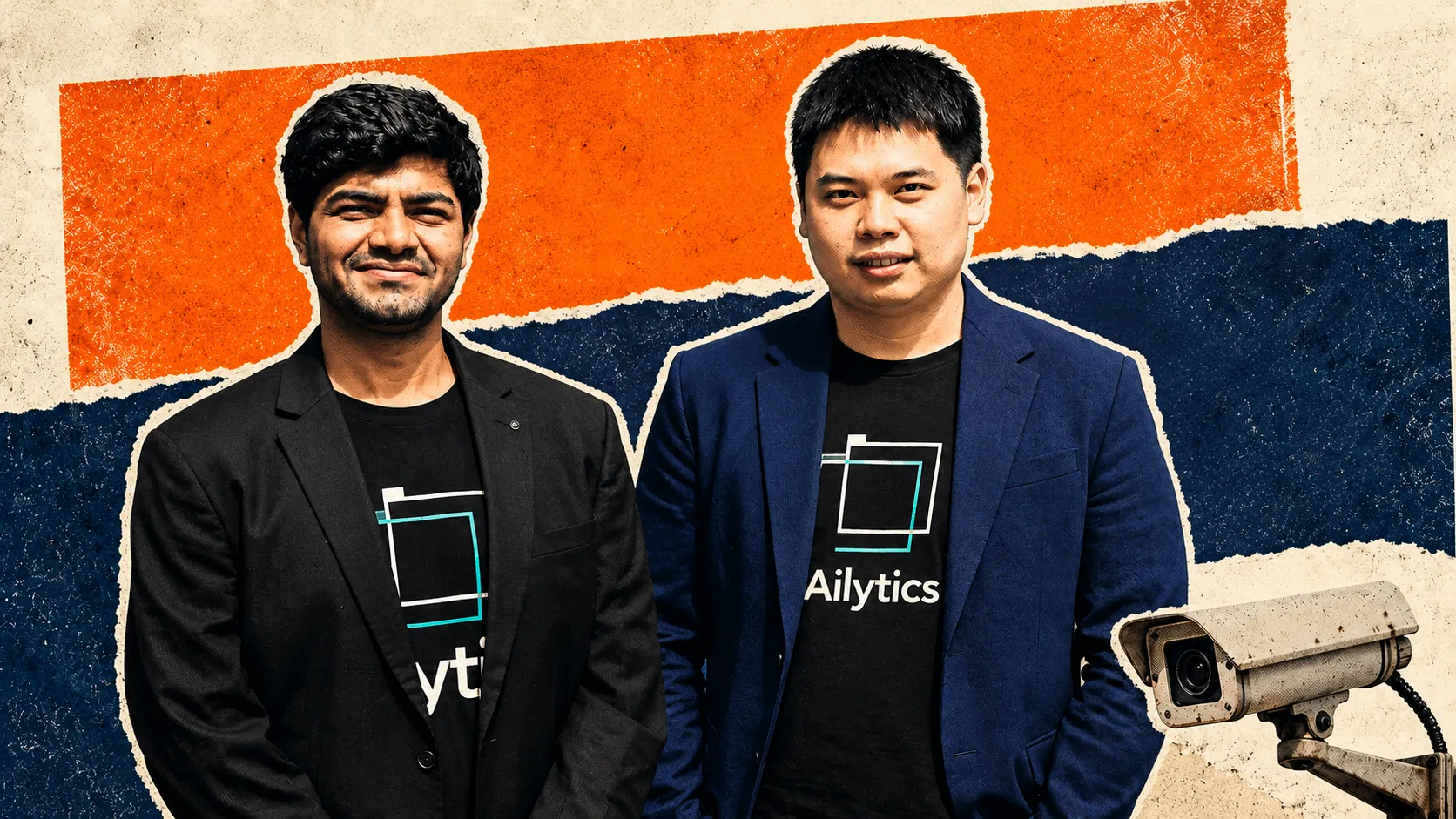
Ailytics, a Singapore-based startup that uses artificial intelligence to turn ordinary security cameras into workplace safety systems, has raised $7.4 million in an oversubscribed Series A round to expand across the Asia-Pacific region, the United States and the Gulf.
The round, announced on 26 October, was led by Tin Men Capital, with participation from SG Growth Capital, Japanese cloud camera company Safie, an unnamed large Japanese construction company, family offices and returning investors. Tin Men also led the company's $2.7 million pre-Series A round in April 2024.
Software, Not Hardware
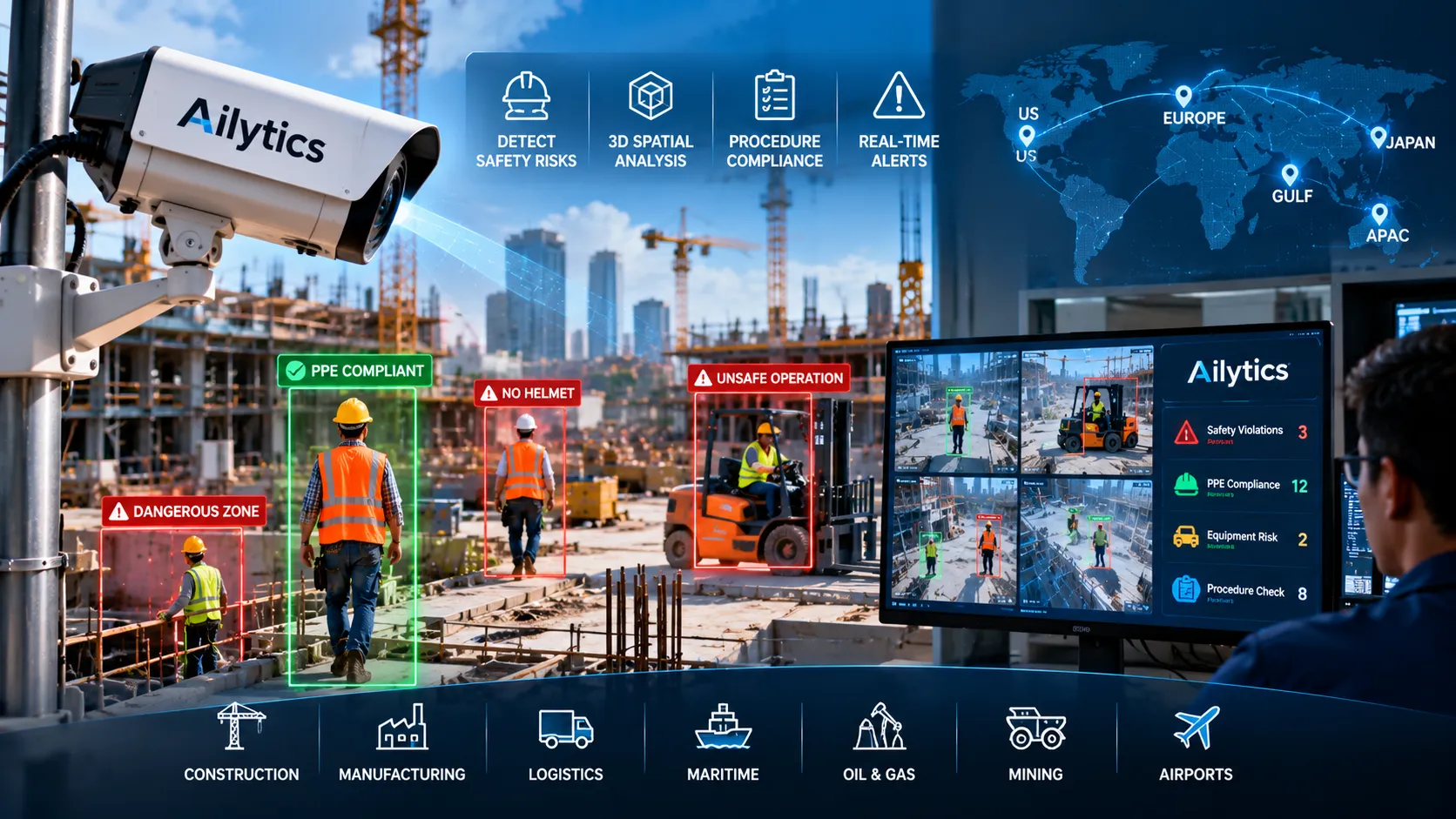
Ailytics does not sell cameras. Instead, its software runs on the closed-circuit television cameras that industrial sites already have, analysing video feeds to detect safety risks such as workers without protective equipment, people entering dangerous zones or unsafe operations of machinery.
Its Ailyssa platform infers three-dimensional spatial relationships from a single video feed, determining, for example, whether a worker is genuinely close to an unguarded edge rather than simply appearing near it in a two-dimensional image. AilyssaX, launched in June, is a reasoning engine that checks whether multi-step procedures are performed in the correct order.
By using existing infrastructure, the company aims to lower the cost and complexity of deploying AI safety monitoring, making it accessible to companies that might not invest in specialised hardware.
From Research Project to Global Deployments
Ailytics began in 2019 as a research project involving the National University of Singapore and the Housing and Development Board, Singapore's public housing authority, before being formally founded in 2021. It is led by chief executive Lenard Tan and chief technology officer Prateek Manocha.
The company has grown from 70 projects in four countries to more than 400 deployments in 15 countries, including the US, Australia, the Netherlands, Hong Kong, Japan, the United Arab Emirates and Saudi Arabia.
Its customers include steelmaker NatSteel, Indonesian shipyard PaxOcean, logistics company DHL and Rome's Leonardo da Vinci airport, and it monitors more than 1,000 cameras at Singapore's Changi Airport Terminal 5 project. Customers report a 73 per cent reduction in total recordable incident rates and 84 per cent fewer safety non-compliances, though these figures are customer-reported and unaudited.
The Japan Connection
The participation of Safie, which supplies cloud camera systems to 29 of Japan's 30 largest construction companies, gives Ailytics a significant channel into the Japanese market. The two companies signed a memorandum of understanding in April 2026, witnessed by Enterprise Singapore and the Tokyo Metropolitan Government.
Japan's construction industry faces severe labour shortages as its workforce ages, making technologies that improve safety and productivity particularly valuable.
Expansion Plans
Ailytics plans to use the funding to develop domain-specific AI models, keep the cost of running AI low as demand grows, and build local teams in the US, Japan, Australia and the Gulf. It is also expanding into manufacturing, logistics, oil and gas, maritime and mining.
"In the US we intend to win the mid-sized industrial companies that incumbents have priced out," Tan said.
The company competes with other vision AI safety providers, including viAct, Lytehouse, Voxel, Intenseye and Protex AI.
Why Workplace Safety Matters
Construction and heavy industry remain among the most dangerous sectors to work in. Falls from height, being struck by vehicles or objects, and accidents involving machinery cause many deaths and serious injuries each year. Beyond the human cost, accidents bring project delays, legal liabilities, insurance costs and reputational damage.
AI-powered monitoring offers the potential to identify hazards in real time and alert supervisors before accidents occur, while providing data to improve safety practices over time.
Questions of Privacy
The use of AI to monitor workers also raises concerns about privacy and surveillance. Critics worry that such systems could be used to monitor productivity or discipline workers rather than solely to improve safety. How worker data is collected, stored and used, particularly in regions with weaker labour protections, is an important question for companies deploying such technologies.
Relevance for India
India's construction sector, one of the largest employers in the country, has a poor safety record, with frequent accidents on building sites, infrastructure projects and in factories. As India undertakes massive infrastructure development, including highways, metros, airports and industrial corridors, the need for better safety practices is pressing.
AI-based safety monitoring using existing cameras could offer a cost-effective approach for Indian contractors, and Indian startups are also developing computer vision solutions for industrial safety.
The Economics of Vision AI
Running AI models on large numbers of video feeds can be expensive, requiring significant computing power either on site or in the cloud. Keeping these costs low is essential for companies like Ailytics, which must price their services at levels industrial customers are willing to pay. The company's emphasis on domain-specific models and controlling AI running costs reflects this challenge.
Advances in efficient AI models and edge computing hardware have made it more feasible to analyse video in real time at lower cost. Specialised models trained for specific tasks, such as detecting safety equipment or identifying hazardous zones, can be smaller and faster than general-purpose vision models. As these costs fall, AI safety monitoring could become accessible to mid-sized companies and smaller sites that previously could not justify the investment, the segment Ailytics has said it intends to target in the United States.
The oversubscribed nature of the round, with participation from a strategic partner in Safie and a major Japanese construction company, suggests that industry players see practical value in the technology rather than viewing it purely as a speculative bet. Strategic investors often bring distribution, customer introductions and industry knowledge that can be as valuable as capital, particularly for a company seeking to expand across multiple countries and sectors with different safety regulations, working practices and customer expectations.
What Comes Next
Ailytics will now work to scale across multiple continents and industries, an ambitious agenda for a company with $7.4 million in fresh capital. Its partnership with Safie and its record of deployments provide a foundation, but competition is intensifying as vision AI becomes more capable and affordable.
For the industrial AI sector, Ailytics' approach of extracting more value from existing cameras reflects a practical path to adoption, one that could help make workplaces safer without requiring large new investments in hardware.