FundingAnalysis5 MIN READ

Air India Express Names CFO Deepak Rajawat as CEO, Tasking the Vistara Veteran With Turning a 108-Plane Network Into Steady Profits

Air India Express has appointed its chief financial officer, Deepak Rajawat, as chief executive officer with effect from December 1, 2026, The Week reported on November 18. A Vistara veteran who served as its chief commercial officer, Rajawat takes over an airline operating about 585 daily flights to 65 destinations with 108 aircraft, part of the Tata Group's Air India.

By Shaym Kumar · Author19 November 2026New
Air India Express Names CFO Deepak Rajawat as CEO, Tasking the Vistara Veteran With Turning a 108-Plane Network Into Steady Profits

The Tata Group's low-cost airline has turned to its finance chief to lead its next phase of growth.

Air India Express has appointed Deepak Rajawat, its chief financial officer, as chief executive officer with effect from December 1, 2026, The Week reported on Wednesday, November 18.

Rajawat said he aims to build "a guest-centric, technology-driven value carrier" focused on the customer proposition, according to The Week. Nipun Aggarwal, chairman of Air India Express, credited him with "a strong understanding of the group's transformation priorities."

A Vistara veteran

Rajawat has more than two decades of experience in aviation and finance, according to The Week. He worked at Vistara, the full-service airline jointly owned by Tata Sons and Singapore Airlines, from its inception, in corporate planning, aircraft acquisition and finance.

He later served as Vistara's chief commercial officer, overseeing revenue management, network planning, sales and distribution, partnerships, product development, inflight services, marketing, branding and customer experience. Vistara grew into India's second-largest airline by domestic market share before it was merged into Air India in 2024.

Since joining Air India Express as chief financial officer, Rajawat has helped strengthen the airline's financial foundations and supported its expansion and integration into the Air India group, according to The Week.

The airline he inherits

Air India Express operates about 585 daily flights to 65 destinations, 48 domestic and 17 international, according to The Week. Its international routes span South, Southeast and West Asia, including the Gulf, where it serves large Indian diaspora communities. Its fleet comprises 108 aircraft from the Boeing 737 and Airbus A320 families.

The airline was formed through the merger of Air India Express and AirAsia India, which was renamed AIX Connect, after the Tata Group acquired Air India from the government in 2022. The integration created the Tata Group's low-cost arm, alongside full-service Air India.

Leadership transition

The appointment follows changes in the airline's leadership. Aloke Singh, who led Air India Express for about five years and oversaw its integration, stepped down earlier in 2026 and later joined IndiGo, according to Gulf News.

Rajawat's appointment from within suggests continuity in strategy, with a focus on profitability and operational execution after a period of rapid expansion and integration.

The challenge ahead

According to The Week, Rajawat inherits a growing network and the challenge of turning that expansion into consistent profitability.

India's low-cost aviation market is fiercely competitive. IndiGo dominates with well over half of domestic traffic, while Akasa Air has grown quickly. Price competition is intense, and costs, particularly fuel, are high. Aviation turbine fuel prices have risen sharply this year because of conflict in the Middle East, putting pressure on airline margins.

The broader industry backdrop is volatile. On the same day as Rajawat's appointment was reported, SpiceJet's board approved a fundraise of up to ₹5,500 crore in an attempt to revive an airline whose market share has collapsed to 0.6%.

The Gulf corridor

Air India Express has a strong presence on routes between India and the Gulf, carrying migrant workers, families and business travellers between Indian cities, especially in Kerala and other southern states, and destinations such as Dubai, Abu Dhabi, Sharjah, Muscat and Doha. These routes are important for the Indian diaspora and generate significant traffic.

Conflict and airspace restrictions in the Middle East have disrupted some flights this year, adding to operational challenges.
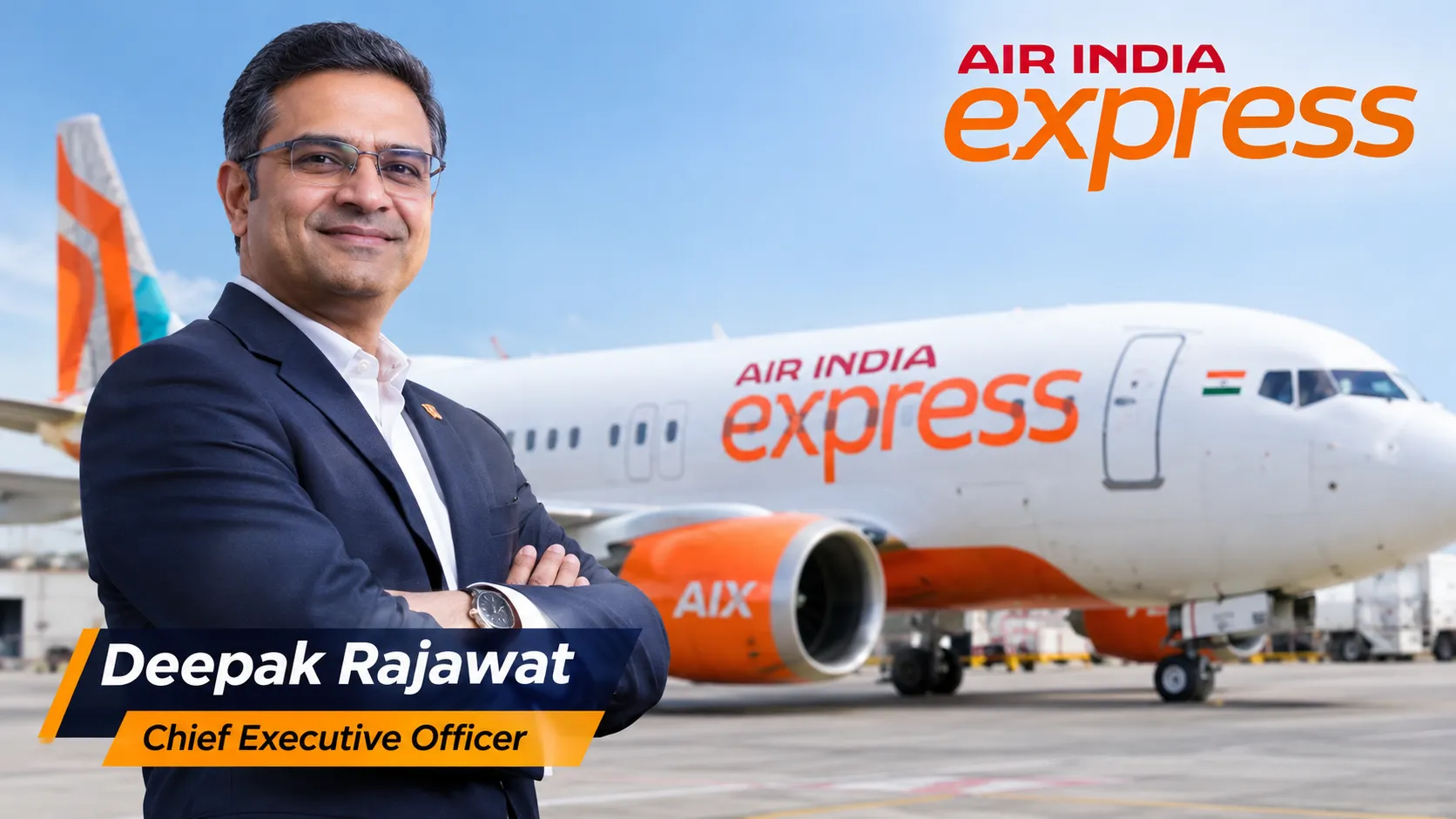

“A guest-centric, technology-driven value carrier.”
— Deepak Rajawat, incoming CEO, Air India Express

The Tata transformation

The Tata Group has been undertaking one of the largest airline transformations in the world since acquiring Air India. It has placed orders for hundreds of new Boeing and Airbus aircraft, merged Vistara into Air India and combined its low-cost operations under Air India Express. The group aims to build a world-class airline group capable of competing with global carriers.

The transformation has faced setbacks, including operational issues and scrutiny after the Air India crash in Ahmedabad in June 2025. Leadership changes across the group have also drawn attention.

A finance-led appointment

Appointing a chief financial officer as chief executive signals the importance of financial discipline. Airlines operate on thin margins, and managing costs, fleet financing, fuel and revenue is critical to profitability. Rajawat's background in both finance and commercial roles gives him experience across the main levers of airline economics.

His commercial experience at Vistara, where he oversaw revenue management and network planning, will be relevant as Air India Express seeks to optimise its routes and fares.

d5ae6268-da51-47f1-bc60-6324fc631d50.png

What it means for travellers

For passengers, the airline's stated focus on being guest-centric and technology-driven suggests investment in digital services, punctuality and customer experience. Low-cost carriers compete primarily on price, but reliability and service quality increasingly influence choices.

The economics of low-cost flying

Low-cost carriers keep fares low by operating a single aircraft family, maximising aircraft utilisation, minimising turnaround times and charging separately for extras such as seat selection and checked baggage. Success depends on tight cost control and high load factors. Even small increases in costs, such as fuel or airport charges, can significantly affect profitability.

Air India Express has been standardising its fleet and operations after the integration of AirAsia India, which should help it lower costs over time.

New aircraft and growth

The Air India group's large aircraft orders mean Air India Express is expected to receive new planes in the coming years, enabling network expansion. Managing this growth, including hiring and training pilots and crew, securing airport slots and filling new capacity profitably, will be among Rajawat's main tasks.

Industry analysts say internal promotions can provide stability during periods of transformation, as executives who already understand the organisation's systems, culture and challenges can move quickly. Rajawat's familiarity with both Vistara's full-service model and Air India Express's low-cost operations gives him a broad perspective on the group's strategy.

His finance background may also prove valuable as the airline navigates high fuel costs and currency fluctuations.

Aviation analysts say the next few years will be decisive for the Tata Group's airline ambitions, as new aircraft deliveries accelerate and competition with IndiGo intensifies on both domestic and international routes. Air India Express's performance in the low-cost segment will be an important part of that contest.

What comes next

Rajawat takes charge on December 1. His early priorities are likely to include improving profitability, managing fuel costs, integrating new aircraft into the fleet and strengthening operational reliability. His performance will be closely watched as the Tata Group continues its effort to build a competitive airline group.

TagsAir India ExpressDeepak RajawatAir IndiaTata GroupVistaralow-cost carrierIndian aviationIndiGoAkasa AirSpiceJetairline CEONipun AggarwalBoeing 737Airbus A320aviation turbine fuelairline profitabilityleadershipGulf routesIndian diasporainvestors

Reader reviews

Sign in to rate and review this article.
Loading reviews…

