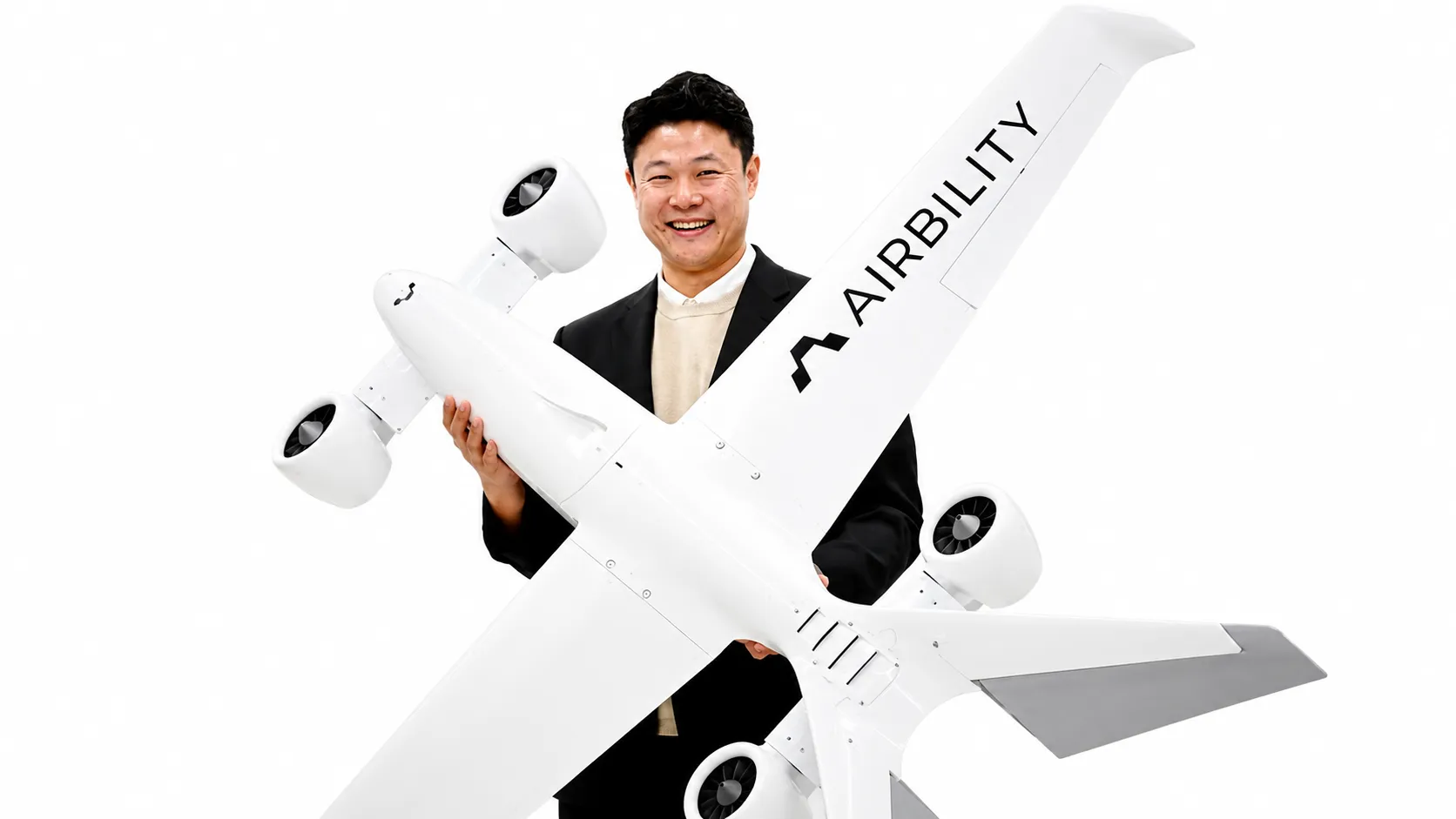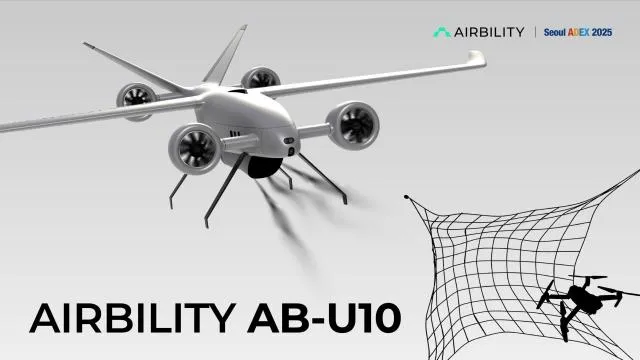
Seoul-based aerospace and defence startup Airbility has raised ₩6.5 billion, approximately $4.7 million, in Series A financing, the company confirmed on September 1, led by Sazze Partners with participation from Stonebridge Ventures and Industrial Bank of Korea. The round brings Airbility's cumulative funding to ₩10.5 billion as the company scales development of interceptor drones designed to physically destroy or capture hostile unmanned aircraft.
Airbility's core value proposition centres on a compelling economic argument that has become increasingly central to modern defence-technology investment theses: militaries have frequently found themselves firing missiles costing millions of dollars to neutralise attack drones that may cost their operators only tens of thousands of dollars to produce and deploy. Airbility contends that its interceptor systems could dramatically reduce this cost asymmetry, offering a far more economically sustainable approach to countering the proliferation of low-cost drone threats.
The company is developing multiple interception approaches, including net-launching systems designed to capture hostile drones intact and direct-impact interceptors engineered for immediate physical neutralisation. This multi-pronged technical approach allows Airbility to address a range of operational scenarios and threat profiles, from situations where intelligence recovery from a captured drone is valuable to contexts demanding immediate, decisive threat elimination.
Airbility says it is currently in discussions with prospective customers across more than nine countries spanning the Middle East, Southeast Asia and Latin America — a geographically diverse pipeline that reflects the increasingly global nature of demand for effective, cost-efficient counter-drone defence capabilities. The proliferation of low-cost commercial and military-adapted drones across numerous conflict zones and contested regions worldwide has created urgent demand among militaries and security forces for defensive technologies that can keep pace with this rapidly evolving threat landscape.
Defence-technology venture investment has increasingly gravitated toward exactly this kind of cost-asymmetry thesis: identifying and funding companies developing relatively inexpensive technologies capable of neutralising far more expensive or numerically overwhelming threats, without forcing military customers to exhaust costly conventional weapons systems against what are often mass-produced, low-value adversary assets. This dynamic has reshaped defence-tech investment priorities significantly over the past several years, as observers of modern conflicts have documented the strategic and financial toll of using expensive interceptors against inexpensive drone swarms.
The involvement of Industrial Bank of Korea alongside more traditional venture-capital investors in Airbility's round reflects South Korea's broader pattern of coordinated public and private capital deployment into defence and dual-use technology sectors, an approach that has helped position the country as an increasingly significant player in global defence-technology exports beyond its traditional focus on conventional military hardware.
As Airbility works to convert its expanding international customer discussions into formal contracts, the company's progress will likely serve as an informative test case for how effectively venture-backed defence-technology startups can compete against established defence contractors in delivering cost-efficient, rapidly deployable counter-drone solutions to militaries and security forces navigating an increasingly drone-saturated threat environment.