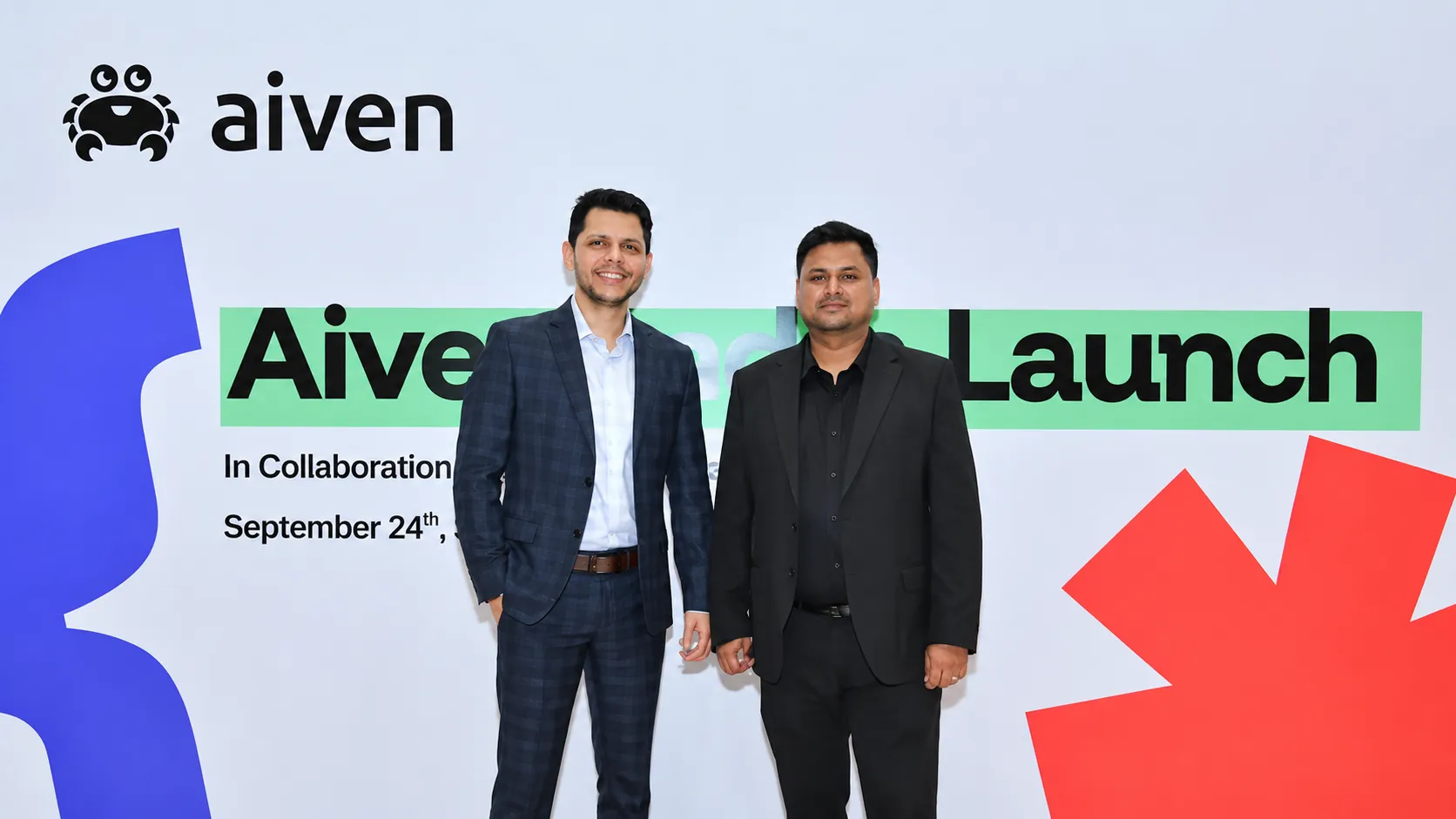
Aiven, the Finnish company that runs managed open-source data services for businesses around the world, has launched operations in India, positioning the country as a strategic growth hub for the wider Asia-Pacific region.
The company has opened its first Indian office in Bengaluru, marking the move with a launch event in New Delhi held with the Embassy of Finland. Aiven currently has around 15 employees in India and plans to expand its local team across sales, partnerships, solutions engineering, customer success and technical support.
The expansion is driven by demand. Aiven said its paying customer base in Asia-Pacific has grown by nearly 90 per cent year on year, as companies across the region accelerate their adoption of cloud computing, artificial intelligence and open-source data infrastructure.
What Aiven does
Aiven describes itself as an open data platform for production AI. In simpler terms, it provides managed versions of widely used open-source data technologies, so that engineering teams can use them without having to install, configure, secure, scale and maintain them themselves.
Its services include Apache Kafka for real-time data streaming, PostgreSQL and MySQL relational databases, ClickHouse for analytics, OpenSearch for search, Valkey for in-memory caching and DataHub for data cataloguing. Customers can run these services on the major public clouds, including Amazon Web Services, Google Cloud and Microsoft Azure, as well as other environments.
That multi-cloud approach is central to Aiven's pitch. Many companies want to avoid depending on a single cloud provider, whether for cost, resilience or regulatory reasons. By offering the same managed services across multiple clouds, Aiven allows data and platform teams to deploy AI applications while reducing both infrastructure overhead and dependence on any single vendor.
Why data infrastructure matters for AI
Much of the public conversation about artificial intelligence focuses on models and chips. But every AI application depends on data infrastructure: systems that collect, store, move and serve data reliably and securely.
A customer service chatbot needs access to up-to-date customer records. A fraud detection system needs real-time transaction streams. A recommendation engine needs fast access to user behaviour and product data. As companies move AI projects from pilots into production, they often discover that their data infrastructure, not the model itself, is the main bottleneck.
Managed services such as those offered by Aiven address that problem by letting engineering teams focus on building applications rather than operating databases and streaming platforms. For fast-growing companies without large infrastructure teams, that can significantly shorten the time needed to bring AI features to market.
Why India, and why now
Aiven's decision to make India its Asia-Pacific hub reflects several trends.
The first is the size and growth of India's digital economy. Indian companies across financial services, e-commerce, logistics, healthcare and software are building data-intensive applications at scale. The country's digital public infrastructure, from payments to identity, has created a large base of businesses that process vast volumes of transactions in real time.
The second is talent. India has one of the world's largest pools of software engineers and a growing community of specialists in data engineering and open-source technologies. Bengaluru in particular is home to engineering teams from many global technology companies, making it a natural base for solutions engineering and technical support roles.