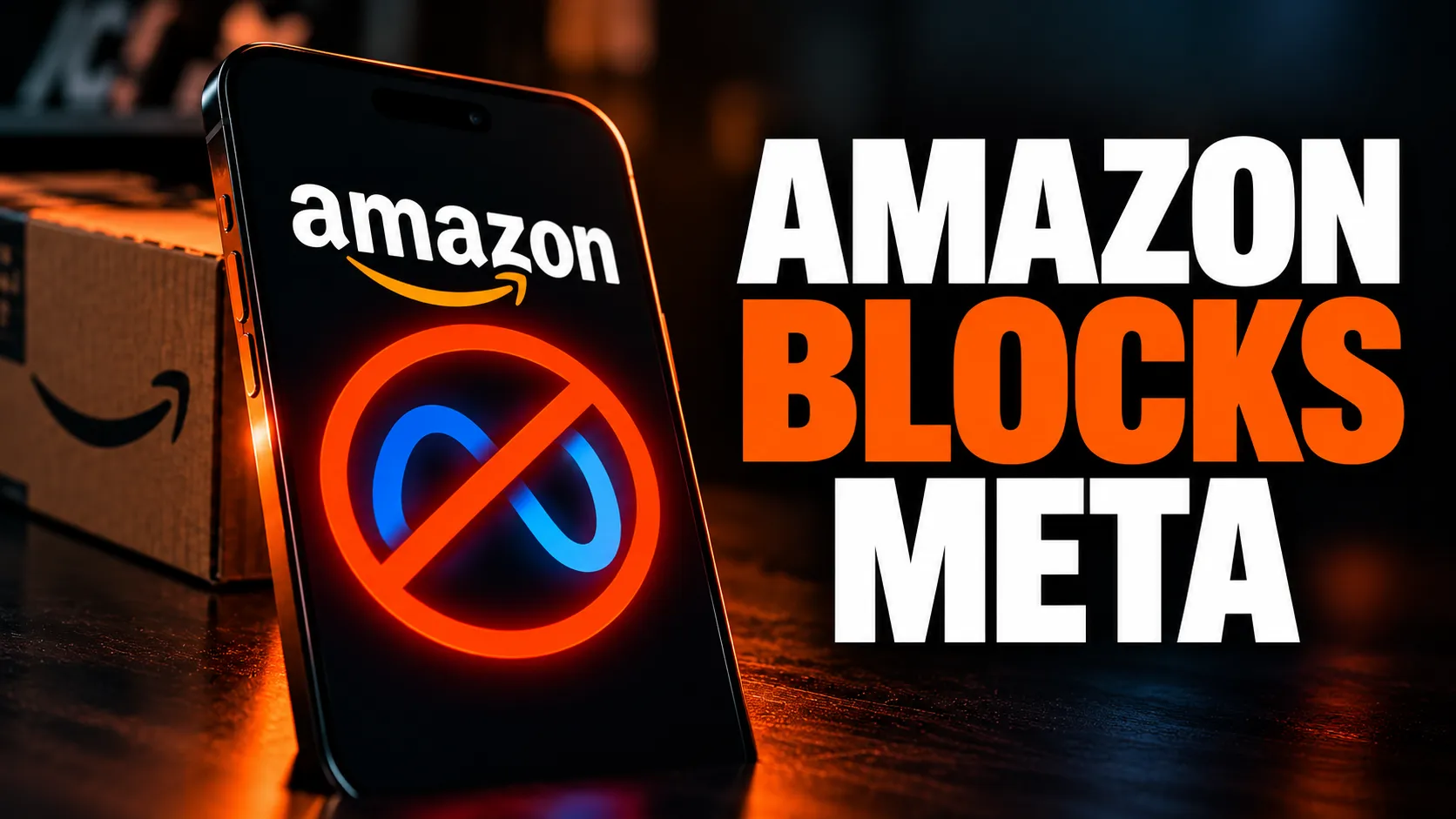
Amazon has blocked Meta's fast-growing Muse AI assistant from shopping on Amazon.com, opening a new front in the battle over who controls online commerce when AI agents begin making purchasing decisions on behalf of consumers.
Users attempting to access Amazon through Muse began receiving messages stating that continued access by an unauthorised AI agent violated Amazon's terms, The Wall Street Journal reported on 22 September 2026.
Meta's Muse assistant can search for products and complete purchases on participating platforms, turning the traditional shopping journey into a conversation with an AI agent. The assistant's debut had been well received by investors, with Meta's shares rising about 11% on Monday after its launch.
Two very different responses
The dispute highlights a sharp divergence in how major commerce platforms are responding to AI shopping agents. While Amazon has chosen to block Muse, Shopify is taking the opposite approach, integrating Muse with Shop Pay so that users can purchase products from participating merchants through the assistant.
Shopify's strategy reflects its position as a platform serving independent merchants rather than operating a single marketplace. For Shopify merchants, AI agents represent a potential new distribution channel that could bring customers who might never visit their websites directly. Integrating with Muse allows Shopify to position itself as the infrastructure layer for agent-driven commerce.
Amazon's position is different. As the dominant online marketplace in many countries, it controls the customer relationship, the shopping experience and a highly profitable advertising business built around product search. An external agent that navigates Amazon on behalf of users could bypass much of that experience.
The economic stakes
The underlying economic question is profound. If consumers increasingly ask AI agents to compare products and make purchases, the agent could replace much of the search, recommendation, advertising and merchandising layer that platforms such as Amazon have spent decades building.
Amazon's advertising business, which generates tens of billions of dollars a year, depends heavily on sponsored product listings that appear when customers search. If an AI agent searches on a customer's behalf and selects products based on its own criteria, those advertisements may never be seen by a human. The agent, not the platform, would become the gatekeeper of consumer attention.
Amazon also has reasons related to customer experience and security. Unauthorised automated access can create risks around account security, fraud, pricing accuracy and order errors. The company has its own AI shopping assistant, Rufus, and has experimented with agentic features that can complete purchases on behalf of customers.
This is not the first time Amazon has pushed back against third-party AI agents. In late 2025, it took legal action against Perplexity over that company's AI browser agent making purchases on Amazon, signalling its willingness to defend its platform against unauthorised automation.
A security wrinkle for Muse
The dispute came on the same day as another challenge for Meta's assistant. Security researcher Patrick Wardle disclosed a vulnerability in Muse's Mac application that could allow a local process to redirect voice traffic to an attacker-controlled server, potentially exposing prompts, authentication tokens and the permissions users had granted to the agent. Meta Superintelligence Labs described the issue as a local privilege escalation rather than a remote break-in and said a fix had been shipped.