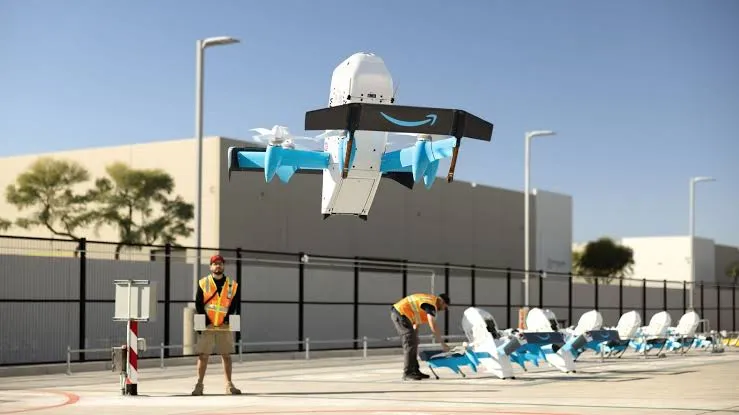
Amazon is preparing to significantly expand its Prime Air drone delivery service, with plans to bring the technology to nearly 500 cities and towns across the United States, according to details that emerged this week as part of the company's broader push to scale autonomous last-mile logistics capabilities.
The planned expansion would represent one of the most ambitious drone delivery rollouts attempted by any major logistics or e-commerce company to date, moving the technology well beyond the limited pilot markets in which Amazon and its competitors have historically tested autonomous aerial delivery.
Amazon's Prime Air programme has moved through several distinct phases since its initial public unveiling more than a decade ago, from early experimental prototypes and limited proof-of-concept trials through a series of small-scale regional pilot launches, each phase building the regulatory track record and operational experience the company has cited as prerequisites for broader commercial expansion.
For competitors and regulators alike, Amazon's expanded rollout will serve as one of the most closely watched real-world tests yet of whether autonomous aerial delivery can move credibly from a novel pilot technology into dependable, everyday logistics infrastructure.
Drone delivery has long been positioned by Amazon as a transformative technology for last-mile logistics, promising delivery times measured in minutes rather than hours for eligible lightweight packages, while potentially reducing the cost and environmental footprint associated with traditional van-based delivery for short-distance, low-weight orders. However, the technology has faced a slower path to widespread commercial deployment than early projections suggested, constrained by regulatory approval processes, airspace safety requirements, and the practical engineering challenges of operating autonomous aircraft reliably across diverse weather conditions and population densities.
The expansion to nearly 500 cities and towns suggests Amazon has reached a level of confidence in both its regulatory relationships and its underlying drone technology to justify a substantially broader rollout than the company has previously attempted. Regulatory approval from the Federal Aviation Administration has historically been one of the primary gating factors for drone delivery expansion in the United States, with the agency taking a methodical approach to expanding permitted drone operations given the safety implications of integrating autonomous aircraft into shared airspace.
The economics of drone delivery remain most favourable for a specific subset of the overall e-commerce basket: lightweight, small-format items that customers want delivered urgently, a category that excludes the majority of typical online shopping baskets but aligns well with impulse purchases, forgotten essentials and time-sensitive items like medication or specific grocery staples.
Noise complaints, privacy concerns related to onboard cameras, and general community pushback against low-altitude drone traffic have each surfaced as recurring friction points in markets where Amazon has previously piloted drone delivery, challenges the company will need to manage carefully as it scales operations into a much larger and more diverse set of nearly 500 communities with varying levels of tolerance for aerial delivery traffic.
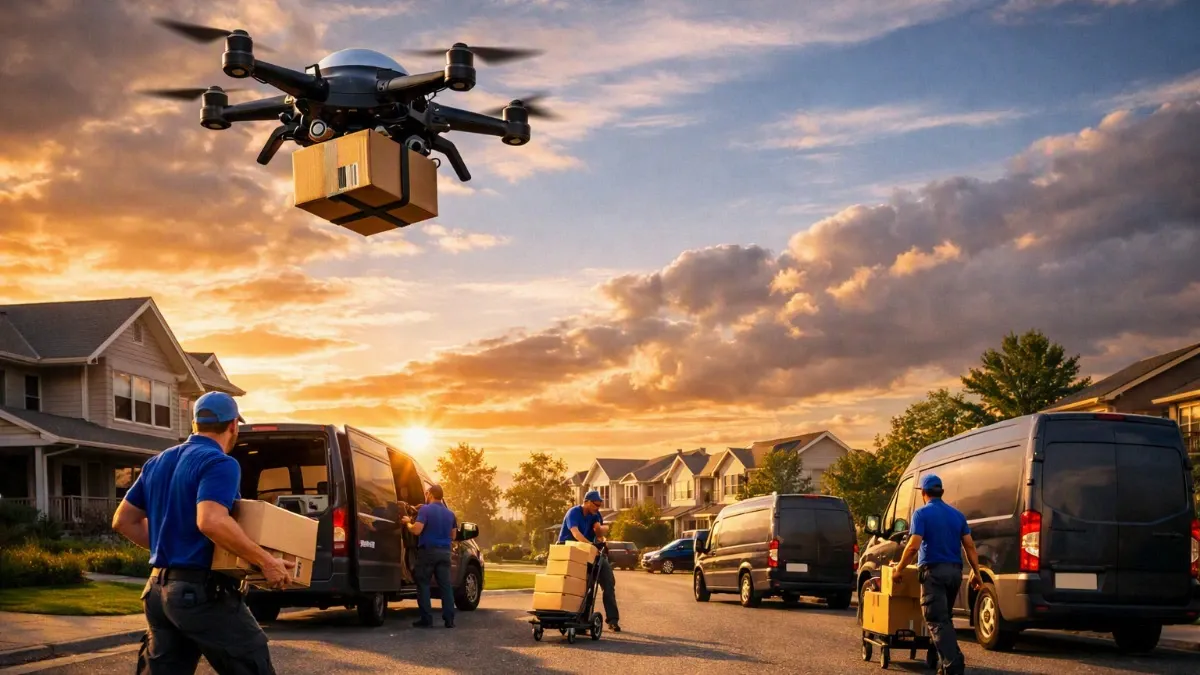
Amazon's drone delivery ambitions have historically drawn direct comparison to Walmart's own delivery drone partnerships and to dedicated drone logistics companies including Zipline and Wing, each of which has pursued somewhat different technical and commercial approaches to solving the same fundamental last-mile delivery challenge across different market segments and geographies.
For Amazon's broader logistics strategy, successful scaling of drone delivery would represent a meaningful complement to its existing van and walker-based delivery network, particularly for smaller, time-sensitive orders in suburban and lower-density areas where drone economics are generally considered most favourable. The company has framed drone delivery as part of a broader multi-modal logistics strategy rather than a wholesale replacement for existing delivery infrastructure, recognising that different delivery methods suit different package types, distances and population densities.
Competitors including Walmart, which has also invested in drone delivery partnerships, and various dedicated drone logistics startups will be watching Amazon's expansion closely, both as a competitive signal and as a real-world test of whether drone delivery can achieve the kind of reliability and cost efficiency at scale that has so far remained more promise than proven reality across the broader industry.
Amazon's broader logistics investment strategy has increasingly emphasised this kind of multi-modal flexibility, recognising that no single delivery technology — whether vans, walking couriers, or drones — offers the optimal solution across the full diversity of package types, delivery distances and population densities the company serves across its vast North American operating footprint.
Regulatory frameworks governing commercial drone operations continue to evolve alongside the technology itself, with the Federal Aviation Administration having progressively expanded permitted beyond-visual-line-of-sight operations in recent years, a regulatory shift widely viewed within the industry as a necessary precondition for exactly the kind of large-scale commercial expansion Amazon is now pursuing.
Insurance and liability frameworks for commercial drone operations remain a developing area of law, with questions around responsibility for property damage, privacy violations or safety incidents involving delivery drones still being worked through by regulators, insurers and the companies operating these fleets, adding a further layer of complexity to Amazon's ambitious expansion timeline.
As Amazon moves toward this expanded rollout, the success or struggles of the initiative will offer one of the clearest signals yet about whether autonomous aerial delivery is ready to move from a novel pilot technology into a genuinely mainstream component of American e-commerce logistics.
Whether Amazon's expanded rollout proceeds smoothly or encounters the kind of regulatory, operational or community pushback that has slowed previous drone delivery pilots will offer an important real-world test of whether the technology has genuinely matured enough to support delivery at true consumer scale.
City and state governments across the nearly 500 communities included in Amazon's expansion plans will play an important role in determining how smoothly the rollout proceeds, given that local permitting, noise ordinances and community engagement processes remain largely outside federal regulatory jurisdiction even once FAA airspace approvals are secured.
Local governments across the nearly 500 targeted communities will each retain a degree of discretion over permitting, noise ordinances and flight-corridor restrictions, meaning Amazon's actual rollout pace is likely to vary considerably by jurisdiction even after federal aviation clearances have been secured nationally.


