TechArtificial Intelligence5 MIN READ

Amazon and JPMorgan Push Back Against AI Shopping Agents Like Meta's Muse, but Experts Warn Blocking May Not Work for Long

Amazon has blocked Meta's Muse AI shopping agent from its marketplace and JPMorgan prevents outside AI agents from acting for retail customers, citing security risks. As the debate intensified over the weekend of November 1, experts from Accenture and Princeton argued that incumbents resisting AI agents may lose business over time as agents become more useful.

By Aravind Kumar · Author2 November 2026New
Amazon and JPMorgan Push Back Against AI Shopping Agents Like Meta's Muse, but Experts Warn Blocking May Not Work for Long

A new battle is taking shape over who controls the customer in the age of artificial intelligence. As technology companies build AI agents that can shop, bank and transact on behalf of users, some of the world's largest retailers and banks are pushing back.

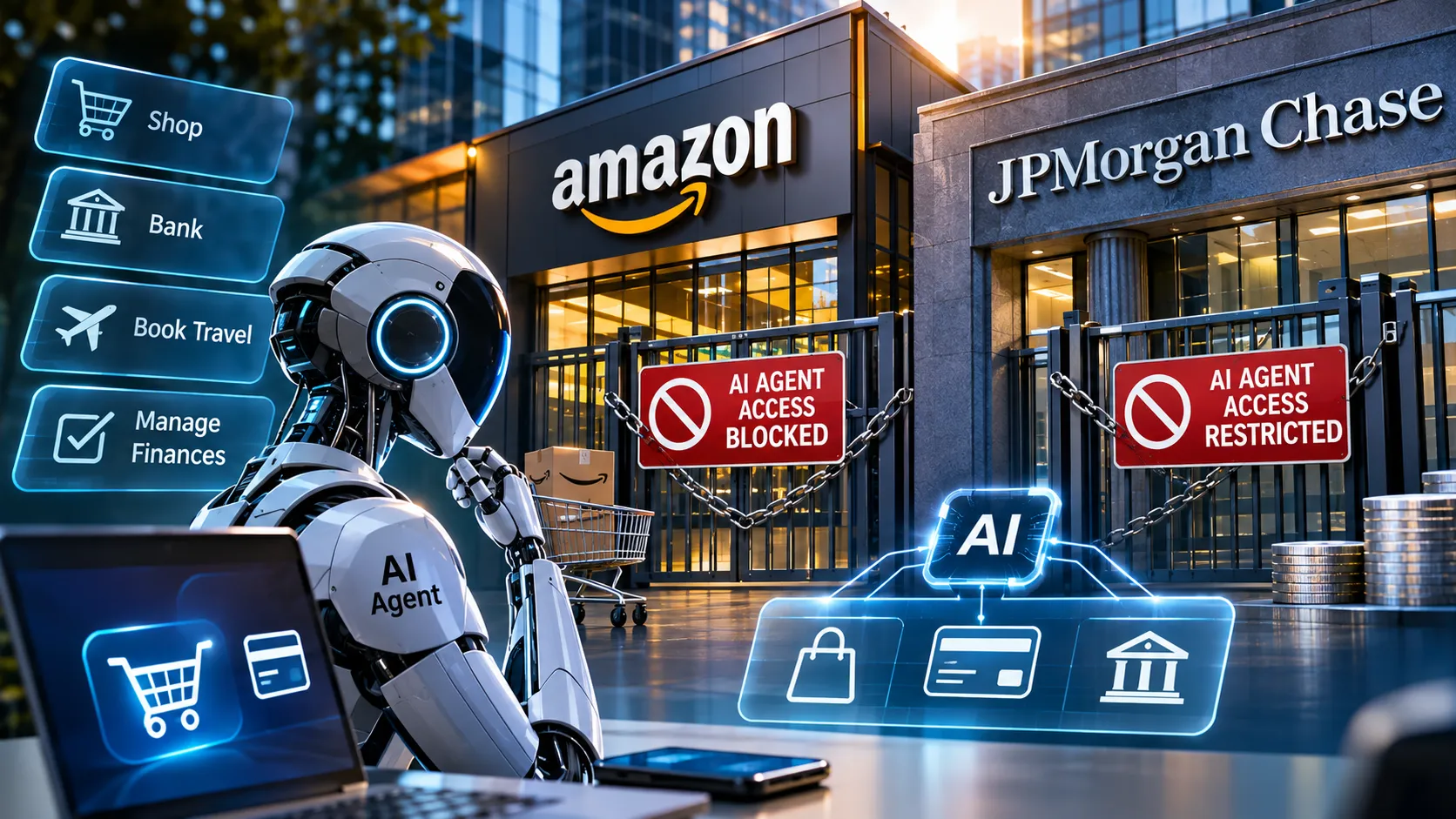
Amazon has blocked Meta's Muse AI agent from shopping on its platform, and JPMorgan Chase currently prevents outside AI agents from acting for its retail customers, according to reports compiled by CoinDesk and published on Sunday, November 1, alongside a CNBC analysis arguing that such resistance may not be a winning long-term strategy.

What AI agents do

AI agents are software systems that can carry out tasks autonomously on behalf of users, such as searching for products, comparing prices, placing orders, booking travel or managing finances. Unlike chatbots, which mainly answer questions, agents take actions in the real world, often by navigating websites and apps as a human would.

Meta's Muse is one of a growing number of such agents. Google, OpenAI and other companies are also developing agents capable of shopping and transacting. For consumers, the appeal is convenience: an agent could find the best deal across multiple retailers or handle routine financial tasks without the user needing to visit each website.

Amazon's position

Amazon blocked Muse from accessing its marketplace in October and has indicated that it plans to restrict other third-party shopping agents as well, according to technology media reports. Amazon has its own AI shopping assistant, Rufus, and features that allow it to make purchases on behalf of customers.

Analysts say Amazon's concern is less about the technology itself than about control over customer relationships and data. "Amazon doesn't seem to be concerned about proxies themselves, but rather about who controls the data," said Mike Danford, who runs e-commerce platform operations, according to the CoinDesk report.

If third-party agents shop on Amazon's behalf, Amazon could lose direct contact with customers, reducing its ability to show advertising, recommend products and build loyalty. Advertising has become one of Amazon's most profitable businesses.

JPMorgan's stance

JPMorgan chief executive Jamie Dimon has said the bank currently prevents outside AI agents from acting on behalf of retail customers, citing security risks, according to the report. The bank also now charges data aggregators such as Plaid for access to customer account data, costs that may ultimately reach consumers through app subscription fees.

Banks have legitimate concerns about AI agents accessing customer accounts. Agents could be manipulated by fraudsters, make unauthorised transactions or expose sensitive data. Banks are also responsible for protecting customers and complying with regulations, which makes them cautious about allowing third parties to act on accounts.

The case against blocking

Several experts argue that blocking agents is unlikely to succeed over the long term. "The institutions that ultimately prevail are usually those that manage to engage safely rather than resist change," said Michael Abbott of Accenture, according to the report.

"Websites that block them too effectively will eventually lose business," said Ed Felten, a computer scientist at Princeton University. Felten expects blocks to erode as agents become more useful and consumers demand the convenience they offer.

Abbott also noted that consumers remain cautious about handing over control to AI. "Our research found that 82% of people want to approve every AI operation," he said.

“Websites that block them too effectively will eventually lose business.”
— Ed Felten, Princeton University

Joseph Chalom of SharpLink argued that incumbents resist agents partly to protect their business models. "Therefore, I don't think they will rush to lower the drawbridge," he said.

5987cfb8-01c2-4bdc-80d6-40158ecfc311.png

Echoes of past battles

The debate echoes earlier conflicts over data access and platform control. In banking, the rise of fintech apps that accessed customer accounts through screen scraping led to the development of open banking frameworks in Europe and elsewhere, which give customers the right to share their data securely with third parties. In the United States, regulators have developed rules on customer data access, and JPMorgan's decision to charge aggregators has been controversial.

In retail, the relationship between marketplaces and price comparison tools has long been contentious, with platforms seeking to control how their data is used.

The stakes for Big Tech

For companies building AI agents, access to major platforms is essential. An agent that cannot shop on Amazon or access bank accounts is far less useful. Meta, Google and OpenAI are investing heavily in agents, viewing them as the next major interface for consumers. The outcome of the current standoff could shape the competitive landscape of AI for years.

Apple, which controls the iPhone and the App Store, could also play a pivotal role in determining how agents reach consumers. Investors have asked whether Apple could profit from third-party AI agents distributed through its platform.

Regulatory questions

Regulators may eventually intervene. Competition authorities could examine whether platforms blocking agents are abusing dominant positions, while financial regulators may set standards for how AI agents can safely access accounts. Consumer protection rules will need to address liability when agents make mistakes or are exploited by fraudsters.

The Indian context

India's digital public infrastructure, including UPI and the account aggregator framework, offers a different model. The account aggregator system allows consumers to share financial data securely with authorised entities through a consent-based framework regulated by the Reserve Bank of India. Such infrastructure could provide a foundation for AI agents to access financial data safely, potentially giving India an advantage in developing agentic financial services.

Indian e-commerce platforms, including Flipkart, Amazon India and quick commerce apps, will also face questions about how to respond to AI agents as the technology matures.

Agents and advertising

The business models of many internet platforms depend on advertising, which relies on users visiting websites and apps where ads can be shown. If AI agents complete tasks without users seeing those pages, advertising revenue could decline. This is a significant concern for retailers with large advertising businesses, such as Amazon, and for search engines. Some analysts expect new forms of advertising and commercial arrangements designed for AI agents to emerge.

What comes next

The tension between platforms and AI agents is likely to intensify as agents become more capable and widely used. Partnerships, standards and regulation may eventually determine how agents interact with retailers and banks. For now, the standoff highlights a fundamental question of the AI era: whether the companies that build AI or the companies that own customer relationships will capture the value it creates.

TagsAI agentsagentic AIMeta MuseAmazonJPMorganJamie DimonPlaidecommercedigital bankingOpenAIGoogleAccenturePrincetondata accessplatform poweropen bankingcybersecurityconsumer protectionIndia digital economyinvestors

Reader reviews

Sign in to rate and review this article.
Loading reviews…