
StartupsTrending6 MIN READ

Amazon's Quick-Commerce Arm Now Crosses $1 Billion in Annualised Sales as It Expands Beyond India's Metros

Amazon Now, the company's minutes-based delivery service in India, has surpassed $1 billion in annualised gross sales after expanding to more than 60 cities in under ten weeks, as the e-commerce giant races to defend market share in the country's fast-growing quick-commerce sector.

By Nisha Omkumar · Author16 September 2026
Amazon's Quick-Commerce Arm Now Crosses $1 Billion in Annualised Sales as It Expands Beyond India's Metros

Amazon has said its minutes-based delivery service, Amazon Now, has crossed $1 billion in annualised gross sales in India, a milestone the company reached after an aggressive expansion that took the service to more than 60 cities in under ten weeks. The company is now targeting 100 cities by Diwali, one of India's biggest shopping seasons, as it pushes further into a category that has rapidly reshaped how urban Indian consumers buy everything from groceries to electronics.

The milestone places Amazon squarely in the middle of one of the most fiercely contested battlegrounds in Indian e-commerce. Quick commerce — the delivery of goods within ten to thirty minutes via dense networks of dark stores — has grown from a niche urban convenience into a multi-billion-dollar category over the past three years, drawing in incumbents such as Flipkart, homegrown pioneers including Blinkit, Zepto and Swiggy Instamart, and now the world's largest online retailer.

Amazon's entry into rapid delivery in India came later than several of its rivals, reflecting both the operational complexity of building a dense dark-store network across a market as geographically and logistically varied as India, and the company's historically cautious approach to capital-intensive, low-margin categories. The swift climb to $1 billion in annualised sales suggests the company is now willing to invest aggressively to close the gap with faster-moving domestic players, several of which have already achieved significant scale and, in some cases, moved toward profitability in their most mature markets.
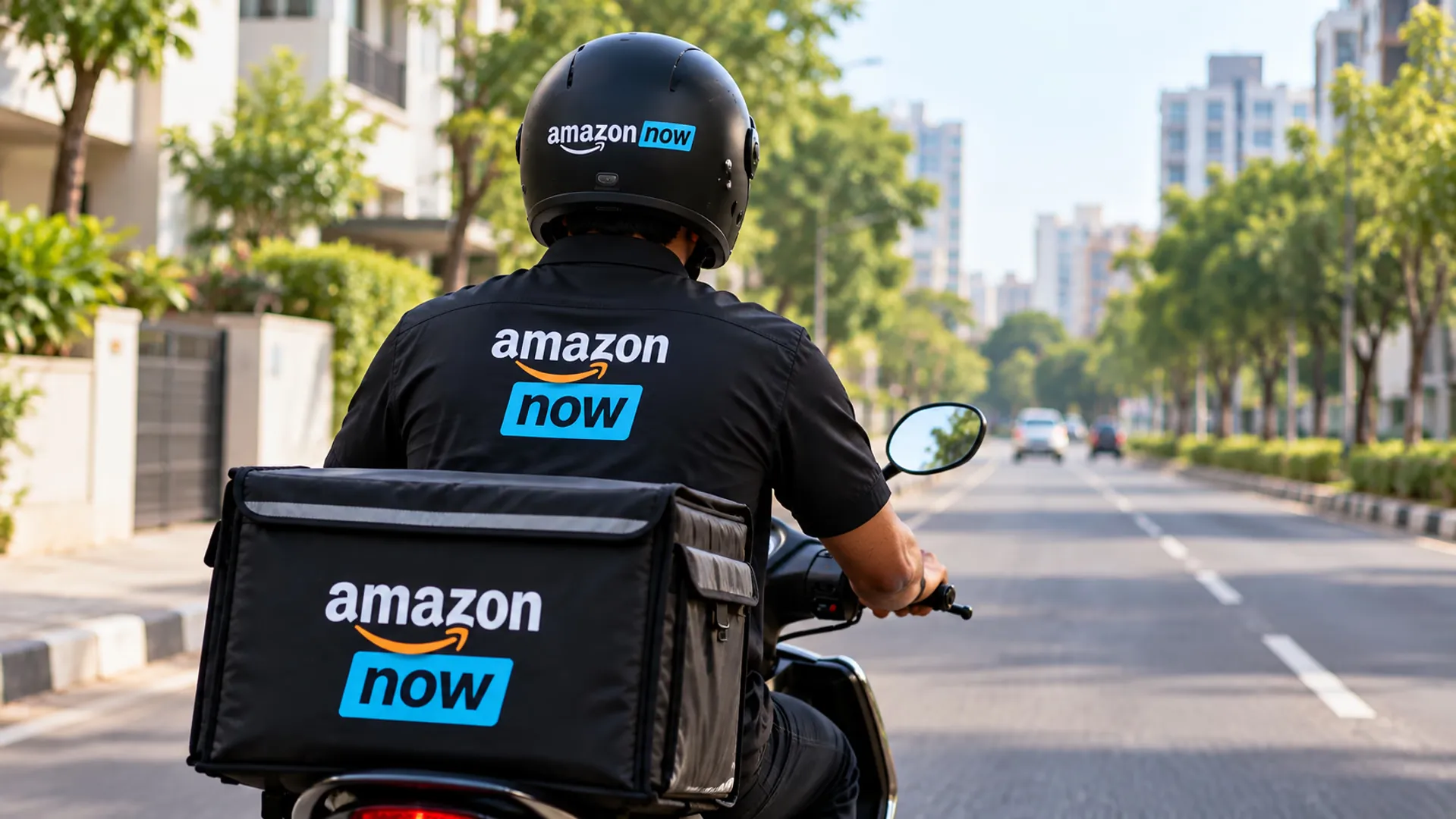
image.png

The expansion beyond India's largest metropolitan markets is particularly significant. Much of the initial growth in India's quick-commerce sector was concentrated in a handful of large cities — Delhi, Mumbai, Bengaluru, Hyderabad and Pune — where population density and smartphone penetration made rapid delivery economically viable. Amazon's push into more than 60 cities within ten weeks signals a broader industry shift toward tier-two and tier-three markets, where rising incomes and increasing comfort with digital commerce are beginning to support similar delivery economics, albeit at a different scale.


Amazon's swift climb to $1 billion in annualised sales signals a willingness to invest aggressively in one of Indian retail's most capital-intensive categories.

For Amazon, the quick-commerce push sits alongside a broader festive-season strategy in India, where the company competes head-to-head with Flipkart across categories ranging from electronics and fashion to daily essentials. The timing of the 100-city target — aligned with Diwali, when Indian e-commerce platforms typically see their highest annual sales volumes — underscores how central the festive period has become to the competitive calculus of every major player in the market.

Analysts tracking the sector have noted that quick commerce's unit economics remain a subject of debate, with dark-store density, delivery-fleet costs and discounting intensity all weighing on near-term profitability even as gross merchandise value scales rapidly. Amazon's global scale and balance sheet give it more room than smaller competitors to sustain an extended investment phase, but the company will nonetheless face pressure to demonstrate a credible path toward sustainable margins in the category, particularly as Indian regulators and industry observers continue to scrutinise the discounting practices of large e-commerce platforms.

The $1 billion annualised sales figure, while still a fraction of the broader quick-commerce market's overall size, represents a meaningful validation of Amazon's rapid-delivery bet in India and positions the company to compete more directly with Blinkit, Zepto and Instamart heading into the year's most important sales period. How the company balances continued geographic expansion against the capital intensity of the category will be a key storyline to watch through the remainder of 2026.

TagsE-commerceQuick CommerceAmazonIndiaRetail

Reader reviews

Sign in to rate and review this article.
Loading reviews…
