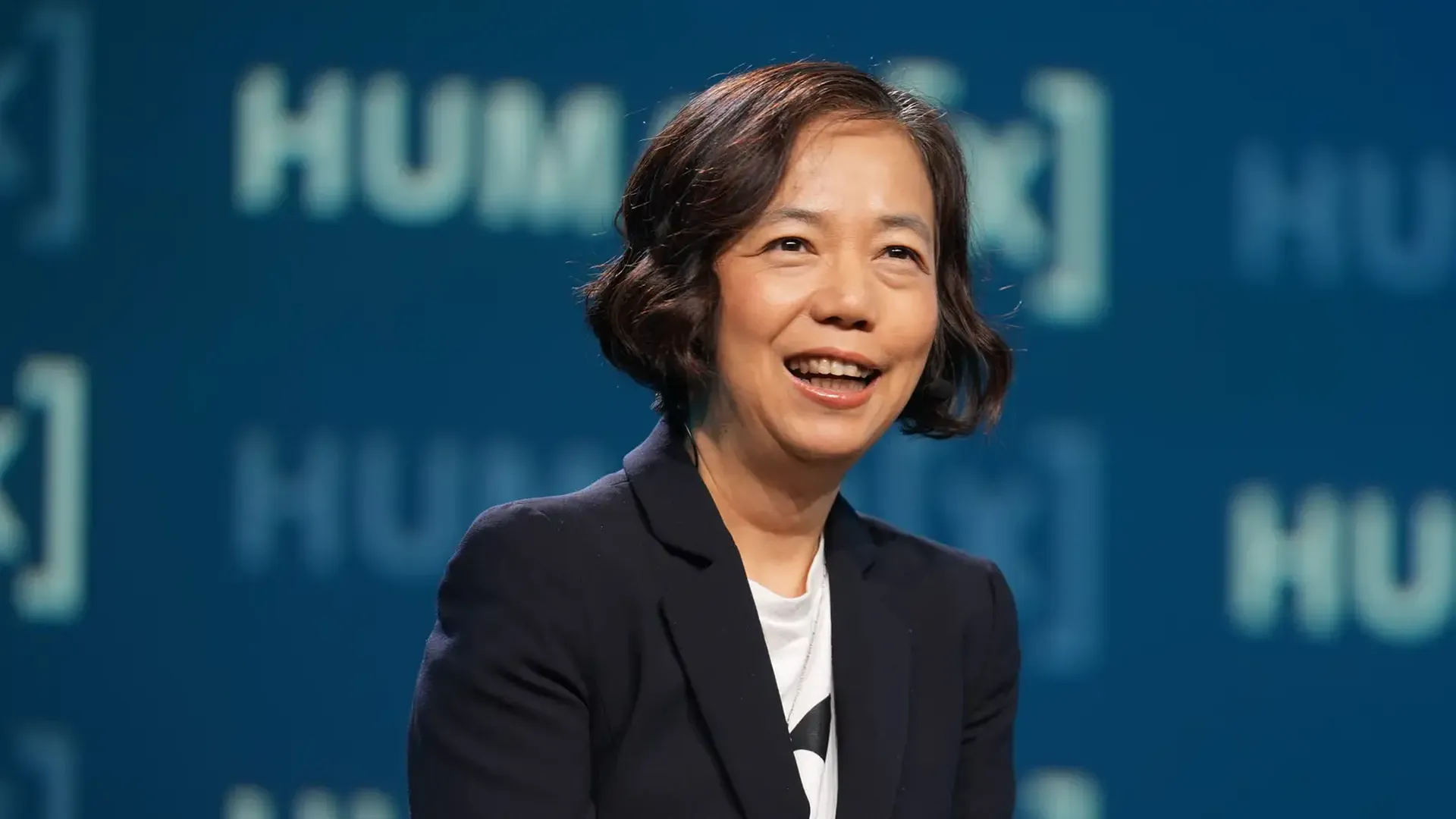
Advanced Micro Devices has agreed to acquire World Labs, the artificial intelligence start-up founded by Stanford computer scientist Fei-Fei Li, in an all-stock transaction valued at about $8.2 billion. The deal, announced on 28 September 2026, gives the chipmaker an in-house frontier research lab focused on "world models", AI systems designed to understand, reconstruct and simulate the physical world.
Li, widely known as the "godmother of AI" for her work creating the ImageNet dataset that helped launch the deep-learning revolution, will join AMD as executive vice president and chief scientist once the deal closes. She will report directly to chair and chief executive Lisa Su.
The transaction is expected to close by the end of 2026, subject to regulatory approvals and customary conditions. AMD said it would keep World Labs separate from its chipmaking business until then. CNBC described it as the second-largest acquisition in AMD's history.
Why a chipmaker wants a model lab
For AMD, the logic is about understanding what its chips will need to do in the future. The company has spent years building graphics processors and software to compete with Nvidia in AI data centres. Owning a research team that trains cutting-edge models gives it direct insight into how those workloads are evolving.
"Building the compute platforms for the next generation of AI requires a deep understanding of how models are evolving," Su said. "Fei-Fei and the World Labs team bring exceptional research leadership and model expertise. Together, we can use that insight to develop the hardware, software and systems that will power the next generation of AI and strengthen the open AI ecosystem."
AMD said it expects World Labs' research to guide its technology roadmaps across hardware, software and systems.
What World Labs builds
Founded in 2024, World Labs develops what it calls spatial-intelligence models. These systems can generate, reconstruct and simulate interactive three-dimensional environments from text, images and video. The company also builds technology for robot learning and simulation.
Its first product, Marble, creates 3D worlds from image or text prompts and has been pitched both for entertainment and for building simulated environments in which robots can be trained. Earlier this month, the company launched Atlas, a model that builds persistent, explorable 3D worlds from a single photograph, according to Startup Fortune.
The distinction from chatbots is fundamental. Large language models learn from text. World models aim to learn how physical space works, including geometry, objects, lighting and motion, which is essential for robots, autonomous vehicles, augmented reality and industrial simulation. Li has argued for years that true general intelligence requires grounding in the physical world.
"The universe isn't made up of words, it's made of real things," she wrote in a post announcing the deal, as reported by Fortune.
A partnership that became a merger
The two companies were already closely linked. World Labs and AMD began what Li called a "deep technical partnership" last year, starting with model training and inference optimisation on AMD GPUs. AMD was also an investor in World Labs' $1 billion funding round in February 2026, which included Nvidia, Autodesk, Emerson Collective, Fidelity and Sea. Autodesk alone invested $200 million. Bloomberg had reported that the round valued the company at about $5 billion.
"As our teams worked together, we realized it would be a natural fit to bring together our AI ecosystem of software and hardware, foundation models, and applications," Li wrote.
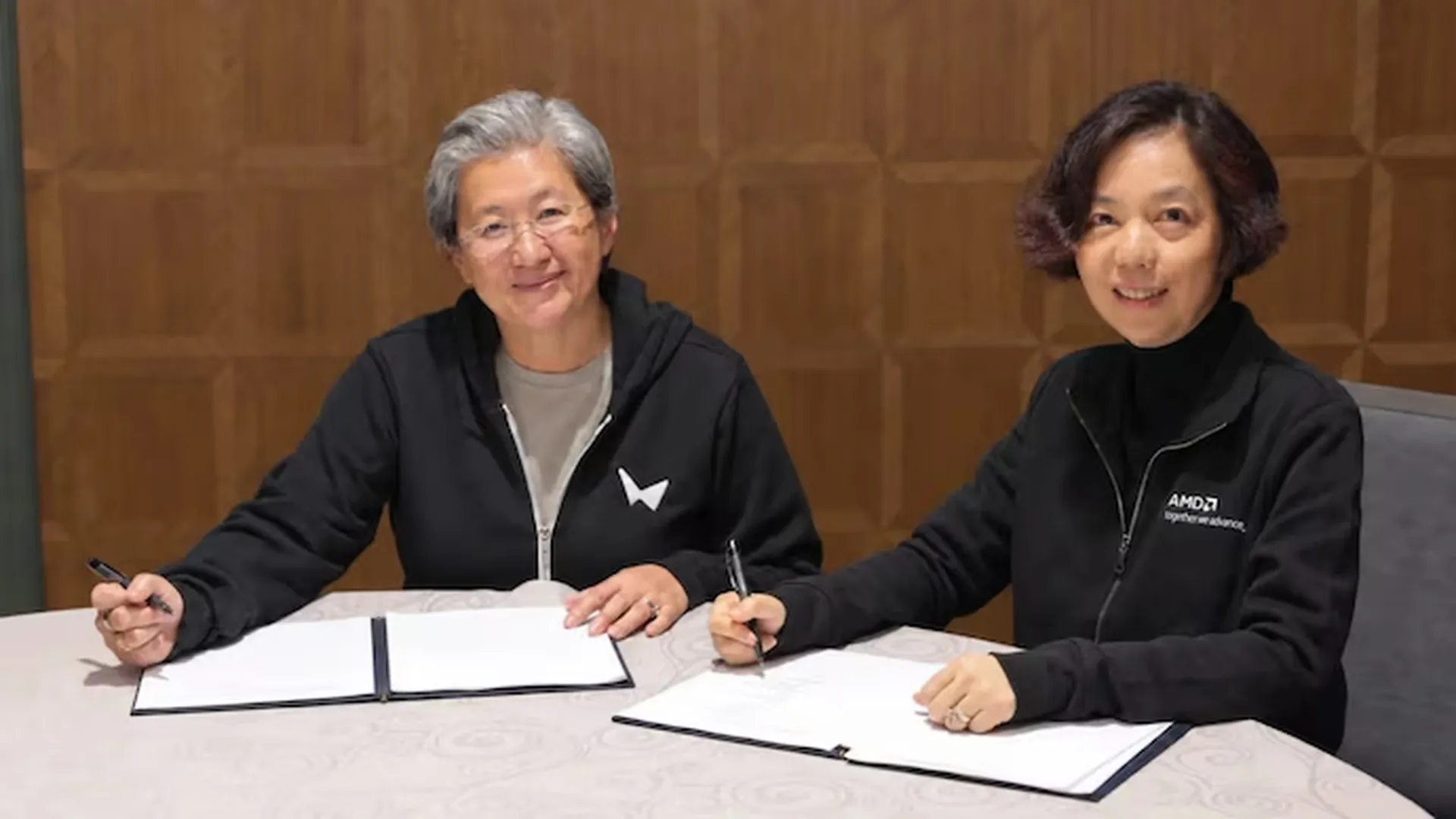
Li described Su as a friend and an early investor in World Labs. Li added that "joining AMD will give our team the resources and engineering depth to accelerate our research and help define the infrastructure needed for the next era of AI."
World Labs co-founders Justin Johnson and Ben Mildenhall will continue to lead the team alongside Li as it becomes a frontier research organisation within AMD.
The race for physical AI
The acquisition places AMD more squarely in the race for so-called physical AI, the use of AI to perceive and act in the real world. Nvidia has invested heavily in the same area through its Omniverse simulation platform, robotics foundation models and partnerships with humanoid-robot makers. Google DeepMind is developing its own world models, and former Meta chief AI scientist Yann LeCun has launched a start-up, AMI Labs, focused on the approach.
Owning a leading research team gives AMD credibility in conversations with robotics companies, carmakers and industrial customers about the full stack, from models to silicon. It also adds a recognisable scientific leader to a company whose brand has historically been built on engineering rather than AI research.
For AMD's investors, the price is significant but manageable. AMD has recently joined the group of companies valued at more than $1 trillion, and paying in stock limits the immediate cash impact. Its shares were little changed in after-hours trading following the announcement.
Two women at the top of AI
The deal also brings together two of the most prominent women in the technology industry. Su has led AMD's turnaround since 2014, transforming it from a struggling chipmaker into one of the most valuable semiconductor companies in the world. Li is among the most influential researchers in the history of computer vision.
Their partnership is notable in an industry where women remain significantly under-represented in senior technical and executive roles. Li has also long advocated for "human-centred AI" and for broader participation in AI research, co-founding the non-profit AI4ALL to bring more diverse students into the field.
Questions to watch
Several questions will shape how the acquisition is judged. The first is regulatory. Although AMD and World Labs are not direct competitors, deals involving AI and semiconductors are drawing close scrutiny from competition authorities in the United States, Europe and China.
The second is talent retention. Research labs depend on a small number of exceptional scientists, and acquisitions can trigger departures if researchers feel constrained by corporate priorities. AMD's commitment to keeping World Labs focused on model research, with Li and her co-founders in charge, is designed to reassure staff.
The third is openness. AMD has positioned itself as a champion of an open AI ecosystem, in contrast to Nvidia's more tightly integrated platform. How World Labs' models are licensed and shared after the deal will indicate whether that stance extends to AMD's own AI research.
Why it matters
The AMD and World Labs deal is part of a broader shift in the AI industry, as attention moves from chatbots towards systems that can understand and act in the physical world. Chipmakers, cloud providers and model developers are increasingly converging, each trying to control more of the stack.
For India's growing community of AI researchers and robotics engineers, many of whom work in AMD's large engineering centres in Bengaluru and Hyderabad, the acquisition signals where some of the most important research and hiring could take place in the years ahead. And for the wider industry, it confirms that the next phase of the AI race will be fought not only in language, but in space, motion and the physical world.


