FundingIPO Watch6 MIN READ

Anthropic Files for Nasdaq IPO Under 'ANT', Revealing $16.3 Billion in First-Half Revenue and a Swing to Operating Profit

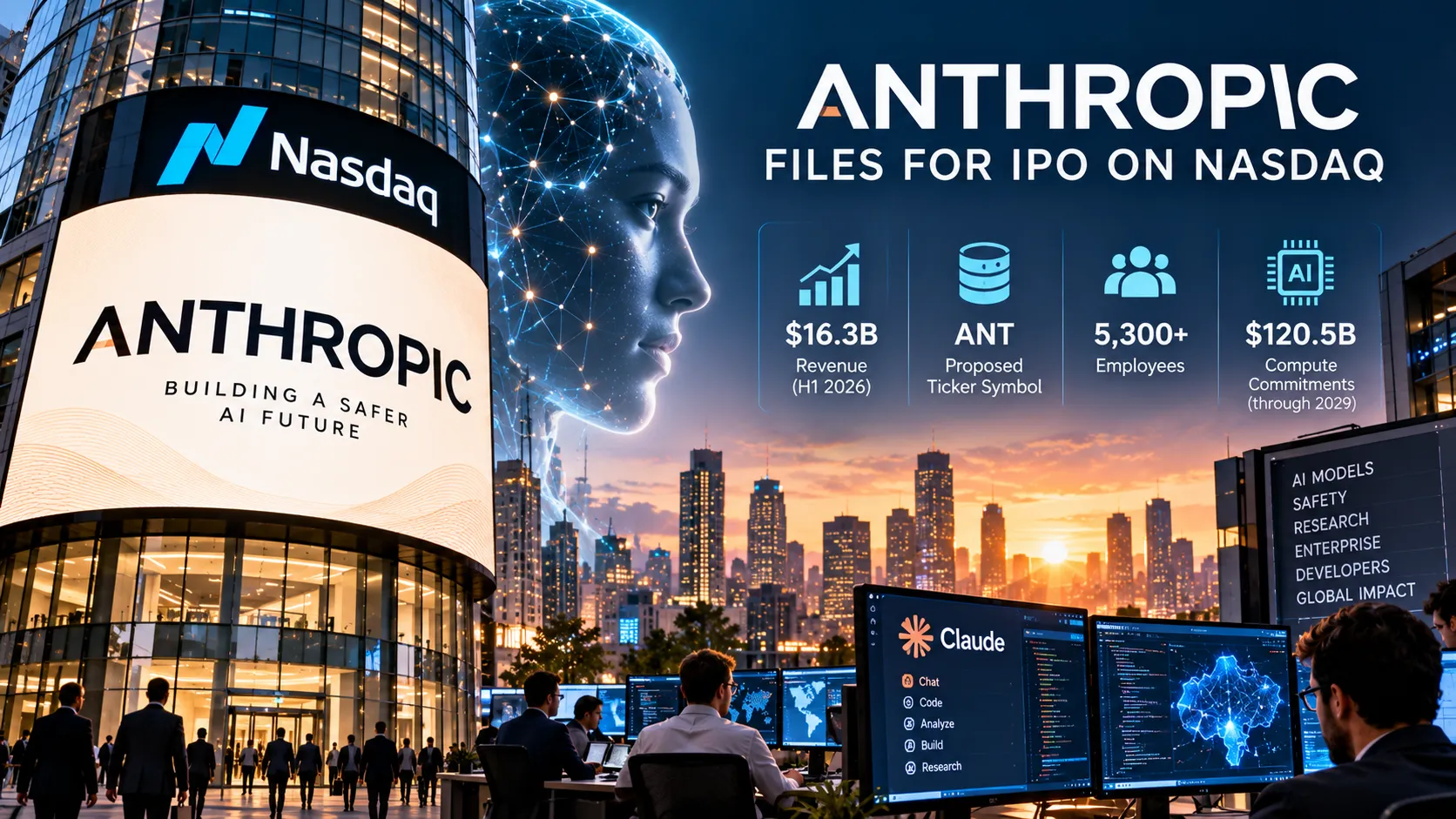
Anthropic has publicly filed for an initial public offering on Nasdaq under the ticker ANT, disclosing first-half 2026 revenue of $16.3 billion, a second-quarter operating profit of $974 million and compute commitments of up to $120.5 billion, in what could be one of the largest listings in history.

By Shaym Kumar · Author27 October 2026Breaking
Anthropic Files for Nasdaq IPO Under 'ANT', Revealing $16.3 Billion in First-Half Revenue and a Swing to Operating Profit

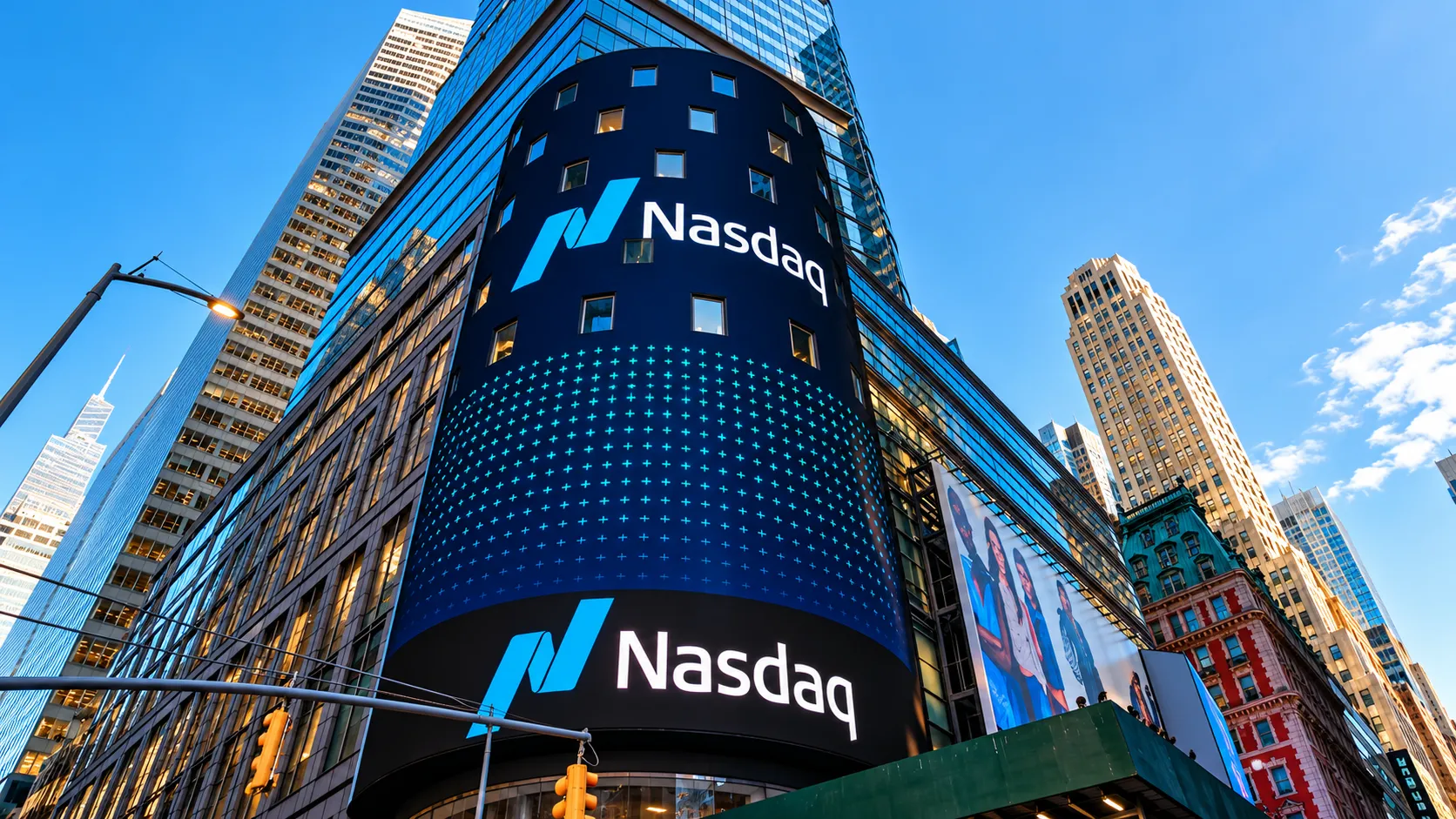
Anthropic, the artificial intelligence company behind the Claude family of models, has publicly filed for an initial public offering on Nasdaq, setting the stage for what could become one of the largest stock market debuts in history.

The San Francisco-based company filed its registration statement, known as an S-1, with the US Securities and Exchange Commission on 26 October and applied to list under the ticker symbol ANT. The listing is expected later this autumn, with Goldman Sachs and Morgan Stanley leading the offering.

The filing provides the first detailed public look at the finances of one of the world's most valuable private technology companies, and it reveals a business growing at an extraordinary pace.

Revenue Surges

Anthropic reported revenue of $16.3 billion for the first half of 2026, compared with $4.6 billion for the whole of 2025. Revenue in the second quarter alone reached $11.6 billion, up from $4.7 billion in the first quarter.

The company cited its developer and enterprise products, including Claude Code, its AI coding tool, and Claude Cowork, as major drivers of growth. Businesses have increasingly adopted AI tools for software development, customer service, research and other tasks, and coding has emerged as one of the most commercially successful applications of large language models.

The company had about 5,300 employees as of 30 September, implying revenue per employee of more than $6.6 million, up from about $1.4 million a year earlier.

Operating Profit, Net Loss

The filing shows a business moving towards operating profitability. Anthropic reported operating income of $974 million in the second quarter, after an operating loss of $1.7 billion in the first quarter. Compute costs, the largest expense for AI developers, rose to $5.6 billion in the second quarter from $3.4 billion, but revenue grew much faster.

At the bottom line, however, the company reported a net loss of $80.7 billion for the first half of 2026, compared with $42 billion for 2025. The gap between near-breakeven operating results and the very large net loss indicates that most of the loss arose from items below the operating line, rather than from day-to-day operations; investors will scrutinise the filing's detailed accounts to understand the drivers.
d9b64cd7-4a25-49aa-8de0-2e9f011939e2.png

Massive Compute Commitments

The filing underscores the enormous infrastructure requirements of frontier AI. Under what it calls the "SpaceXAI Arrangements", Anthropic has agreed to spend up to $120.5 billion on computing capacity through 2029, equivalent to roughly $3.1 billion a month once all capacity is delivered, which is expected by December 2026.

The company is also leasing its own data centres through an initiative it calls "Anthropic Direct", which it expects to account for a growing share of its compute investment. On the same day as the filing, Reuters reported that Wall Street banks and Blackstone had lined up $63 billion to finance Broadcom AI chips and networking equipment to be leased to Anthropic.

Valuation Expectations

Anthropic was valued at $965 billion in a private funding round in May. Reports suggest the IPO could value the company at between $1.5 trillion and $2 trillion, which would place it among the most valuable listed companies in the world on its first day of trading. The size of the offering and the number of shares to be sold have not yet been disclosed.

The listing would follow a period of extraordinary private fundraising by AI companies, as investors have poured hundreds of billions of dollars into model developers and the infrastructure that supports them.


“The filing turns the AI boom's biggest private bet into a public test of whether frontier models can be a durable business.”
— TIGI Analysis

Market Reaction

The filing lifted sentiment on Wall Street. The Nasdaq Composite rose 0.82 per cent and the S&P 500 gained 0.70 per cent on 26 October, as investors welcomed the prospect of a landmark AI listing that could provide a public benchmark for valuing AI developers.

Some employees will be able to sell shares on the first day of trading, with the remaining shares unlocking on a staggered schedule over about a year, through more than 20 unlock windows. The approach is designed to avoid a single large wave of selling after a traditional lock-up period ends.

Risks Disclosed

The prospectus contains extensive risk disclosures. Anthropic warns that its insurance may not cover liabilities arising from a catastrophic AI incident and that tighter regulation of AI could raise costs or restrict operations. It also states that AI could pose a "catastrophic or existential risk to humanity" if misused or allowed high levels of autonomy, an unusually stark disclosure that reflects the company's long-standing emphasis on AI safety.

Anthropic was founded in 2021 by Dario Amodei, its chief executive, and other former OpenAI researchers, with a stated mission focused on developing AI safely.

Competitive Landscape

Anthropic competes with OpenAI, Google DeepMind, Meta, xAI and a growing number of Chinese developers, including DeepSeek. OpenAI, its closest rival, has been reported to be raising capital at a valuation above $1 trillion. Competition for talent, computing power and enterprise customers is intense, and model capabilities continue to advance rapidly.

Implications for India

Anthropic's growth has implications for India's technology sector. Indian IT services companies are among the largest enterprise adopters of AI coding tools, and AI's impact on software development is reshaping their business models. India is also a significant market for AI developers, with a large base of developers and enterprise customers. Indian investors and the diaspora will watch the listing closely as a bellwether for global AI valuations.

Governance and Structure

Anthropic is structured as a public benefit corporation, a legal form that requires directors to balance shareholder interests with a stated public benefit, in its case the responsible development of advanced AI. The company has also established a Long-Term Benefit Trust designed to oversee its mission, giving the trust a role in electing board members. How these governance arrangements carry over into public markets, and how investors view them, will be closely examined as the IPO process unfolds.

Such structures are unusual among listed companies and could influence how the company balances commercial growth with its safety commitments. Some investors may welcome the long-term orientation, while others may question whether governance designed to prioritise safety could constrain returns. The prospectus and roadshow will give the company an opportunity to explain how its mission and its obligations to public shareholders fit together.

What Comes Next

The company will now proceed through the SEC review process and a roadshow with institutional investors before pricing its shares. Market conditions, particularly sentiment toward technology stocks amid debate over AI spending, will influence the timing and valuation.

If completed on the scale expected, the Anthropic IPO would mark a defining moment for the AI industry, transforming one of its most important private companies into a publicly traded one and testing whether public markets share private investors' conviction in the long-term value of frontier AI.

TagsAnthropicIPONasdaqANTS-1ClaudeClaude CodeDario AmodeiArtificial IntelligenceGoldman SachsMorgan StanleyAI ValuationsComputeOpenAITech Stocks

Reader reviews

Sign in to rate and review this article.
Loading reviews…
