
TechArtificial Intelligence6 MIN READ

Australia's Apate.AI Raises A$11.4 Million for Adversarial-AI Fraud Intelligence

Sydney-founded cybersecurity startup Apate.AI has raised A$11.4 million in seed funding to scale its adversarial-AI platform designed to detect and disrupt AI-powered fraud and scam operations before they reach victims.

By Aravind Kumar · Author2 September 2026New
Australia's Apate.AI Raises A$11.4 Million for Adversarial-AI Fraud Intelligence

Australia-born cybersecurity startup Apate.AI has raised A$11.4 million, approximately $8.15 million, in seed funding, the company confirmed on August 31, from investors including Lobby Capital, OIF Ventures, Investible, Concept Ventures and Baobab Ventures. Now incorporated in Delaware in the United States, the company's total disclosed funding reaches approximately A$13.9 million including a previous A$2.5 million round, as it scales technology designed to combat an increasingly sophisticated wave of AI-powered fraud.

Apate.AI's platform operates in the domain of adversarial AI and fraud intelligence, building technology specifically designed to detect, analyse and disrupt fraud and scam operations that themselves increasingly rely on artificial intelligence — including AI-generated phishing content, deepfake-assisted social engineering and automated scam-messaging systems capable of operating at a scale and sophistication that traditional fraud-detection tools struggle to match. This represents a distinctive and increasingly critical niche within the broader cybersecurity landscape: fighting AI-enabled threats using equally sophisticated AI-native countermeasures.

The company's relocation of its formal incorporation to the United States while maintaining its founding roots in Sydney reflects a common pattern among ambitious cybersecurity and AI startups originating outside the US, who frequently seek to establish a formal American corporate presence in order to more effectively access the world's largest cybersecurity enterprise-customer market, engage with major US-based strategic investors, and position themselves competitively against domestic American rivals in a sector where proximity to Silicon Valley and major US financial and technology hubs can carry significant commercial advantages.

The scale and sophistication of AI-powered fraud has grown into a major global concern throughout 2026, with security researchers and law-enforcement agencies increasingly documenting cases of AI-generated voice cloning, deepfake video content and highly personalised, AI-crafted phishing messages being deployed at scale against both individual consumers and enterprise targets. This escalating threat landscape has created urgent commercial demand for defensive technologies capable of matching the sophistication of AI-native attack methods, rather than relying solely on legacy fraud-detection approaches designed for an earlier, less AI-saturated threat environment.

Apate.AI's investor syndicate, spanning both Australian and broader international venture-capital firms, reflects growing global recognition of the AI-fraud-detection category as a distinct and increasingly important cybersecurity subsector, separate from more established categories such as network security, endpoint protection or traditional email-security platforms. The specialised, adversarial nature of the technology required to counter AI-generated fraud has created space for focused startups like Apate.AI to build differentiated technology stacks specifically engineered for this emerging threat category.

For Australia's broader technology ecosystem, Apate.AI's fundraising success adds to a growing roster of Australian-founded cybersecurity and deep-tech startups successfully attracting significant international venture capital, reinforcing the country's standing as a credible source of globally competitive cybersecurity innovation despite its comparatively smaller domestic venture-capital market relative to the United States, Europe or increasingly, parts of Asia.
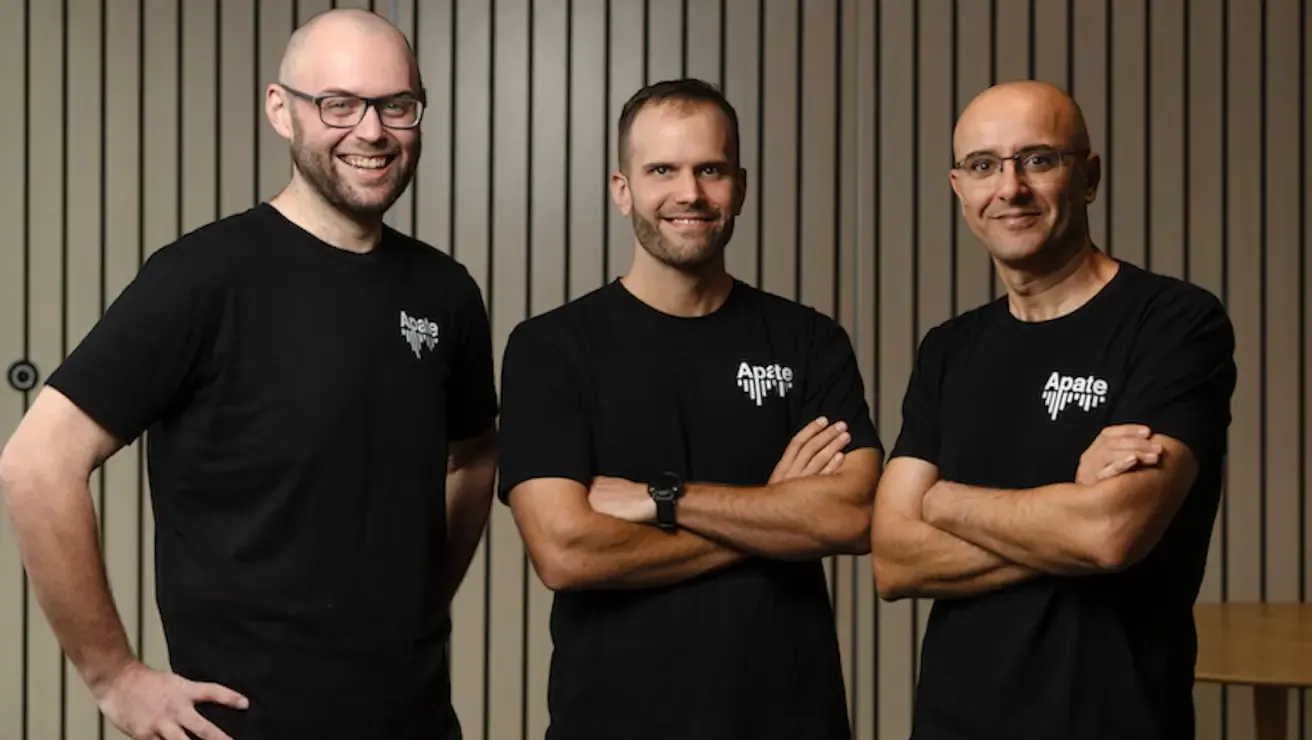

Fighting AI-generated fraud increasingly requires AI-native defenses — legacy fraud detection simply wasn't built for adversaries this sophisticated.
TIGI Technology Desk
image.png

As AI-powered fraud continues to escalate in both volume and sophistication globally, Apate.AI's continued development and market expansion will likely serve as an important indicator of how effectively adversarial-AI defensive technologies can scale to meet a threat landscape that itself is evolving at the accelerating pace enabled by widespread generative-AI accessibility.

The company's naming choice — a reference to Apate, the Greek personification of deceit and trickery — reflects a broader trend among cybersecurity startups toward branding that directly signals their adversarial, threat-focused positioning to enterprise buyers navigating an increasingly crowded cybersecurity vendor landscape. This kind of explicit positioning has become particularly important within the fraud-detection subcategory, where enterprise buyers often struggle to differentiate between vendors offering broadly similar-sounding capabilities without clear technical differentiation.

Australia's cybersecurity startup ecosystem has produced a disproportionate number of internationally successful companies relative to the country's overall venture-capital market size, a pattern often attributed to Australia's close intelligence and security cooperation with the United States and United Kingdom, which has helped cultivate a deep pool of technically sophisticated security talent with direct exposure to nation-state-level threat intelligence and defensive techniques that translate effectively into commercial cybersecurity product development.

Apate.AI's product roadmap will likely need to evolve continuously as AI-generation techniques used by fraudsters themselves advance, creating an inherently adversarial technology race in which defensive capabilities must be regularly updated to counter increasingly sophisticated attack methods. This dynamic, while creating ongoing engineering demands, also provides a natural mechanism for sustained customer engagement and recurring revenue, as enterprise clients require continuously updated protection rather than a one-time software purchase to remain effective against an evolving threat landscape.

The company's seed round also reflects growing institutional recognition that fraud-detection technology increasingly requires specialised AI expertise distinct from general cybersecurity or fraud-analytics capabilities, given the unique technical challenge of identifying AI-generated content and behaviour patterns that are specifically engineered to evade conventional detection methods. This specialisation has created space for focused startups like Apate.AI to build differentiated intellectual property that larger, more generalist cybersecurity vendors have been comparatively slower to develop internally.

As AI-generated fraud continues proliferating across both consumer and enterprise contexts globally, Apate.AI's Delaware incorporation and Australian technical roots position the company to pursue expansion across multiple major markets simultaneously, potentially establishing the kind of first-mover advantage in adversarial-AI fraud detection that could prove decisive as the category continues to mature and attract additional well-funded competitors.

As enterprise and consumer awareness of AI-generated fraud continues rising globally, Apate.AI's positioning at the leading edge of adversarial-AI defence gives the company a meaningful window to establish category leadership before larger, better-resourced cybersecurity incumbents inevitably move more aggressively into the space.

TagsApate.AIAustraliaCybersecurityAdversarial AIFraud DetectionSeed Funding

Reader reviews

Sign in to rate and review this article.
Loading reviews…

