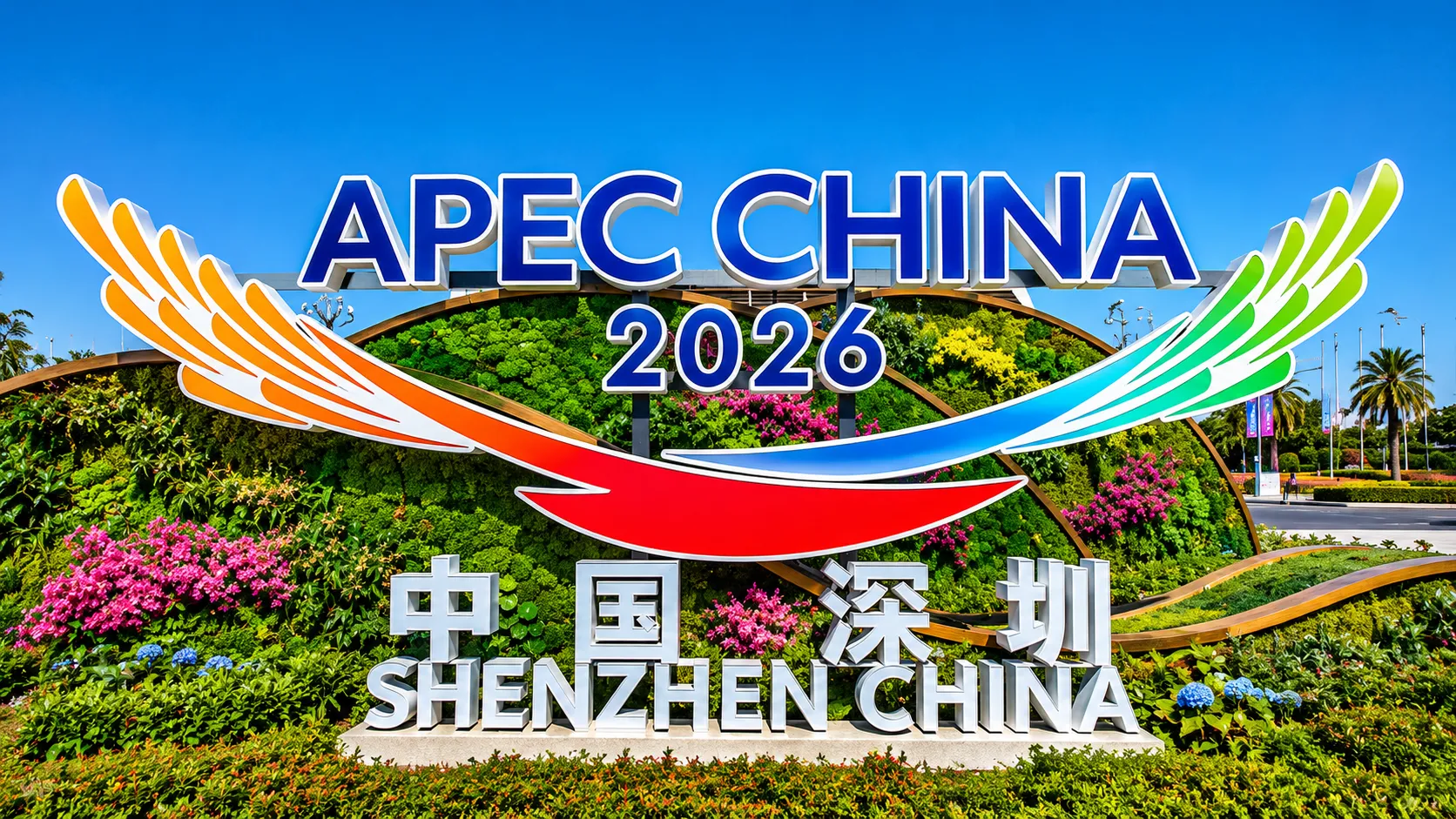
The world's political and business leaders are converging on China's technology capital this week, at a moment when global trade is under unusual strain.
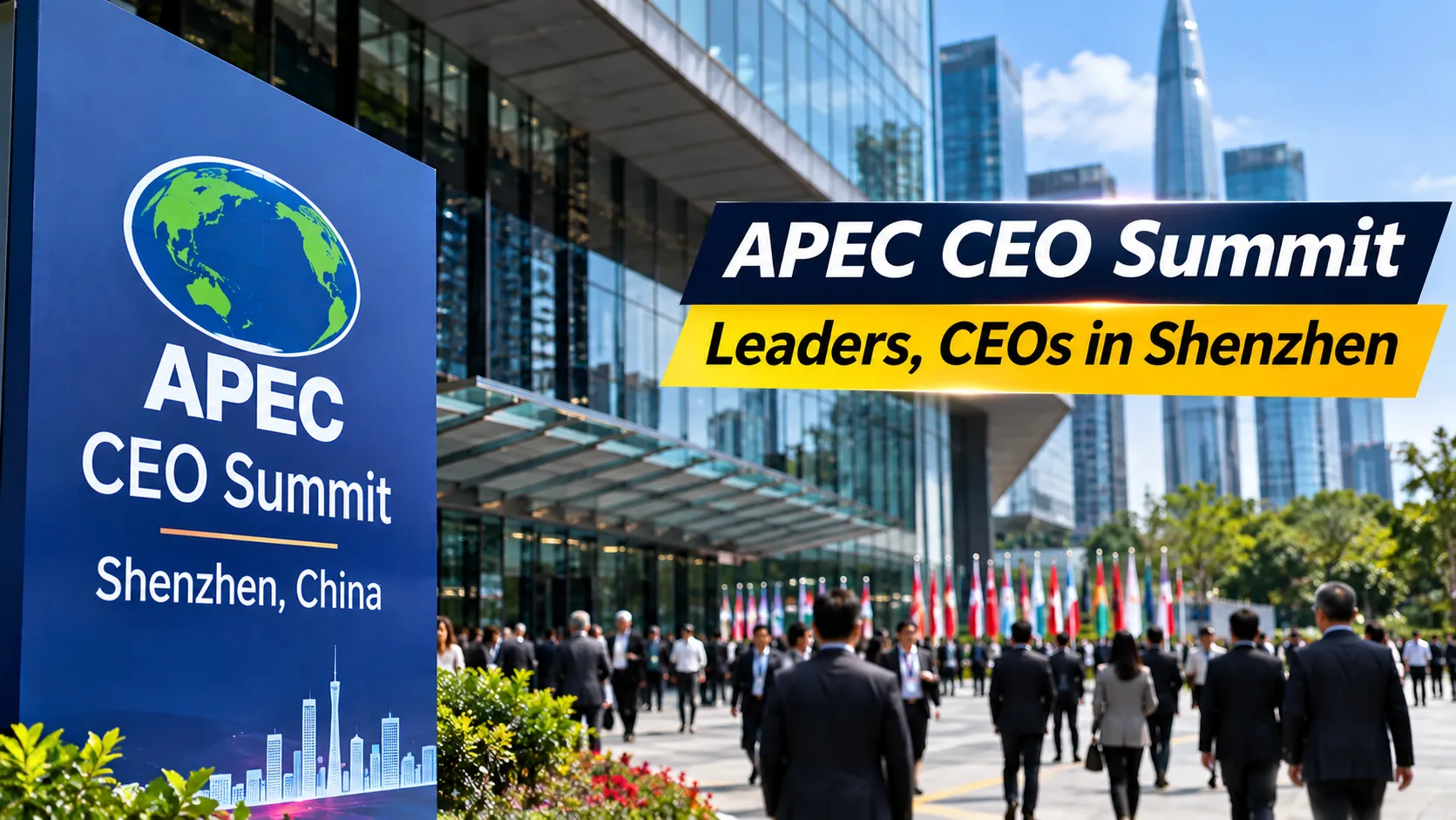
Twelve leaders of Asia-Pacific Economic Cooperation (APEC) economies, including Chinese President Xi Jinping, will attend the APEC CEO Summit in Shenzhen on November 17 and 18, the China Council for the Promotion of International Trade (CCPIT) said on Sunday, November 15, according to ANI, citing Xinhua.
Li Qingshuang, vice-chairperson of the CCPIT, said representatives from 115 Fortune Global 500 companies would attend. US companies form the largest delegation from outside China, accounting for close to 20% of the total.
Who is attending
Leaders from Australia, Canada, Chile, Hong Kong (China), Indonesia, South Korea, Malaysia, Mexico, Russia, Thailand and Vietnam will join Xi, according to ANI. They will give speeches, make remarks or join panel discussions. Heads of several international organisations and leaders of business associations from the United States, Russia, Japan and other regions are also expected.
The summit's theme is "To Prosper and Win the Future Together."
The agenda
Discussions will focus on supply chain resilience, harmonising regional trade frameworks and cooperation in the digital and green economies, according to ANI.
These issues have become central concerns for businesses across the region. Tariffs, export controls, sanctions and geopolitical tensions have disrupted supply chains in recent years, forcing companies to rethink where they source materials and manufacture products. The war involving Iran and disruptions in the Strait of Hormuz have added energy security to the list of concerns.
Part of Leaders' Week
The CEO Summit is part of APEC Economic Leaders' Week, which links private sector priorities with government policymaking. The APEC Business Advisory Council (ABAC) began its fourth meeting of the year in Shenzhen on November 14 to finalise policy proposals for leaders, according to ANI.
On November 19, on the sidelines of the APEC leaders' meeting, Xi will also host a trilateral summit with US President Donald Trump and Russian President Vladimir Putin, China's foreign ministry confirmed on Monday, according to AFP.
Why Shenzhen
Shenzhen is a symbol of China's economic transformation. A fishing town four decades ago, it became China's first special economic zone in 1980 and has grown into a city of more than 17 million people and a hub for technology companies, including Huawei, Tencent, BYD and DJI.
Hosting the summit in Shenzhen allows China to showcase its technology and manufacturing capabilities to global business leaders, at a time when it is seeking to attract foreign investment and counter efforts by the United States and its allies to reduce dependence on Chinese supply chains.
The business stakes
For multinational companies, APEC offers a rare opportunity to engage with leaders of the world's largest economies in one place. The strong presence of US companies, despite trade tensions between Washington and Beijing, reflects the continued importance of the Chinese market for American businesses in sectors such as consumer goods, automobiles, aviation, agriculture and technology.
Companies will be looking for signals on trade policy, including tariffs and export controls, as well as on China's plans to support its slowing economy. Data released on Monday showed that China's retail sales grew just 0.4% in October, while investment fell sharply.
What is APEC?
APEC is a forum of 21 economies around the Pacific Rim, including the United States, China, Japan, Russia, Australia, Canada and Southeast Asian nations, which together account for a large share of global trade and output. Founded in 1989, it promotes free trade, economic integration and cooperation, although its decisions are non-binding.
India is not a member of APEC, although it has long sought to join. Membership has been frozen for many years, and India participates in regional economic forums through other channels, such as the East Asia Summit, which Prime Minister Narendra Modi is attending in Manila this week.
Digital and green cooperation
The focus on digital and green economies reflects areas where APEC economies see opportunities for cooperation despite tensions. Digital trade, data flows, cross-border payments, clean energy and electric vehicles are growing rapidly across the region. China leads in many green technologies, including solar panels, batteries and electric vehicles, while the United States leads in AI and advanced software.
However, competition in these areas is also intense, with governments using subsidies, tariffs and export controls to protect domestic industries.
What it means for India
Although not a member, India has a strong interest in APEC's outcomes, since many of its largest trading partners are members. Changes in trade rules, supply chain strategies and US-China relations could affect Indian exporters and India's efforts to attract manufacturing investment.
Indian companies with operations in APEC economies, and members of the Indian diaspora working for multinational companies in the region, will also be affected by any shifts in trade and investment policies.
The business advisory role
The APEC Business Advisory Council, made up of business leaders from each member economy, presents recommendations to APEC leaders each year on issues such as trade facilitation, digital trade, sustainability and inclusion. Its proposals often focus on practical measures, such as simplifying customs procedures, harmonising standards and supporting small businesses' access to international markets.
Business leaders hope this year's recommendations will help reduce the costs of fragmented trade rules, which have increased as governments impose new restrictions.
Geopolitics and business
The presence of leaders from Russia alongside those from Western-aligned economies such as Australia, Canada and South Korea underlines APEC's role as one of the few forums where rivals meet regularly. For businesses, this offers a chance to gauge the direction of relations among major economies, which affects investment decisions and supply chain planning.
Organisers have also emphasised the role of small and medium-sized enterprises, which account for most businesses in the region but often struggle to access international markets. Measures to simplify cross-border e-commerce, digital payments and logistics are expected to feature in discussions, as policymakers look for ways to spread the benefits of trade more widely.
Climate and energy transition issues are also likely to feature, given the region's role as both the largest source of emissions and the leading manufacturer of clean energy technologies.
What comes next
The CEO Summit on November 17 and 18 will be followed by the leaders' meeting, alongside which the trilateral summit will take place on November 19. Business leaders will look for concrete commitments on trade, investment and supply chains, while investors will watch for signs of easing tensions between the world's largest economies.