FundingMarket Data Women5 MIN READ

APL Apollo Tubes Crashes 21% and Tata Steel Falls 8% as Investors Deliver a Harsh Verdict on Their Landmark Deal

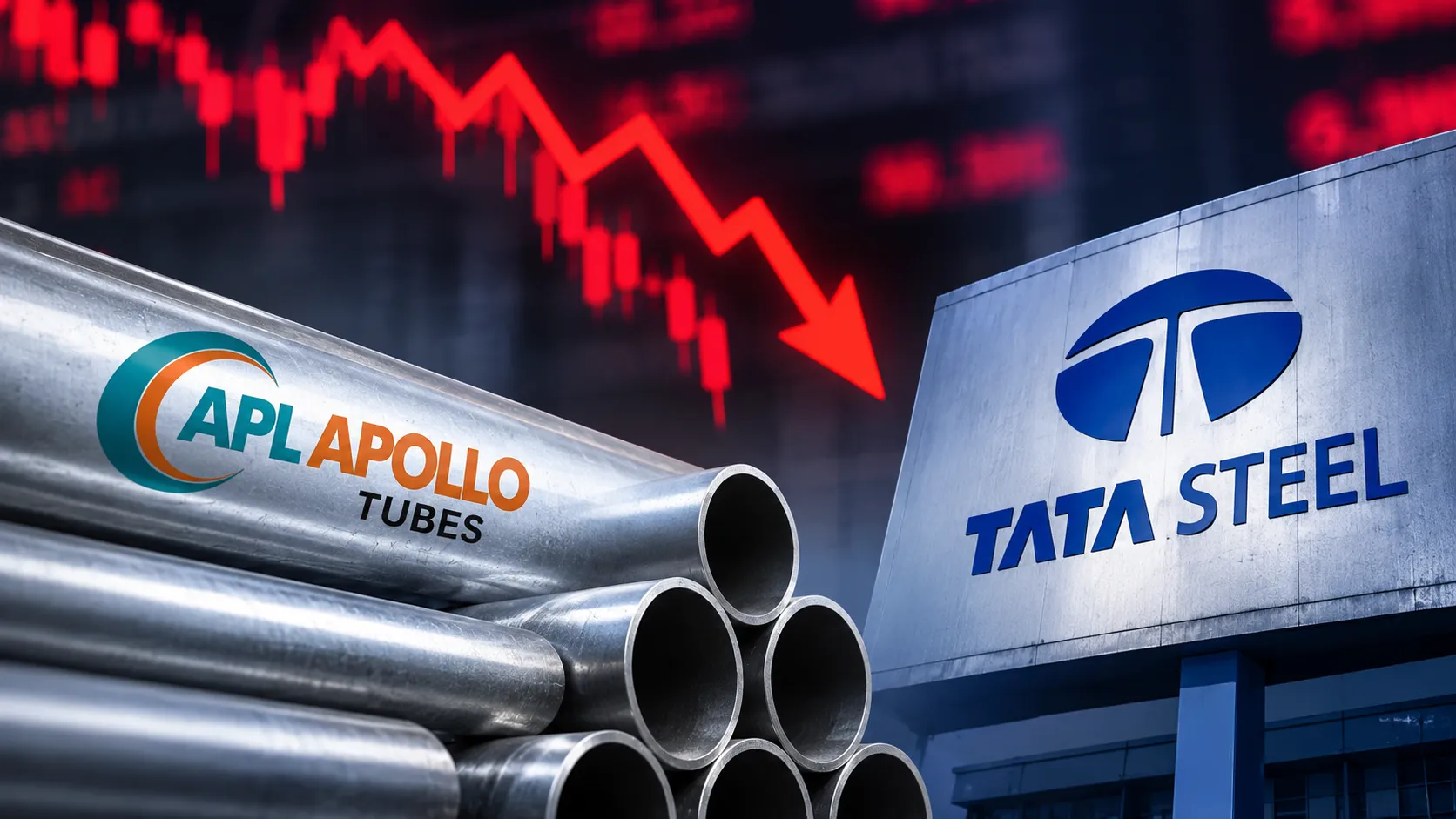
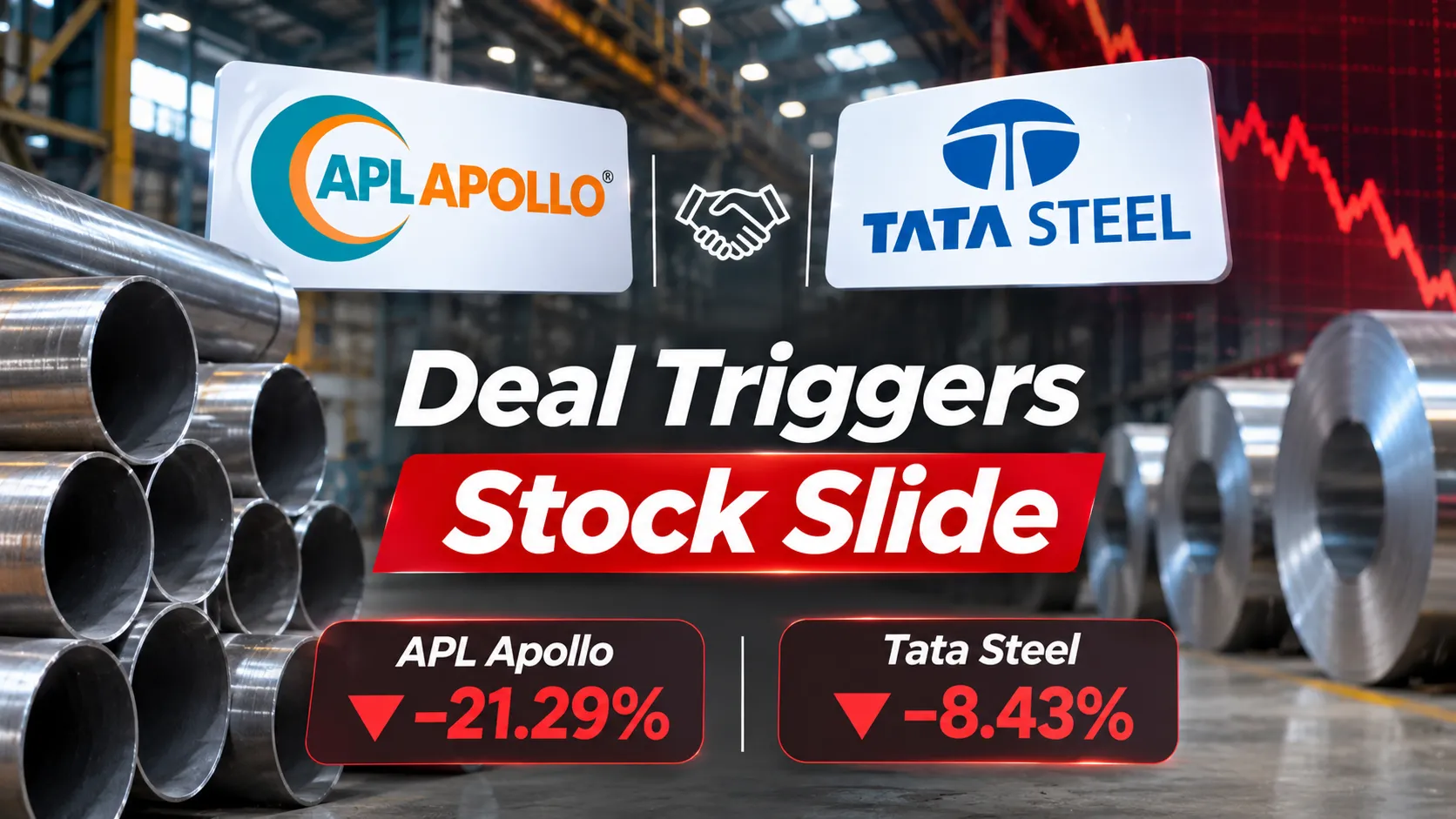
Shares of APL Apollo Tubes plunged 21.29% to ₹1,670 and Tata Steel fell 8.43% to ₹163 on November 23, as investors reacted to the companies' transaction involving the sale of Tata Steel's tubes business and Tata Steel Colors to APL Apollo and a stake in the tubes maker. The two stocks were among the biggest drags on a market that lost more than ₹6 lakh crore in value.

By Shaym Kumar · Author24 November 2026New
APL Apollo Tubes Crashes 21% and Tata Steel Falls 8% as Investors Deliver a Harsh Verdict on Their Landmark Deal

Big deals often divide investors. This one appears to have disappointed shareholders on both sides.

Shares of APL Apollo Tubes plunged 21.29% to ₹1,670 on Monday, November 23, while Tata Steel fell 8.43% to ₹163, according to closing data compiled by Univest. The declines came after the two companies announced a major transaction under which Tata Steel will sell its tubes business and Tata Steel Colors to APL Apollo, and take a significant stake in the tubes maker.

The two stocks were among the biggest losers on a day when the Sensex fell 1,483.72 points and the Nifty Metal index dropped 3.68%, the worst performance of any sector.

The deal in brief

The transaction, which TIGI reported earlier, represents a major portfolio overhaul for Tata Steel. Under the arrangement, Tata Steel will transfer its steel tubes business and its colour-coated steel subsidiary, Tata Steel Colors, to APL Apollo, India's largest maker of structural steel tubes. Business Standard reported that Tata Steel will acquire a 26.6% stake in APL Apollo for ₹15,510 crore, triggering an open offer to minority shareholders.

For Tata Steel, the deal would give it a significant stake in a fast-growing downstream business while exiting operations where APL Apollo has greater scale. For APL Apollo, it would add capacity, products and the backing of one of India's largest steelmakers.

Why APL Apollo shareholders sold

APL Apollo's fall of more than a fifth in a single session reflects several investor concerns. The first is dilution. Issuing a large stake to Tata Steel reduces the ownership of existing shareholders, and investors may worry that the value of the businesses being acquired does not justify the shares being issued.

The second is control. With Tata Steel becoming a major shareholder, investors may question how the company will be governed, how decisions will be made and whether its strategy will change. APL Apollo has been built by its promoter, Sanjay Gupta, into a highly profitable, focused business, and some investors may fear the deal could alter that.

The third is valuation. APL Apollo has historically traded at premium valuations because of its strong growth and returns. Integrating a large acquired business could weigh on margins and returns in the near term.

Why Tata Steel fell

Tata Steel's decline of more than 8% suggests that its investors also had reservations. Some may question the price being paid for the stake in APL Apollo, particularly given the tubes maker's premium valuation before the announcement. Others may be concerned about capital allocation, as Tata Steel has significant debt and ongoing investments in its Indian and European operations.

The decline also came on a day when metal stocks were broadly weak, so not all of the fall can be attributed to the deal.

The strategic logic

Despite the market reaction, the deal has a clear strategic rationale. India's demand for structural steel tubes is growing rapidly, driven by construction, infrastructure, warehousing and housing. Steel tubes are increasingly used as an alternative to traditional building materials because they are lighter, faster to install and can be manufactured to precise specifications.

APL Apollo has been the leader in this market, building a brand and distribution network that serves builders and fabricators across the country. Combining its capabilities with Tata Steel's tubes business and colour-coated products could create a dominant player in value-added steel products.

“The market is not questioning the logic of the deal so much as the price both sides are paying for it.”
— TIGI Markets Desk

For Tata Steel, focusing on core steelmaking while holding a stake in a downstream leader may allow it to capture growth without managing every business directly.

How deals are judged

Markets often react negatively to large deals in the short term, particularly when they involve share issuance, complex structures or uncertainty about integration. Over time, the share price reaction depends on whether the companies deliver the promised benefits.

Investors will watch the terms of the open offer, the timeline for regulatory approvals and any further details about how the combined business will be run.

Market context

The sharp falls added to the pressure on the broader market. The Sensex closed at 82,435.99, down 1.77%, and the Nifty at 25,349.65, down 1.75%, as banks and metals led the decline. More than ₹6 lakh crore of market value was wiped out across BSE-listed companies.

The monthly derivatives expiry, brought forward to Monday because of the Guru Nanak Jayanti holiday on Tuesday, added to the volatility.

02fed752-4961-4dfc-b5ce-ddd984c42732.png

Analyst views

Analysts are likely to revisit their forecasts and recommendations for both companies in light of the deal. Key questions include the impact on earnings per share, return on capital and debt levels. Some may see the share price falls as an overreaction that creates buying opportunities, while others may argue that the deal structure warrants a lower valuation.

What it means for the steel industry

The transaction reflects a broader trend of consolidation in the Indian steel industry, as companies seek scale, value-added products and stronger positions in growing markets. Large steelmakers such as JSW Steel, Tata Steel and ArcelorMittal Nippon Steel India have been investing in capacity and downstream businesses to capture rising domestic demand.

What it means for retail investors

Retail investors in APL Apollo, who had enjoyed strong returns over the past decade, faced a sharp loss on Monday. The open offer may give minority shareholders an opportunity to sell part of their holdings at a set price, depending on its terms. Investors will need to decide whether to stay invested in the combined company or exit.

Lessons from past deals

Indian markets have seen similar reactions to complex deals in the past, where companies issuing shares or taking on new strategic shareholders faced sharp initial selling. In several cases, the shares recovered over time as the benefits of the transaction became clearer, while in others the market's scepticism proved justified.

The outcome typically depends on execution: whether promised synergies are delivered, whether the combined business maintains its growth and returns, and whether governance remains strong. Investors in both APL Apollo and Tata Steel will be looking for early evidence on each of these points.

What comes next

Trading resumes on Wednesday, November 25, after the holiday. Investors will watch whether the two stocks stabilise or fall further, and whether management provides additional clarity on the deal's financial impact. Regulatory filings and analyst meetings in the coming days are likely to shape sentiment.

TagsAPL Apollo TubesTata Steelsteel tubesTata Steel Colorsmergers and acquisitionsopen offerNifty Metalsteel stocksmarket reactionshare price crashSensexNiftystructural steelTata Groupinvestorsvaluationcapital allocationbuilding materialsIndian stockscorporate deals

Reader reviews

Sign in to rate and review this article.
Loading reviews…

