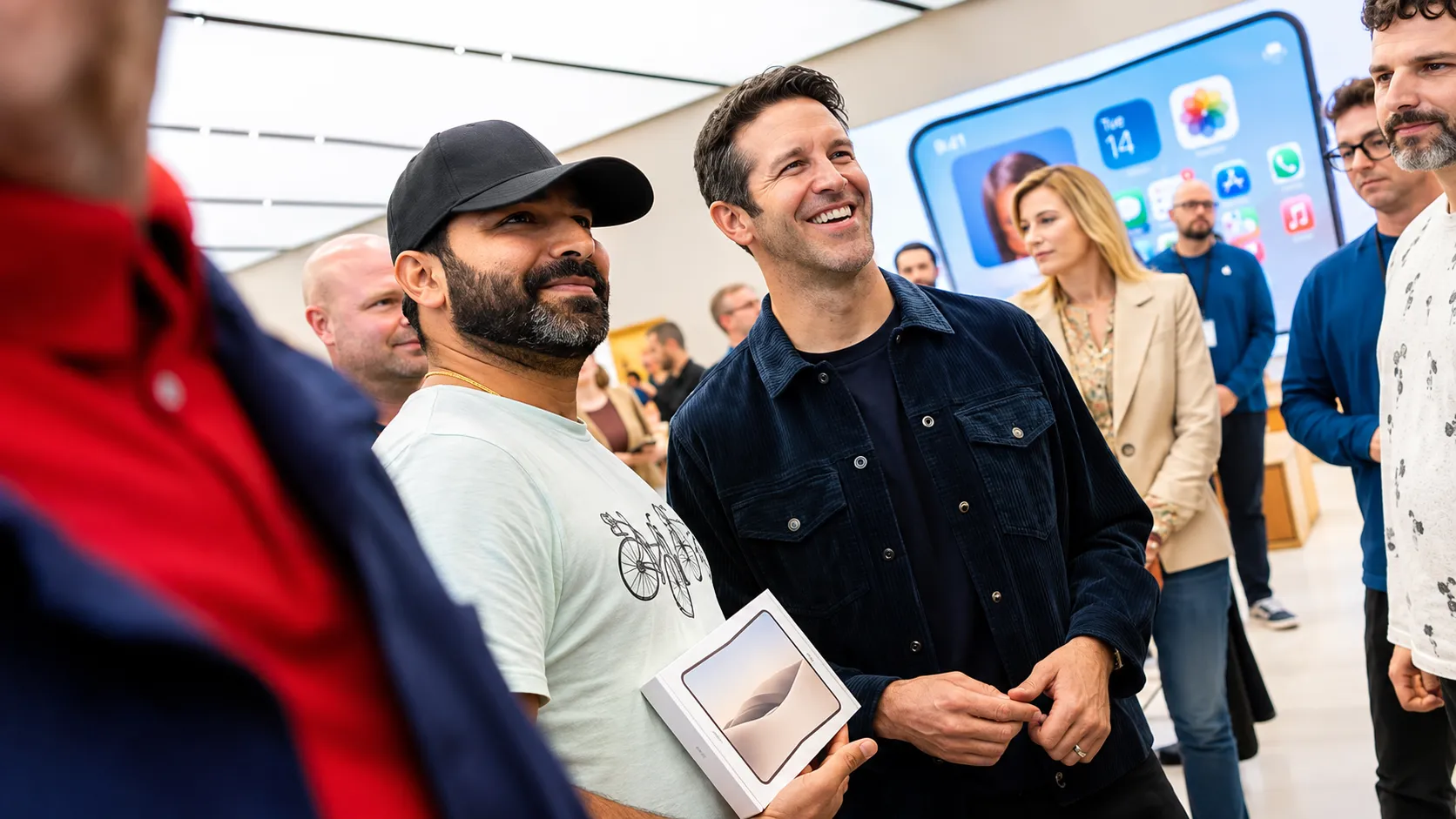
For the first time in more than 15 years, someone other than Tim Cook will lead Apple through its quarterly earnings call. John Ternus, the hardware engineering chief who took over as chief executive in September, faces his first major test with investors at a moment when the economics of the smartphone business are being upended by soaring chip costs.
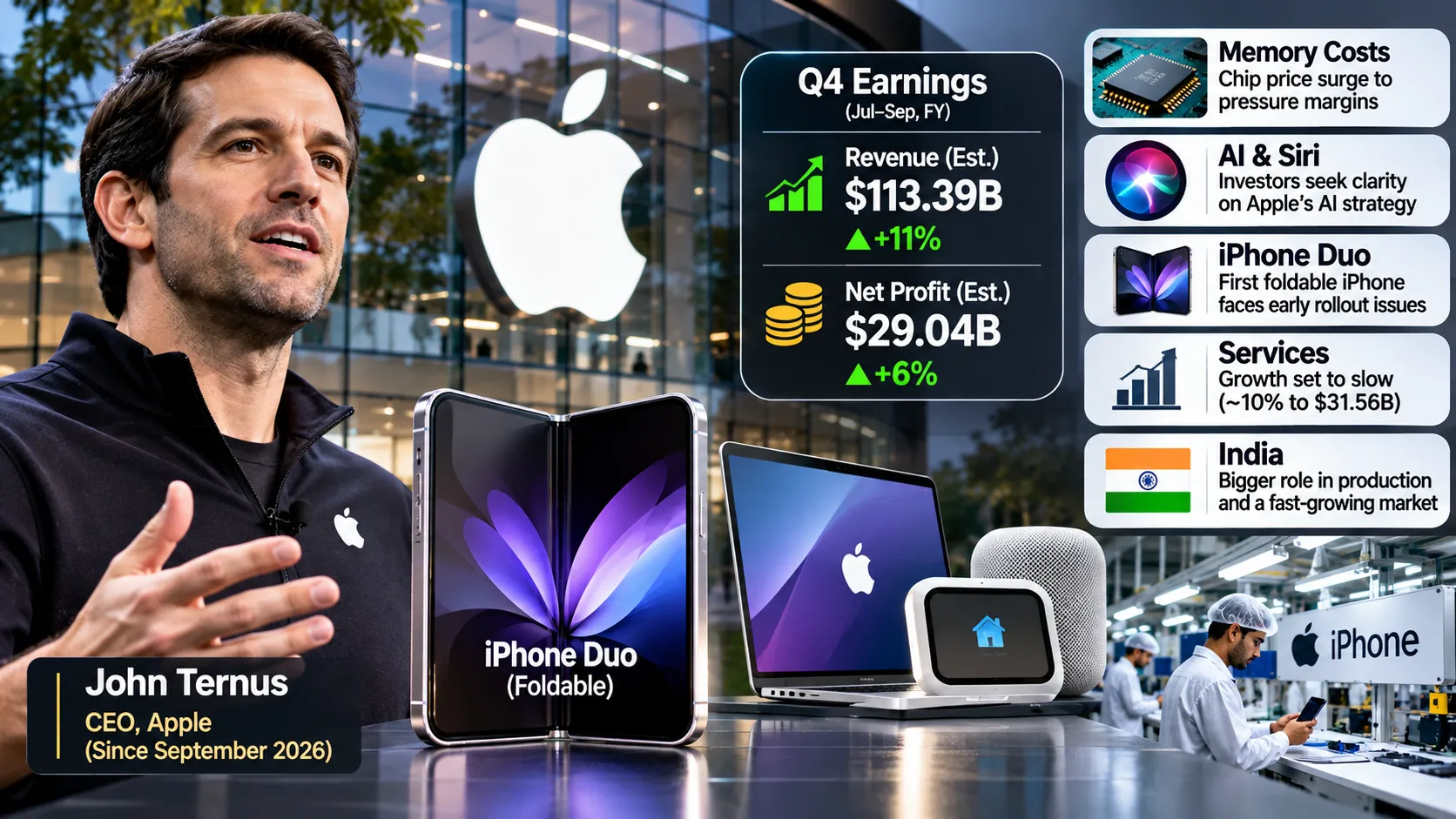
Apple will report results for its July-September fiscal fourth quarter on Monday, November 2, with Ternus hosting the earnings call, according to a Reuters preview published by Devdiscourse. Analysts expect revenue to rise nearly 11% to $113.39 billion and net profit to rise about 6% to $29.04 billion, according to LSEG data.
But rising memory costs, which Cook memorably described as a "100-year flood," are expected to drag Apple's quarterly profit growth to its weakest in six quarters, analysts say.
The memory squeeze
The AI boom has driven an extraordinary surge in demand for memory chips, as technology companies build data centres filled with servers that require vast amounts of high-bandwidth memory and conventional DRAM. Memory makers such as Samsung, SK hynix and Micron have prioritised production of high-margin AI memory, tightening supply of the chips used in smartphones, PCs and other consumer devices. Prices have soared as a result.
For Apple, which uses large amounts of DRAM and NAND flash storage in iPhones, iPads and Macs, higher memory prices raise the cost of every device. Apple has historically been able to negotiate favourable terms with suppliers because of its scale, but even Apple cannot fully escape a market-wide shortage. Investors will look closely at gross margins and at Apple's guidance for the December quarter, its biggest of the year.
South Korea's export data, released on November 1, showed chip exports up 259% in October, illustrating the scale of the memory boom that is squeezing device makers.
iPhone and services
Analysts expect iPhone revenue to rise about 15% to $56.54 billion, slowing from growth of about 22% in the previous quarter, according to the Reuters preview. Services revenue, which includes the App Store, iCloud, Apple Music, Apple TV+ and payments, is expected to rise almost 10% to $31.56 billion, the slowest pace in more than three years.
Services have been a crucial driver of Apple's profitability, carrying much higher margins than hardware. A slowdown in services growth would be closely watched, particularly as regulators in the United States, Europe and elsewhere challenge Apple's App Store fees and rules.
The foldable phone
Ternus oversaw the launch of Apple's first foldable phone, the iPhone Duo, which went on sale on October 23 at a starting price of $1,999 in the United States. The launch came too late to contribute significantly to the September quarter, but it will be a focus for investors assessing demand in the holiday quarter.
The rollout has faced problems. Some buyers have reported cracks along the central fold of the inner display, and Apple is offering replacements. IDC analyst Nabila Popal said the test will be "how quickly Apple can replace affected devices while supplies remain tight." Bank of America estimates that delivery waits for the Duo average 79 days.
Ternus has also overseen the launch of a smart home hub and Apple's first touch-screen laptops, products that represent significant new directions for the company.
The AI question
Artificial intelligence remains Apple's biggest strategic question. The company has been criticised for falling behind rivals such as Google, Microsoft, Samsung and OpenAI in generative AI, and its revamped Siri assistant has been delayed and scrutinised.
"Recent agentic innovation far outpaces our experience with Siri AI," said Dan Morgan, portfolio manager at Synovus Trust. Morgan said investors also want to know whether Apple could profit from third-party AI agents distributed through its App Store, potentially turning the rise of AI agents into a revenue opportunity rather than a threat.
The debate over AI agents is intensifying across the technology industry. Amazon and JPMorgan have moved to restrict outside AI agents from operating on their platforms, while companies such as Meta, Google and OpenAI are building agents that can shop, book and transact on behalf of users. Apple's control of the iPhone and App Store gives it a powerful position in determining how such agents reach consumers.
Who is John Ternus?
Ternus joined Apple in 2001 and rose through the hardware engineering organisation, leading work on products including the iPad, AirPods and Mac. As senior vice president of hardware engineering, he oversaw the transition of the Mac to Apple's own silicon chips, one of the company's most successful strategic moves of the past decade.
His appointment as CEO signalled continuity and a focus on product engineering. Cook, who led Apple from 2011 and oversaw its growth into one of the world's most valuable companies, presided over a period of enormous financial success but faced questions about Apple's pace of innovation in new categories.
Strong share performance
Apple's shares have risen about 27% this year, outperforming Microsoft, Alphabet, Meta and Amazon, according to the Reuters preview. Investors have favoured Apple partly because it has spent less heavily on AI infrastructure than its Big Tech peers, at a time when concerns about AI spending have weighed on technology stocks. Last week, Alphabet's shares fell sharply after its results, and the broader technology sector came under pressure.
The India dimension
India has become an increasingly important part of Apple's supply chain and market. Apple's contract manufacturers, including Foxconn and Tata Electronics, have expanded iPhone production in India significantly, and India now produces a substantial share of iPhones exported to the United States. Apple has also opened retail stores in Mumbai, Delhi and other Indian cities and has seen strong sales growth in India, now one of its fastest-growing markets.
Shifting production to India has helped Apple reduce its dependence on China and mitigate the impact of US tariffs on Chinese imports. Any commentary from Ternus on supply chain strategy will be closely followed in India.
Regulatory pressures
Apple faces significant regulatory challenges. In the United States, the Justice Department has pursued an antitrust lawsuit against the company, and court rulings have forced changes to App Store payment rules. In Europe, the Digital Markets Act requires Apple to allow alternative app stores and payment methods. These changes could affect services revenue over time.
What investors will watch
Beyond headline numbers, investors will focus on gross margin guidance, the outlook for iPhone Duo supply, commentary on memory costs, the strategy for AI and Siri, and capital returns. Apple typically announces large share buybacks and dividends, and its capital return programme remains among the largest in the world.
Ternus's tone and communication style will also be scrutinised, as investors form their first impressions of how he will lead the company.
What comes next
Apple's results, due after the US market closes on Monday, will set the tone for technology stocks in a busy week that includes the US midterm elections on November 3 and the October jobs report on November 6. For Ternus, the call will mark the beginning of his public tenure as Apple's leader. How he navigates memory costs, the foldable phone launch and the AI challenge will shape investor confidence in Apple's next chapter.