Apple is taking a careful, research-led step into one of the most sensitive applications of artificial intelligence: answering people's questions about their health.
Apple and OpenEvidence, a medical evidence search engine popular with doctors, launched a study on Sunday, November 15, built around an experimental AI-powered health chat app, according to STAT. Participants download the study app and enrol in the Apple Health AI Usage Study.
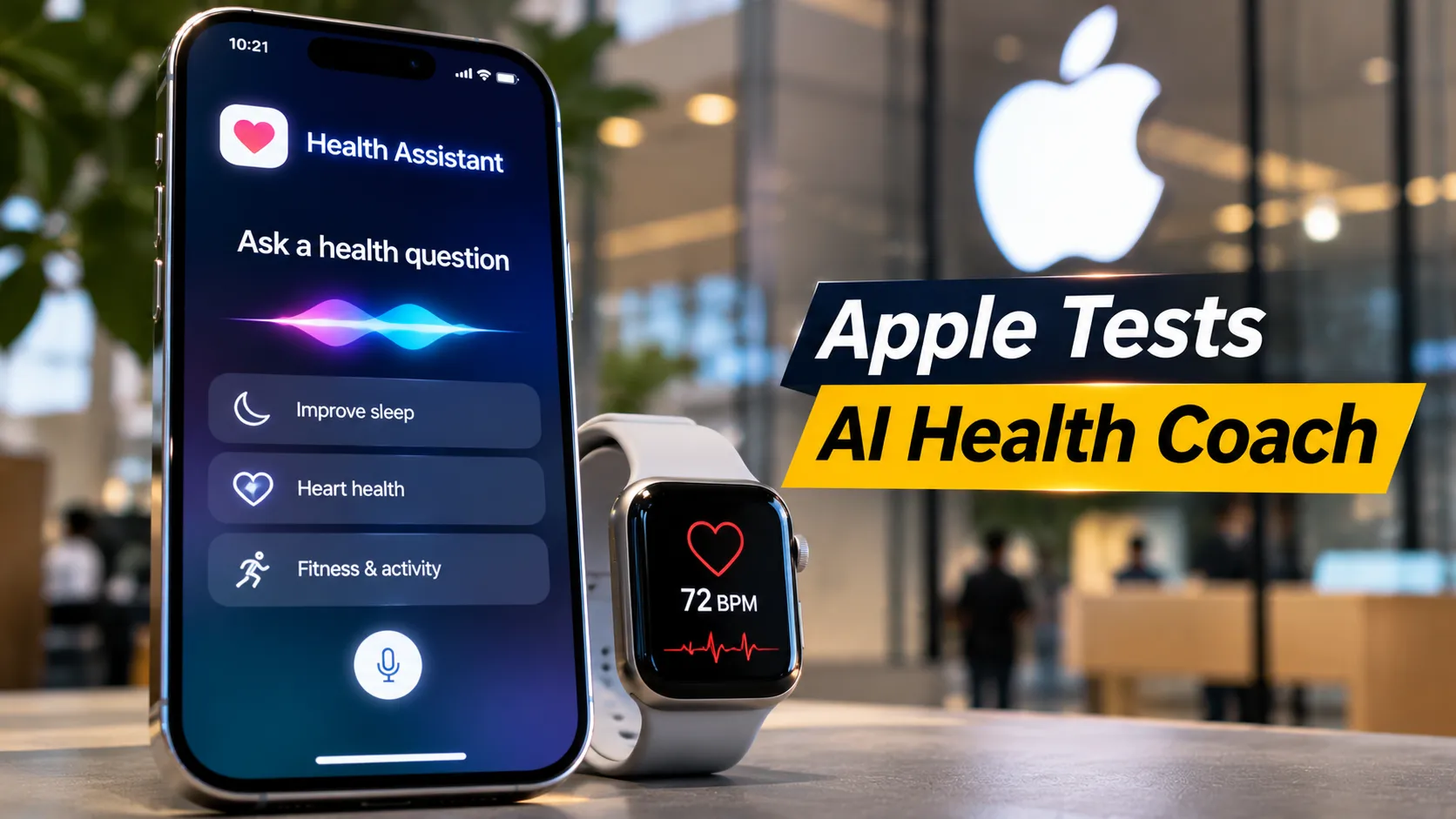
Users can ask health questions, such as how to improve their sleep or heart health, and can ask about data they choose to share from Apple's Health app, including vital signs or lab results. Apple suggests the app can help participants prepare for appointments with their doctors.
The study design
The study aims to enrol up to 200,000 iPhone users in the United States for at least 12 months, according to AI Weekly. Eligible participants need an iPhone 15 or later running iOS 26 or later, with Apple Intelligence enabled.
Participants will be surveyed about their experiences, including the quality of the chatbot's responses and how they used the information, according to STAT. OpenEvidence deletes query and response data after 24 hours, according to AI Weekly.
Who is OpenEvidence
OpenEvidence has built a following among clinicians by providing answers to medical questions grounded in published research and clinical guidelines. Rather than relying solely on general internet data, the platform draws on peer-reviewed literature, which supporters say makes its answers more reliable for medical use.
OpenEvidence helped develop the study app and provides some of its technology, according to STAT.
Hints of Apple's ambitions
Apple has reportedly been working on an AI health coach, and the study may inform future products, STAT reported. The launch hints at possible new directions for both companies.
Health has been a growing focus for Apple. The Apple Watch tracks heart rate, sleep, activity and blood oxygen, and can detect irregular heart rhythms and falls. Apple's Health app aggregates data from devices, apps and, in some countries, medical records. Chief executive Tim Cook has said that Apple's greatest contribution to humanity could be in health.
Why a study, not a product
The decision to launch the chatbot as a research study rather than a consumer product reflects the risks of AI in healthcare. AI chatbots can produce convincing but incorrect answers, sometimes called hallucinations, which could lead users to make poor health decisions. Regulators in the United States and elsewhere are still developing rules for AI tools that provide medical information.
A large-scale study allows Apple to understand how people use such tools, what questions they ask, where the AI performs well or poorly, and how users act on the information, before deciding whether to launch a product. It also provides data to support any future regulatory submissions.
The competitive landscape
Apple is entering a crowded field. OpenAI has said that large numbers of people use ChatGPT for health questions, and has introduced health-related features. Google has developed medical AI models and health features in its products. Amazon has expanded into healthcare through One Medical and pharmacy services. Startups are building AI tools for symptom checking, mental health support and chronic disease management.
Apple's advantages include its large base of iPhone and Apple Watch users, the health data those devices collect and its reputation for privacy. Its approach of letting users choose which data to share, and partnering with an evidence-focused provider, is consistent with that positioning.
Privacy and trust
Health data is among the most sensitive personal information. Users and regulators will scrutinise how Apple and OpenEvidence handle the questions people ask and the data they share. The short data retention period at OpenEvidence and the opt-in design are intended to address such concerns.
Trust will be essential if Apple decides to launch a health AI product. A single high-profile error could damage confidence in the technology and the brand.
Doctors and AI
The study also raises questions about the relationship between patients, doctors and AI. Tools that help patients understand their test results and prepare questions for appointments could make consultations more productive. But doctors have also expressed concern that patients might rely on chatbots instead of seeking professional care, or arrive with misleading information.
Medical organisations generally advise that AI tools should support, not replace, professional medical advice.
What it means for India
India is one of Apple's fastest-growing markets and a major manufacturing base for iPhones. The country also has a vibrant digital health sector, with startups offering teleconsultation, diagnostics and AI-based health tools, and a government-backed digital health infrastructure through the Ayushman Bharat Digital Mission.
The study is limited to the United States, but its findings could shape future Apple health features offered globally. For Indian health tech companies, Apple's move signals growing interest from big technology firms in AI-powered health guidance, which could bring both competition and partnership opportunities.
The market opportunity
Digital health is one of the fastest-growing areas of technology investment. Consumers increasingly use apps and wearables to track their health, and many turn to the internet for medical information before or after seeing a doctor. AI chatbots could make that information more personalised, by drawing on a user's own health data, but also raise the stakes if the advice is wrong.
Companies that can combine reliable medical knowledge with trusted handling of personal data could capture significant value.
Regulatory scrutiny
In the United States, the Food and Drug Administration regulates software that diagnoses or treats medical conditions, while general wellness tools face fewer restrictions. AI chatbots that provide health information sit in a grey area, and regulators are examining how to oversee them. A large study could help Apple understand where its product might fall under regulatory rules.
Analysts say the study could also give Apple valuable insight into the kinds of health questions people ask most often, which could inform the design of features across its devices, from the Apple Watch to AirPods, which Apple has increasingly positioned as health devices with features such as hearing health tools.
What comes next
The study will run for at least a year. Its findings, and any product announcements, will be watched closely by the technology and healthcare industries. Apple has not said when, or whether, it will launch an AI health coach.