FundingMarket Data Women5 MIN READ

Apple Hits a Record $5.16 Trillion Market Value as Investors Rotate Into Big Tech Names Seen as Safer AI Bets

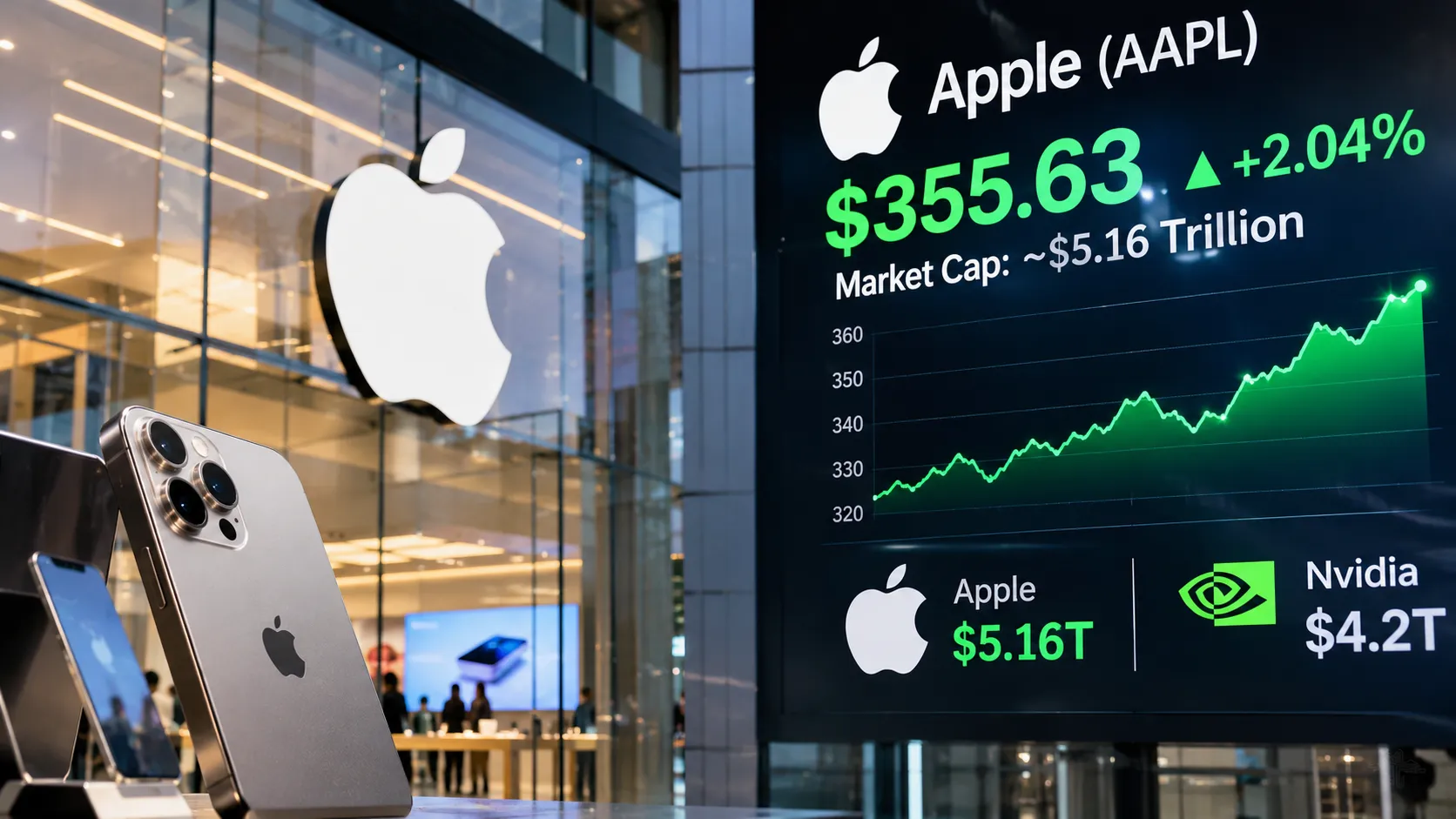
Apple shares closed at a record $355.63 on November 11, up 2.04%, after touching an all-time intraday high of $355.90. At its peak during the session, the iPhone maker's market value reached about $5.16 trillion, its highest ever, and the stock is up about 31% this year, overtaking Nvidia as the world's most valuable listed company.

By Shaym Kumar · Author12 November 2026New
Apple Hits a Record $5.16 Trillion Market Value as Investors Rotate Into Big Tech Names Seen as Safer AI Bets

Apple has reached a new peak in market value, becoming the clearest winner of a shift in investor sentiment within the technology sector as the AI trade becomes more turbulent.

Apple shares rose $7.12, or 2.04%, to close at a record $355.63 on Wednesday, November 11, according to MacDailyNews, after touching an all-time intraday high of $355.90. During the session, the stock pushed above $355.42, giving the company a market value of about $5.16 trillion, its highest ever, according to TheStreet.

The shares are up about 31.1% this year, TheStreet reported. Estimates of Apple's market value vary slightly depending on the share count used; MacDailyNews put its value at about $5.1 trillion at the close.

Overtaking Nvidia

Apple's rise has come as Nvidia, the chipmaker that dominated the AI rally, has stumbled. Nvidia's market value has fallen sharply since November 8, when its board opened an investigation into chief executive Jensen Huang's conduct. MacDailyNews listed Nvidia's market value at about $4.2 trillion, well below Apple's.

Apple first crossed the $5 trillion threshold briefly in late July 2026, becoming only the second company ever to do so after Nvidia, according to 9to5Mac. Since then, it has consolidated its gains and now sits comfortably as the world's most valuable listed company.

Why investors are buying Apple

Apple was once seen as a laggard in artificial intelligence, as rivals such as Microsoft, Alphabet and Meta invested hundreds of billions of dollars in AI infrastructure and models. Apple took a more cautious approach, integrating AI features under the Apple Intelligence brand into its devices and partnering with outside AI developers rather than building massive data centres of its own.

That caution has become part of Apple's appeal. As investors have grown concerned about the returns on AI spending and the debt being used to finance data centres, Apple's strong balance sheet, steady cash flows and large share buybacks have looked attractive. Unlike companies spending heavily on AI infrastructure, Apple has not had to dramatically increase capital expenditure.

Apple also benefits from AI demand indirectly. If AI features become an important reason for consumers to upgrade their phones and computers, Apple's installed base of more than 2 billion active devices gives it a large platform to monetise those features.

A strong day for tech

Apple's record came on a strong day for US stocks. The Nasdaq Composite rose 1.6% to 25,466.19, the S&P 500 gained 1.31% to 7,619.38 and the Dow Jones Industrial Average rose 0.49% to 52,486.49, according to TheStreet. Technology stocks were lifted by better-than-expected results from AI cloud provider CoreWeave.

The market's rebound came despite concerns about the Federal Reserve. Hotter-than-expected inflation data released on Tuesday had pushed up Treasury yields and raised expectations of a December interest rate rise.

The iPhone engine

The iPhone remains Apple's largest business, accounting for about half of its revenue. Demand for its latest models, the pricing of new devices and the strength of upgrades in key markets such as the United States, China and India are closely watched by investors.

Apple's services business, which includes the App Store, iCloud, Apple Music, Apple Pay and advertising, has become an increasingly important source of growth and profit. Services carry higher margins than hardware, and their growth has helped lift Apple's overall profitability and valuation.

“Apple's caution on AI, once a weakness in investors' eyes, has become part of its appeal.”
— TIGI Markets Desk

The India connection

India has become central to Apple's strategy. The company has rapidly expanded iPhone manufacturing in India through partners including Foxconn and Tata Electronics, as part of efforts to reduce its dependence on China. A growing share of iPhones sold in the United States are now assembled in India, and the country has become one of Apple's largest export bases.

Apple has also expanded its retail presence in India, opening stores in major cities, and India is one of its fastest-growing markets for iPhone sales. However, iPhone sales in India have faced pressure this year, with one report citing a 20% year-on-year decline in the third quarter of 2026 as rising prices and memory costs weighed on the smartphone market, according to Apple World Today.

6db42630-73fe-4c8a-9494-df3d58b4d4a5.png

Risks for Apple

Despite its record value, Apple faces challenges. Regulators in the United States, Europe and elsewhere are scrutinising its App Store practices, and changes to app store rules could affect its services revenue. Tariffs and trade tensions between the United States and China could affect its supply chain and costs.

Rising memory chip prices, driven by demand from AI data centres, have increased component costs for smartphones and computers across the industry. And Apple's valuation, at more than $5 trillion, leaves little room for disappointment.

The concentration question

Apple's rise underlines the concentration of the US stock market in a small number of very large technology companies. Apple, Nvidia, Microsoft, Alphabet, Amazon and Meta together account for a large share of the S&P 500's value, meaning that moves in their shares have a big impact on global index funds and pension savings.

For investors, the rotation from Nvidia to Apple within the Magnificent Seven group shows that the market is distinguishing between companies based on their exposure to AI spending risks.

What it means for Indian investors

Indian investors with exposure to US technology stocks through international funds or direct investment have benefited from Apple's rally. Apple's growing manufacturing footprint in India also matters for Indian suppliers, electronics manufacturers and jobs, and for India's ambitions to become a global electronics manufacturing hub.

The buyback machine

Apple has returned enormous sums to shareholders through buybacks and dividends over the past decade, reducing its share count significantly and supporting earnings per share growth. Its ability to generate cash from iPhone sales and services allows it to keep returning capital while still investing in research and development.

For long-term investors, this combination of steady cash generation and capital returns has made Apple one of the most dependable large technology stocks. In a market grown nervous about the cost of the AI arms race, that reliability commands a premium, which helps explain why the company has overtaken rivals that are spending far more heavily on data centres.

What comes next

Investors will watch Apple's holiday-quarter iPhone sales, the progress of its AI features, regulatory developments and any shift in market sentiment towards Big Tech. If the turbulence in AI stocks continues, Apple could remain a favoured destination for investors seeking quality and stability within the technology sector.

TagsApplemarket capitalisation$5 trillionAAPLiPhoneTim CookBig TechNvidiaMagnificent SevenNasdaqS&P 500AI stocksApple Intelligenceservices revenueIndia manufacturingFoxconnTata ElectronicsWall Streetglobal marketsinvestors

Reader reviews

Sign in to rate and review this article.
Loading reviews…

