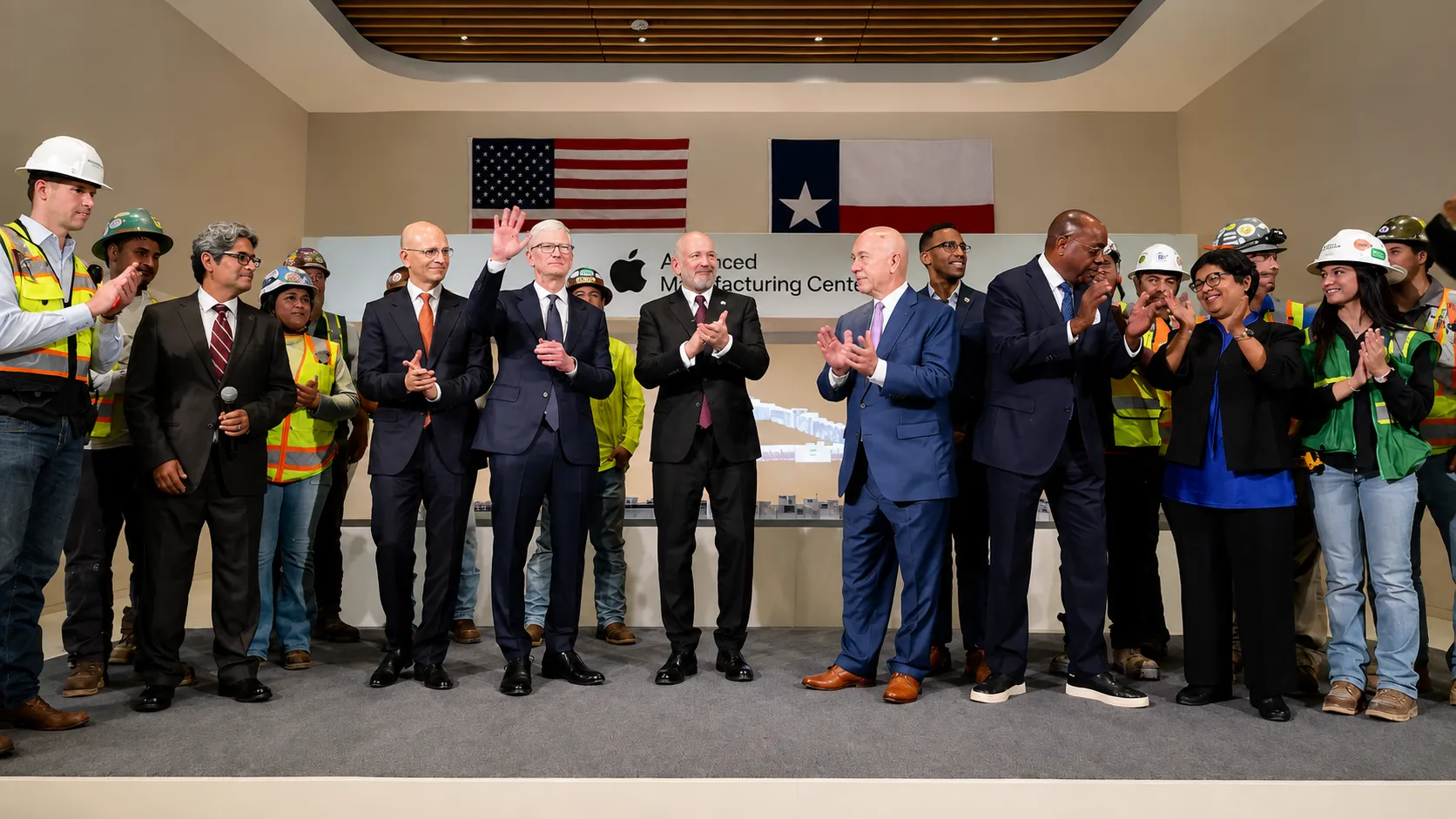
Apple chief executive Tim Cook was joined by U.S. Commerce Secretary Howard Lutnick to formally open a new manufacturing plant in Houston, Texas, marking a significant milestone in the technology giant's continued push to expand its domestic American manufacturing footprint amid ongoing shifts in global supply-chain strategy. The event, attended by state and local officials alongside senior Apple executives, was framed by both the company and federal officials as a tangible marker of continued investment in U.S.-based advanced manufacturing capacity.
The Houston plant opening reflects a broader strategic recalibration underway across Apple's global manufacturing operations, as the company continues to diversify production capacity beyond its historical concentration in China and other Asian manufacturing hubs. The presence of a senior cabinet-level official at the opening underscores the extent to which large-scale manufacturing investment decisions by major American technology companies have become intertwined with broader national industrial policy priorities, particularly around domestic semiconductor, electronics and advanced-manufacturing capacity. The symbolic weight of the event was reinforced by the joint appearance of Cook and Lutnick, a pairing that signals coordinated messaging between the company and the federal government around the strategic importance of the facility. Such joint appearances have become an increasingly common feature of major manufacturing announcements across the U.S. technology sector, reflecting both companies' desire to publicly demonstrate commitment to domestic investment and the administration's interest in showcasing tangible outcomes of its broader industrial policy agenda. For Apple, the expansion of domestic manufacturing capabilities serves multiple strategic purposes beyond pure supply-chain diversification. Domestic production facilities can help the company reduce exposure to geopolitical trade tensions and tariff policies affecting cross-border electronics manufacturing, while also supporting the company's public commitments around job creation and investment within the United States — commitments that have become an increasingly prominent part of Apple's corporate communications strategy in recent years. The involvement of Commerce Secretary Lutnick in the plant opening also signals the continued prioritisation of domestic manufacturing capacity by U.S. federal policy, building on a multi-year push spanning both legislative incentives and executive-branch engagement aimed at encouraging major technology and electronics companies to establish or expand production facilities on American soil. This policy emphasis has taken on particular significance amid broader concerns about supply-chain resilience following disruptions experienced during recent years across global semiconductor and electronics manufacturing networks.
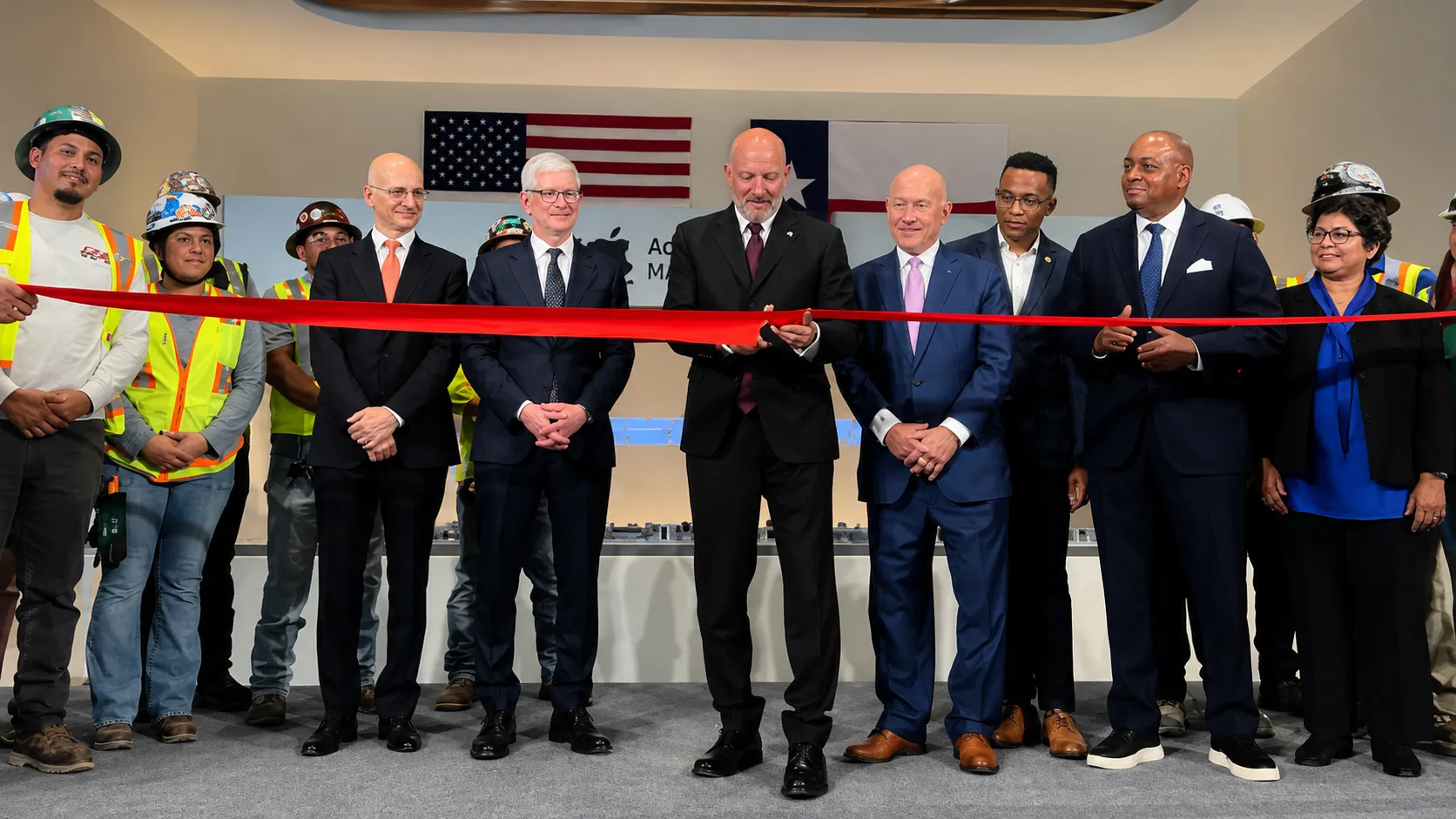
Apple's manufacturing footprint decisions carry outsized significance across the broader technology and electronics supply chain, given the company's position as one of the world's largest purchasers of components, contract manufacturing capacity and advanced materials. Analysts tracking the company's supply-chain strategy note that incremental shifts toward domestic production, even when representing a modest share of Apple's overall manufacturing volume, can nonetheless signal broader directional intent that ripples through the company's extensive network of component suppliers and contract manufacturers, many of whom are simultaneously evaluating their own capacity-expansion decisions in response to Apple's strategic signals. The Houston facility's specific role within Apple's broader manufacturing network — whether focused on final assembly, component production, testing or another function within the company's supply chain — will shape how significant an impact the plant ultimately has on domestic employment and Apple's broader 'Made in America' positioning. Regardless of its precise scope, the plant's opening adds to a growing list of manufacturing investments announced by major U.S. technology companies over the past several years, reflecting an industry-wide recalibration of production geography in response to both policy incentives and heightened supply-chain risk awareness. Texas, and Houston specifically, has increasingly positioned itself as a competitive destination for advanced manufacturing investment, benefiting from a combination of favourable state-level industrial policy, relatively lower operating costs compared to coastal technology hubs, and a deep pool of engineering and skilled-trades talent drawn from the region's long-established energy and industrial sectors. Apple's decision to invest in the state adds to a broader wave of technology and semiconductor manufacturing investment that Texas has attracted in recent years, as companies across the electronics value chain have sought to diversify their domestic manufacturing footprint beyond traditional hubs on the West Coast. The broader supply-chain diversification trend that the Houston plant exemplifies also reflects lessons drawn from recent years of global disruption, spanning pandemic-related manufacturing shutdowns, geopolitical trade tensions and semiconductor supply shortages that exposed vulnerabilities in highly concentrated, geographically narrow supply chains. For companies of Apple's scale, building redundancy and geographic diversity into manufacturing operations has increasingly become viewed not merely as a matter of policy compliance or public relations, but as a genuine operational risk-management imperative given the catastrophic business impact that supply-chain disruptions can inflict on a company so dependent on precisely timed, high-volume component flows.
As Apple continues to navigate the complex balance between cost efficiency, supply-chain resilience and policy alignment, the Houston plant opening offers a tangible marker of the company's evolving manufacturing strategy. Industry observers will be watching closely for further announcements regarding the facility's operational scope and hiring plans, as well as for signals of whether Apple's broader supplier network follows suit with additional domestic manufacturing investments in the months ahead. For the broader U.S. technology manufacturing landscape, Apple's Houston investment adds further momentum to a policy-driven reshoring trend that has gained considerable traction over the past several years, with implications extending well beyond Apple's own supply chain to the broader ecosystem of contract manufacturers, materials suppliers and skilled-labour markets that stand to benefit from sustained investment in domestic advanced-manufacturing capacity. The plant's opening will likely be referenced repeatedly in coming months as policymakers and industry advocates seek concrete examples of large-scale technology manufacturing investment returning to American soil, reinforcing the broader political and economic narrative surrounding domestic industrial policy. For workers and communities in the Houston region, the plant's opening also carries direct economic significance, offering a concrete example of how large-scale technology manufacturing investment can translate into local employment and supply-chain opportunities beyond the immediate footprint of the facility itself. The facility's long-term success will likely be measured not only in output and employment figures but in its ability to anchor a broader regional ecosystem of specialised suppliers and skilled-labour development over the coming years.