The world's largest oil company is making one of its biggest bets on artificial intelligence, completing a deal that makes it a major shareholder in Saudi Arabia's national AI champion and signals the kingdom's determination to turn its energy wealth into digital power.
Saudi Aramco has completed its acquisition of a 49% stake in Humain, the AI company majority-owned by the Public Investment Fund (PIF), Saudi Arabia's sovereign wealth fund, according to an announcement on Sunday, November 1, reported by Unite.AI. PIF retains the remaining 51%.
Aramco contributed about SAR 9.9 billion, or $2.6 billion, in cash and transferred key AI assets to Humain, according to the report. The deal brings together AI, computing and digital assets contributed by both PIF and Aramco.
What Humain does
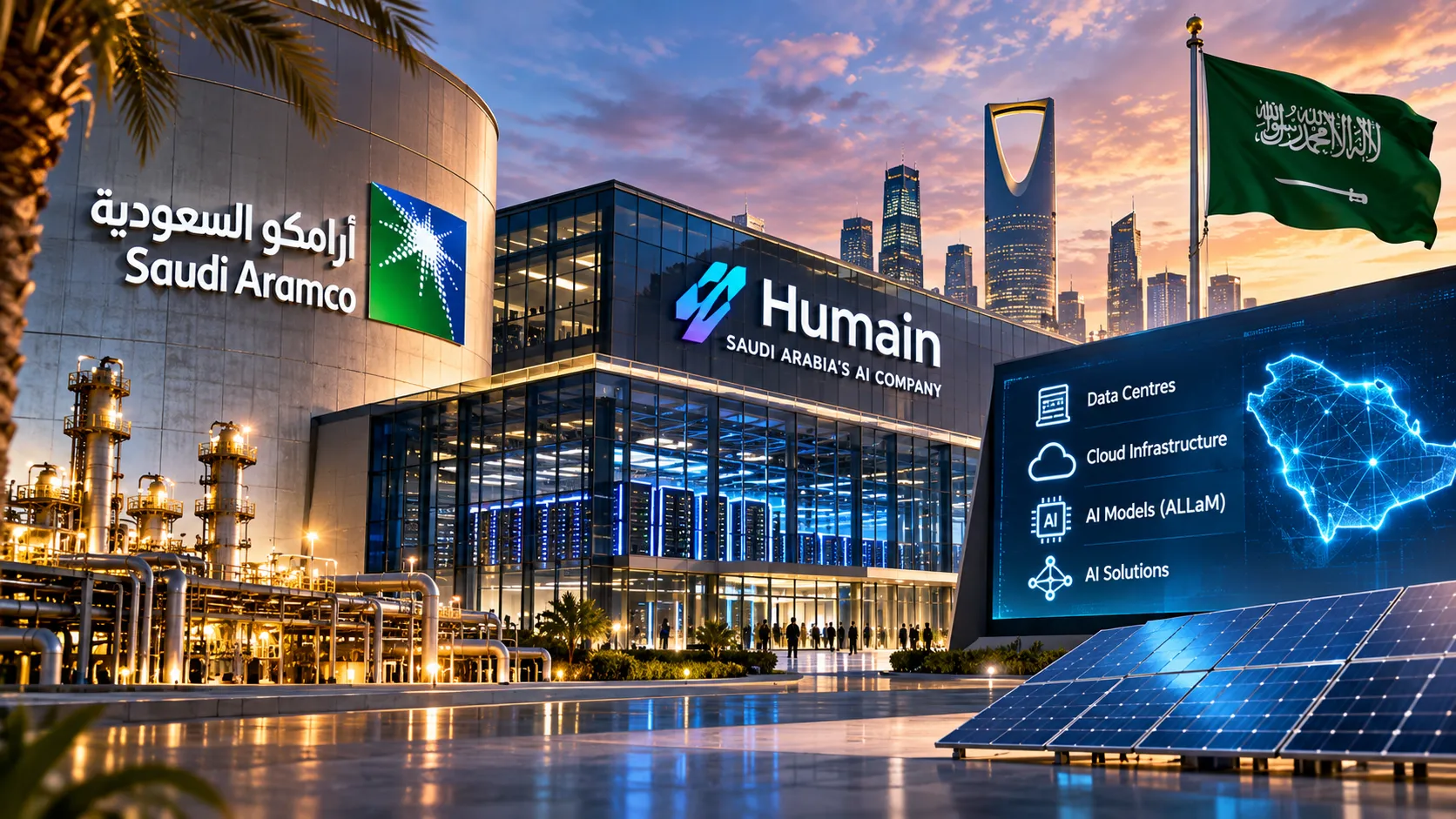
Humain was launched in May 2025 to build full-stack AI capabilities for Saudi Arabia and the wider region. It operates across four areas: next-generation data centres, high-performance infrastructure and cloud platforms, advanced AI models and AI solutions for businesses and governments.
Its model line-up includes ALLaM, described as one of the world's strongest multimodal Arabic large language models. Building strong Arabic-language AI is a strategic priority for Saudi Arabia, given that most leading AI models have been developed primarily in English and Chinese.
Humain plans to deploy three gigawatts of AI data centre capacity by 2030, according to the report, which would make it one of the largest AI infrastructure operators in the region.
Why Aramco is investing
For Aramco, the deal is a way to apply advanced AI to its own vast industrial operations and to monetise its existing AI and digital assets, according to the announcement. The company expects to use Humain's AI infrastructure for industrial applications, from exploration and production to refining and logistics. Aramco chief executive Amin H. Nasser described the deal as crucial to the company.
AI has significant potential in the energy industry, including analysing seismic data to find oil and gas reserves, optimising drilling, predicting equipment failures and improving refinery efficiency.
The investment also complements Aramco's core energy business in a more direct way: AI data centres consume enormous amounts of electricity, and Saudi Arabia's abundant energy resources give it a cost advantage in powering them.
PIF's strategy
"Bringing PIF and Aramco's AI portfolio of investments collectively underneath HUMAIN creates a robust synergy," said Yazeed A. Al-Humied, deputy governor and head of MENA investments at PIF. The partnership aligns with PIF's 2026-2030 strategy, which aims to deepen economic integration and expand private-sector opportunities, according to the announcement.
PIF, one of the world's largest sovereign wealth funds, has invested heavily in technology, from stakes in global companies to domestic ventures in gaming, entertainment and electric vehicles, as part of the Vision 2030 programme to diversify the Saudi economy away from oil.
The Gulf AI race
Saudi Arabia is competing with the United Arab Emirates and Qatar to become a regional and global AI hub. The UAE has invested heavily through companies such as G42 and MGX, and has struck partnerships with American technology companies including Microsoft and OpenAI. Gulf states are using their wealth and energy resources to attract AI investment, build data centres and develop local AI capabilities.
Access to advanced AI chips, particularly from Nvidia, has been a key consideration. US export controls have restricted sales of the most advanced chips to some countries, and Gulf states have negotiated with Washington to secure access in exchange for commitments on security and investment.
Energy meets AI
The convergence of energy and AI is one of the defining themes of the current technology cycle. AI data centres require vast amounts of reliable power, and electricity supply has become a constraint on AI expansion in many markets. Energy-rich countries and companies are positioning themselves to supply this power, either by building data centres themselves or by providing energy to technology companies.
Aramco's investment in Humain is a clear example of an energy giant seeking to capture part of the value created by AI, rather than simply selling energy to others.
Implications for India
India and Saudi Arabia have deep economic ties, including energy trade, investment and a large Indian diaspora in the kingdom. Saudi investors, including PIF, have invested in Indian companies such as Reliance's Jio Platforms and Reliance Retail. As Gulf states build AI capabilities, opportunities may emerge for Indian technology companies and professionals, who already play a significant role in the region's IT sector.
India is also pursuing its own sovereign AI ambitions through the IndiaAI Mission, which provides computing capacity and supports the development of Indian-language models, an effort with parallels to Humain's focus on Arabic AI.
Challenges ahead
Building world-class AI capabilities requires not only capital and energy but also talent, research expertise and access to advanced chips. Saudi Arabia has been working to attract AI researchers and engineers, but competition for talent is intense. Humain will need to demonstrate that its models and services can compete with those of global leaders.
The scale of the ambition
Three gigawatts of data centre capacity is a substantial target. For comparison, the largest AI data centre campuses being built by American technology companies range from hundreds of megawatts to several gigawatts. Achieving Humain's goal will require significant investment in buildings, power infrastructure, cooling systems and chips, as well as partnerships with technology providers.
Saudi Arabia's advantages include abundant land, low-cost energy and significant financial resources. Challenges include the hot climate, which increases cooling requirements, and the need to secure advanced chips and skilled workers.
Partnerships with global tech
Humain has sought partnerships with global technology companies to accelerate its development. Saudi Arabia and the United States have discussed AI cooperation, including access to advanced chips and investments by American technology firms in Saudi data centres. Such partnerships could give Humain access to cutting-edge technology while offering American companies a foothold in a fast-growing market.
What comes next
With the transaction completed, Humain will integrate the AI assets contributed by Aramco and PIF and pursue its plans for data centre expansion and AI services. Its progress will be watched as a test of whether Saudi Arabia can translate its financial and energy resources into a competitive position in the global AI industry.
For the global AI industry, Humain's progress will offer a test of whether new entrants backed by sovereign wealth can compete with established leaders.