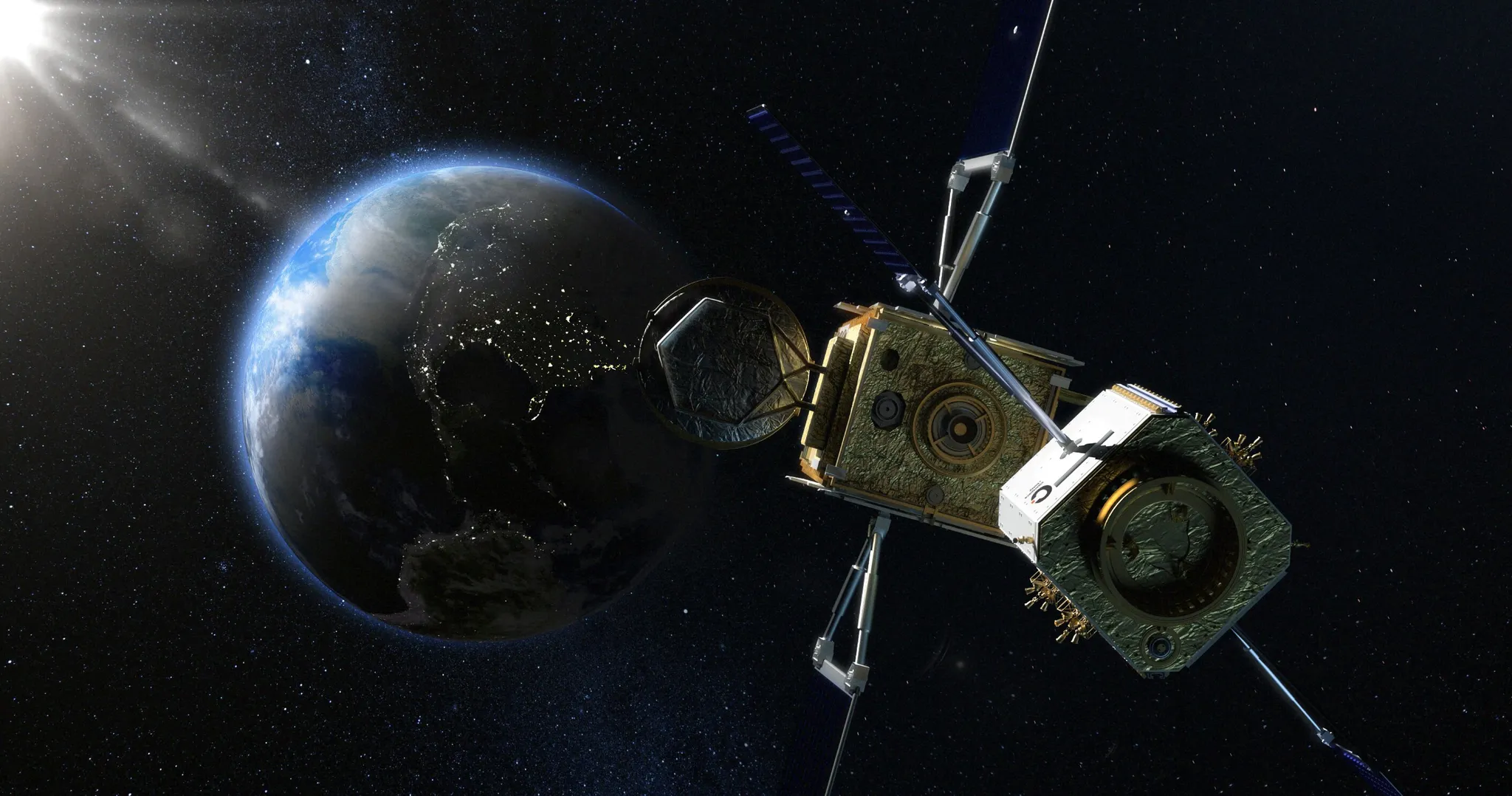
ArcSpace, a French space technology startup, has secured more than €2 million in funding to develop technology aimed at servicing and repairing satellites while they remain in orbit. The financing, reported as part of a broader wave of European deeptech funding activity, positions the company among a small but growing global cohort of startups attempting to prove that robotic in-space servicing can move from experimental technology demonstration to a genuinely scalable commercial capability.
In-orbit servicing addresses a structural inefficiency that has long characterised the satellite industry: spacecraft are typically retired not because their core electronics or payloads have failed, but because they run out of propellant or suffer component-level failures that would be straightforward to repair on Earth but remain effectively unfixable once a satellite has been placed into orbit. ArcSpace's technology aims to change that calculus by developing the capability to inspect, refuel or repair satellites directly in space, potentially extending operational lifespans and reducing the frequency with which operators must launch costly replacement spacecraft.
The commercial case for satellite servicing has strengthened considerably as the number of active satellites in orbit has grown, driven by the proliferation of broadband mega-constellations, expanding earth observation fleets and increasing defence and intelligence applications for space-based assets. As the total value of orbital infrastructure has climbed, so too has the economic argument for extending individual satellite lifespans rather than accepting the capital expense and lead time associated with replacement launches.
Beyond the purely commercial dimension, in-orbit servicing carries meaningful strategic and regulatory significance. Governments worldwide increasingly classify satellite infrastructure as critical national assets, and the growing problem of orbital debris — inactive satellites and fragments accumulating in increasingly congested orbital lanes — has become a subject of mounting international regulatory attention, with several space agencies and international bodies beginning to explore mandatory debris mitigation requirements that could eventually create structural demand for servicing and remediation technology of exactly the kind ArcSpace is developing.
France's space industry benefits from a deep, historically rooted aerospace engineering base, anchored by decades of national investment in launch vehicle technology and satellite manufacturing through entities such as the French space agency CNES and prime contractors including Airbus Defence and Space and Thales Alenia Space. That established ecosystem provides French space-tech startups like ArcSpace with access to specialised engineering talent, testing infrastructure and, often, early-stage customer relationships that founders in less developed national space industries frequently struggle to access.
The technical challenge facing ArcSpace mirrors that confronting other in-orbit servicing startups globally: proving that robotic docking, inspection and repair systems can operate reliably in the harsh, unforgiving environment of space, where a single subsystem failure during a live mission can set a company's credibility back significantly given the difficulty and expense of securing additional flight opportunities to attempt validation again. Orbital robotics remains among the most technically demanding disciplines in aerospace engineering, requiring exhaustive ground testing and conservative mission design to manage risk appropriately.
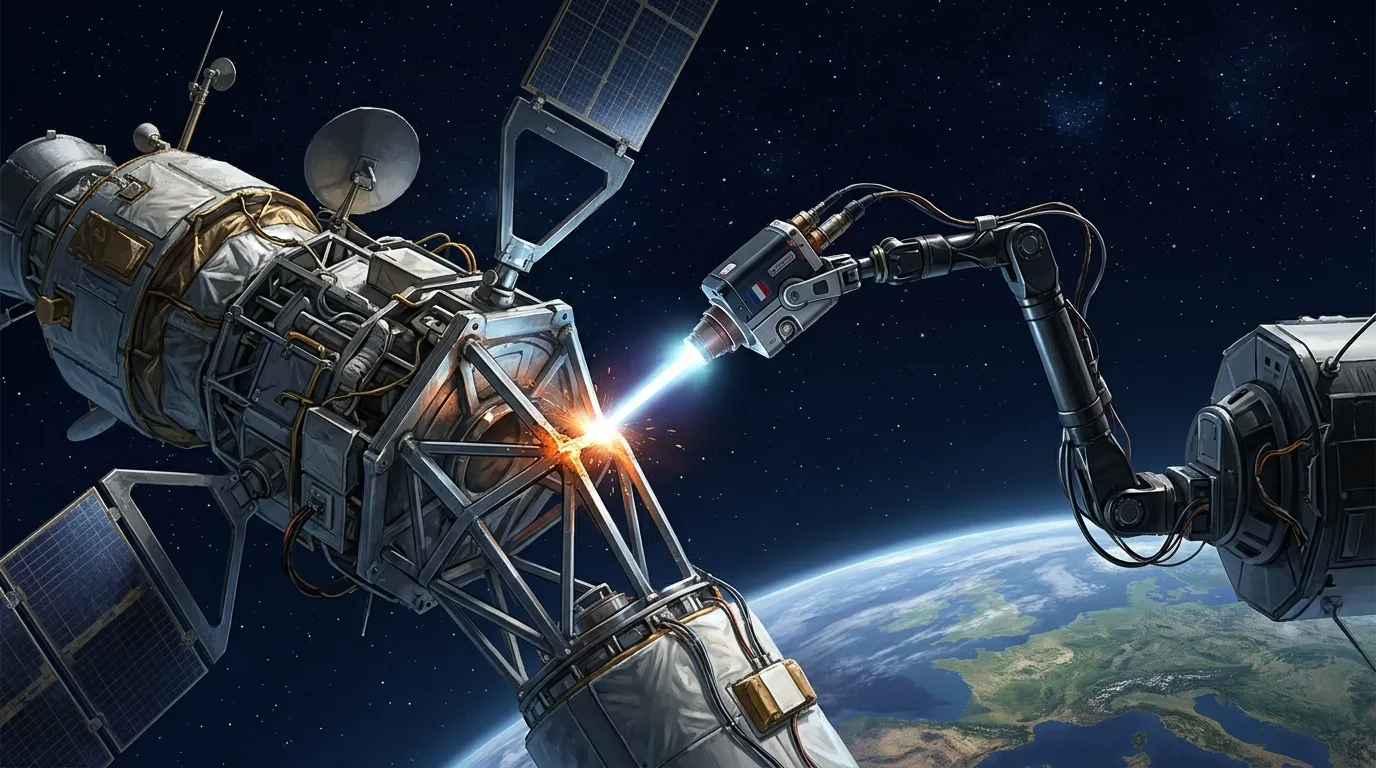
For satellite operators, the willingness to entrust valuable, mission-critical spacecraft to a still-unproven servicing technology represents a genuine commercial hurdle that ArcSpace, like its global competitors in the category, will need to overcome through a track record of successful demonstration missions before broader industry adoption becomes likely. Early servicing contracts, even at modest scale, would represent meaningful validation milestones capable of unlocking larger institutional funding rounds and more substantial commercial partnerships.
As the global in-orbit servicing market continues to develop, ArcSpace's emergence adds a European voice to a category still dominated by a handful of American and, increasingly, Chinese competitors, reflecting the broader strategic importance European governments and investors are placing on maintaining sovereign capability across the full space technology value chain rather than depending on foreign providers for critical satellite servicing infrastructure.
The relatively modest scale of ArcSpace's disclosed funding, at just over €2 million, positions the company at an earlier stage of development than some of its better-capitalised international competitors in the in-orbit servicing category, suggesting the round likely represents seed-stage capital intended to fund initial technology development and early mission planning rather than a fully resourced path to commercial deployment.
European space policy has increasingly emphasised the strategic importance of maintaining independent access to and capability within orbital infrastructure, a priority that has gained further urgency amid growing geopolitical competition over space as a domain of both economic and military significance. Startups like ArcSpace, developing sovereign European capability in a technically demanding and strategically sensitive category like satellite servicing, may find themselves increasingly well positioned to benefit from government interest and potential future public-sector contracting opportunities as this policy emphasis continues to develop.
As ArcSpace advances toward its first demonstration missions, the company's ability to secure early commercial or institutional partnerships — potentially including with CNES or European satellite operators seeking life-extension services for ageing spacecraft — will offer the clearest near-term signal of whether its technology is progressing toward genuine commercial readiness or remains at an earlier, more purely developmental stage relative to its global competitors in the category. Given the multi-year validation timelines typical across the in-orbit servicing sector globally, patient, technically informed investors willing to fund several successive development milestones before expecting commercial revenue will likely remain essential to the company's continued progress. Whether ArcSpace can attract that patient capital at increasing scale, following this initial €2 million raise, will determine how competitively it can pursue its technical roadmap against better-funded international rivals in the years ahead. The company's continued ability to attract technically literate deeptech investors, rather than more generalist venture funds less equipped to evaluate orbital robotics claims, will likely remain an important marker of credibility as ArcSpace approaches the more capital-intensive stages of its development roadmap. In a sector where genuine technical differentiation can be difficult for outside observers to assess, that investor composition itself often functions as one of the more reliable signals available to the broader market of a young space-tech company's underlying scientific and engineering credibility. Its next disclosed milestone, whether a further funding round or an announced demonstration mission timeline, will offer the clearest indication yet of how quickly ArcSpace intends to move from early-stage development toward the commercial validation the entire in-orbit servicing category still needs to achieve broader industry credibility.