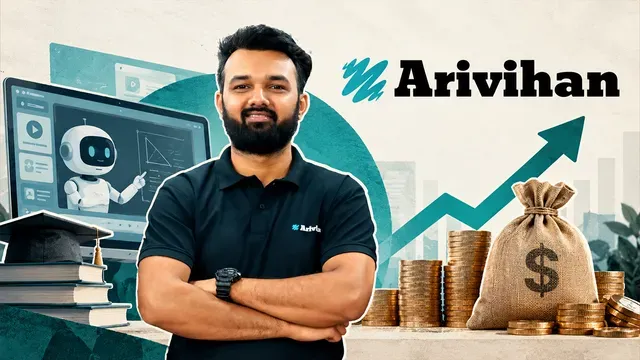
Arivihan, an Indore-based education technology startup that uses artificial intelligence to tutor school students without human teachers, has raised $10.2 million, about ₹98 crore, in a Series A round co-led by Accel and Prosus Ventures.
The two lead investors contributed $10 million together, while three angel investors affiliated with GSF, Dinesh Chandra Agrawal, Dinesh Gulati and Rajesh Sawhney, put in a further $200,000. The round, announced on 30 September 2026, takes Arivihan's total funding to about $15 million.
The deal is notable on several counts. It is a sizeable Series A for an Indian edtech company at a time when the sector is still recovering from the collapse of the pandemic-era boom. It backs a startup built outside India's traditional technology hubs. And it is a direct bet that AI can deliver personalised teaching to students whom the country's coaching industry has largely failed to reach.
A tutor without a teacher
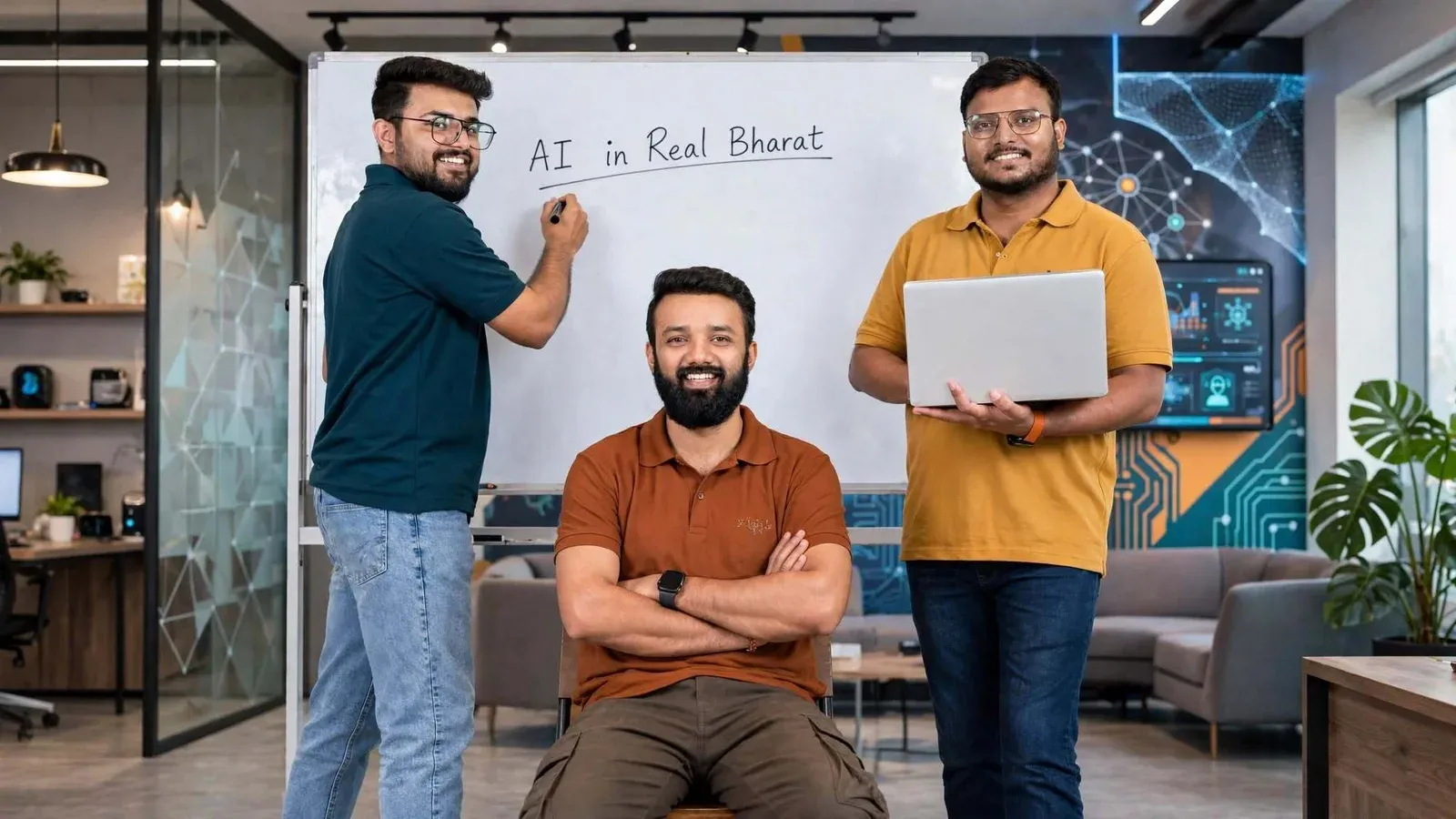
Arivihan was founded by Ritesh Singh Chandel, Sonu Kumar and Rushabh Kothari, all alumni of the Indian Institute of Technology, Roorkee. The platform offers interactive video lectures, instant doubt resolution and personalised study plans, all generated and delivered by AI rather than by live instructors.
Its core users are Class 12 students preparing for state board examinations, CBSE examinations and NEET, the national entrance test for medical colleges. The company says that about 80% of its subscribers come from tier-3 towns and rural areas, with a strong presence in Madhya Pradesh, Uttar Pradesh, Rajasthan and Bihar.
That user base sets Arivihan apart from much of India's edtech industry, which grew up serving students in large cities and aspirants for competitive examinations such as JEE. For students in small towns, the alternatives are often limited: expensive coaching centres in distant cities, local tutors of uneven quality, or free online videos that offer little personal guidance. Arivihan's bet is that an AI tutor, available in the student's own language and at an affordable price, can fill that gap.
The investors' view is explicit. "AI has finally made it possible to deliver truly personalised online education that can match the effectiveness of bespoke and expensive in-person coaching," said Anagh Prasad of Accel.
How the money will be used
Arivihan plans to use the new capital to expand across India, launch new CBSE offerings, and strengthen its AI and vernacular language capabilities. It will also increase spending on performance marketing and build on-ground distribution, an acknowledgement that reaching students in smaller towns requires more than digital advertising.
The company's funding history shows steady progress. It raised seed funding through Accel's Atoms accelerator programme in 2024, followed by a $4.2 million pre-Series A round in July 2025. The Series A, coming just over a year later, suggests that the startup has met the growth and engagement milestones its backers set.
The edtech reset
Arivihan's raise stands out against a difficult backdrop for Indian education technology. During the pandemic, when schools closed and learning moved online, edtech companies raised billions of dollars and valuations soared. BYJU'S became India's most valuable startup, and a host of competitors expanded rapidly into test preparation, tutoring and upskilling.
The reopening of schools exposed the fragility of many of those businesses. Demand fell, customer acquisition costs rose, and aggressive sales practices drew criticism from parents and regulators. BYJU'S descended into a prolonged financial and legal crisis, several startups shut down or were sold at steep discounts, and investors largely withdrew from the sector.
The companies that have regained investor favour since then share some common traits. PhysicsWallah, which built a large audience with low-cost courses, demonstrated that affordability and scale could produce a profitable business, and went on to list on the stock market. Investors now look for edtech firms with low acquisition costs, strong learning outcomes and pricing that matches what Indian families can realistically pay.
Arivihan's model aligns with those lessons. By replacing human teachers with AI, it aims to keep its cost of delivery low enough to serve price-sensitive students in smaller towns profitably. Whether it can maintain quality and engagement at scale will be the defining test.
Can AI really teach?
The broader question is one that educators around the world are debating: can AI deliver learning outcomes comparable to those of skilled human teachers? Generative AI tools have made it possible to answer student questions instantly, explain concepts in multiple ways and adapt the pace of instruction to each learner. Research on AI tutoring is still emerging, but early studies in several countries suggest that well-designed systems can improve performance, particularly when they are used to supplement rather than replace structured learning.
There are also risks. AI models can produce confident but incorrect answers, a serious problem in subjects such as mathematics and science. Students may use AI to shortcut learning rather than deepen understanding. And the absence of human mentors may affect motivation, which is often as important as instruction in examination preparation.
Arivihan's approach, focused on structured curricula for well-defined examinations, may reduce some of those risks. Board examination syllabi are standardised, and the questions students ask tend to cluster around predictable topics. That makes it easier to build reliable content and to check the accuracy of AI-generated explanations.
Why Bharat matters
The startup's focus on smaller towns reflects a wider shift in India's consumer internet economy. Cheap smartphones and data have brought hundreds of millions of people online outside the largest cities, creating demand for services in local languages and at local price points. Education is one of the categories where that demand is most acute, because families across India see examinations as a path to better opportunities.
Investors increasingly see this "Bharat" market as the next frontier for growth. Accel and Prosus have both backed companies serving India's mass market, and their joint bet on Arivihan suggests they see AI as a tool that can make quality education economically viable at scale for the first time.
For Arivihan, the next phase will require balancing growth with evidence of learning outcomes. If it can show that its AI tutors genuinely improve examination results for students in Indore, Patna and Jaipur, it could build one of the most consequential education businesses in India. If it cannot, it will face the same scepticism that has followed the sector since its post-pandemic reckoning. Either way, educators, investors and policymakers interested in widening access to learning will have much to learn from its results.