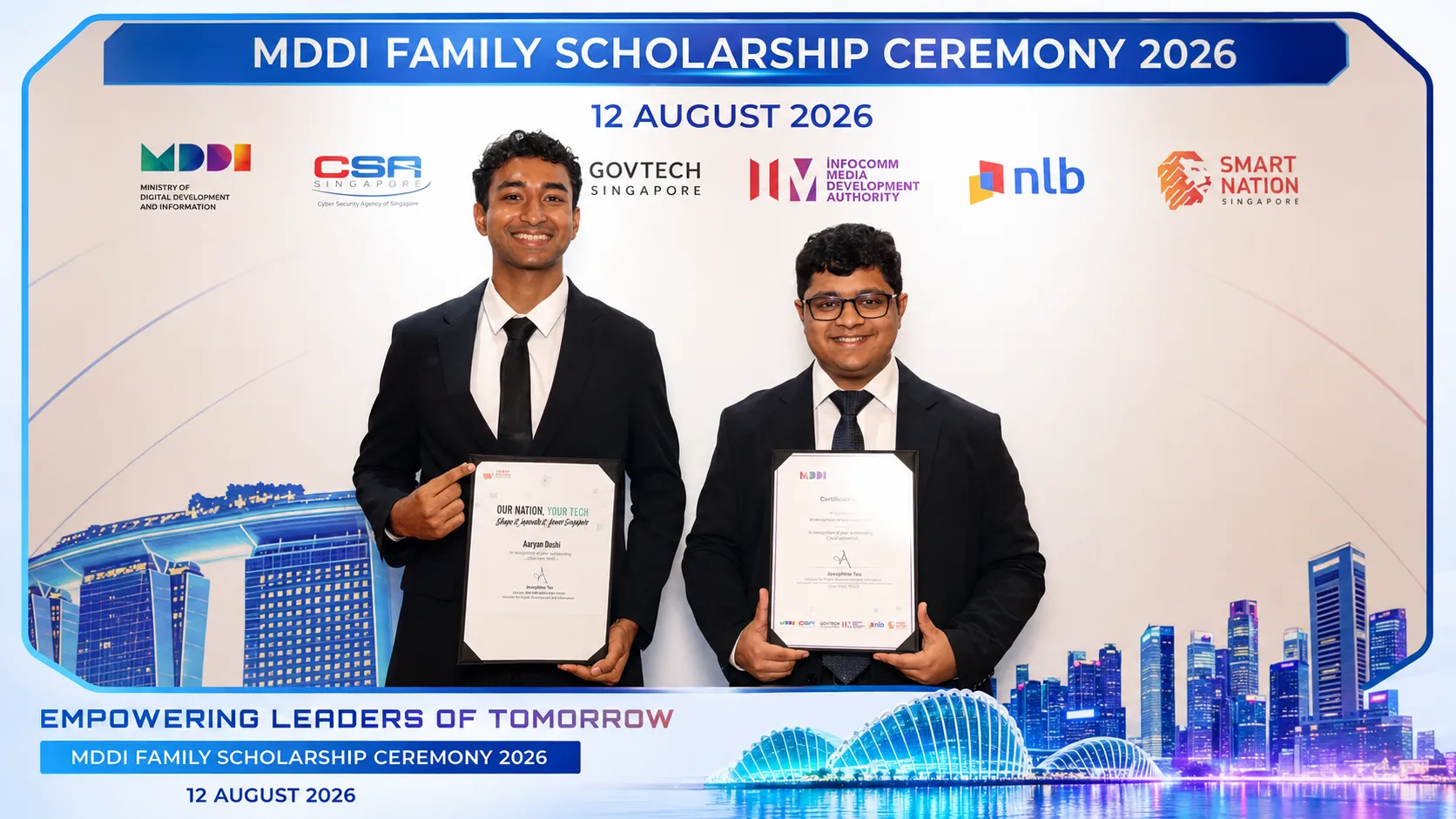
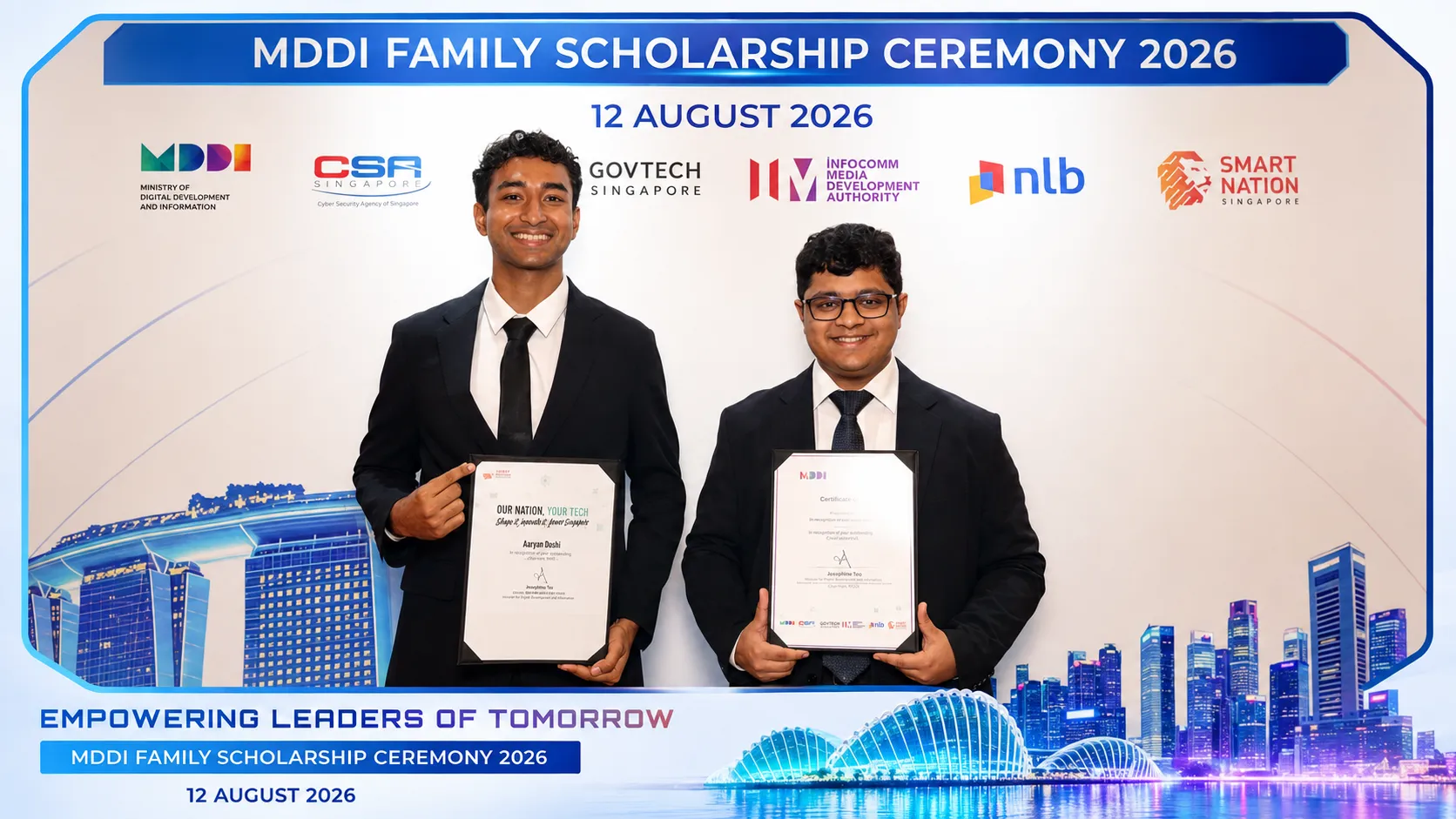
Two young Indian-origin Singaporeans, Aryan Dalvi and Prannaya Gupta, have been named recipients of prestigious government-linked technology scholarships, positioning both students among a cohort the city-state has explicitly identified as its next generation of global-ready technology leadership. Dalvi has been named a recipient of the Smart Nation Scholarship administered through GovTech, Singapore's government technology agency, while Gupta has secured the IMDA SG Digital Scholarship, offered through the Infocomm Media Development Authority.
Both scholarship programmes form part of Singapore's broader, long-running strategy of identifying and investing directly in high-potential young technologists early in their academic careers, typically combining funded tertiary education with structured work placements, mentorship and a post-graduation service commitment within Singapore's public-sector technology apparatus. The approach reflects Singapore's characteristically deliberate, state-directed method of talent-pipeline development, designed to ensure the city-state retains a pool of homegrown technical leadership capable of steering its ambitious digital-government and smart-nation initiatives rather than relying solely on recruiting technology talent from abroad.
The Smart Nation Scholarship, administered by GovTech, is specifically oriented toward students who demonstrate strong aptitude and interest in applying technology to public-sector challenges, spanning areas from digital-government infrastructure to data-driven urban planning and citizen-facing digital services. Recipients typically commit to a period of public-sector service following graduation, during which they apply their technical training directly toward Singapore's ongoing digital-transformation agenda across government agencies.
The IMDA SG Digital Scholarship, meanwhile, is oriented more broadly toward Singapore's infocomm and digital-media sector, supporting students pursuing technology-related tertiary education with an eye toward strengthening the broader talent pipeline feeding both public and private-sector digital industries. Together, the two scholarship tracks illustrate the layered, sector-specific approach Singapore's government technology agencies have taken toward cultivating distinct but complementary strands of the city-state's future technical workforce.
For Dalvi and Gupta, both scholarships carry not only funded educational pathways but also structured early exposure to real-world technology challenges through associated internship, mentorship and project-based components built into each programme, providing recipients with practical experience considerably ahead of typical undergraduate career-development timelines. This early, hands-on exposure has become an increasingly central feature of how Singapore's technology scholarship ecosystem seeks to differentiate itself from more conventional academic-funding models.
The recognition of two Indian-origin students among this year's scholarship cohort reflects the increasingly prominent role Singapore's ethnic Indian community continues to play within the city-state's technology and innovation sectors, a trend consistent with broader community-level data showing strong representation among degree-qualified professionals within Singapore's Indian population, itself a demographic that Singapore's political and civic leadership has periodically highlighted as an example of the tangible outcomes achievable through sustained educational investment.
Singapore's broader scholarship ecosystem, spanning both these technology-specific tracks and longer-established public-service scholarships administered by other government ministries and statutory boards, has historically served as one of the city-state's primary mechanisms for both identifying exceptional young talent early and securing a multi-year service commitment in return for funded education — a model credited with helping Singapore maintain a consistently strong pipeline of homegrown leadership across its public and quasi-public institutions.
As Dalvi and Gupta begin their respective scholarship journeys, both are expected to progress through structured academic and professional-development pathways designed to prepare them for senior technical and leadership roles within Singapore's public-sector technology apparatus in the years ahead. Their selection adds to a growing roster of young Indian-origin Singaporeans achieving prominent recognition within the city-state's competitive scholarship landscape, reinforcing the community's continued strong representation within fields directly aligned with Singapore's national digital and smart-nation ambitions.
For Singapore's broader technology and public-policy establishment, scholarship cohorts of this kind represent a long-term, multi-decade investment strategy, one whose eventual payoff will only become fully apparent as recipients like Dalvi and Gupta progress through their education and into the substantive public-sector technology roles their scholarships are explicitly designed to prepare them for.
Both Dalvi and Gupta are expected to begin their scholarship-funded studies at institutions selected in consultation with their respective sponsoring agencies, with structured checkpoints built into each programme to monitor academic progress and ensure recipients remain on track to fulfil the post-graduation service commitments attached to their awards. Programme alumni from previous scholarship cohorts have gone on to occupy meaningful technical and leadership roles across Singapore's public-sector technology agencies, offering a track record that current recipients are often explicitly encouraged to study as they plan their own academic and early-career trajectories.
Community organisations supporting Singapore's Indian population have highlighted scholarship recognitions of this kind as evidence of the tangible returns generated by decades of sustained educational investment within the community, a narrative that dovetails with broader government data showing rising degree-attainment rates and expanding representation of Indian-origin Singaporeans within technical and professional fields. As Singapore continues positioning itself as a regional hub for digital-government innovation, the pipeline of talent represented by scholars like Dalvi and Gupta is likely to remain a closely watched barometer of the city-state's long-term technology-leadership strategy.
Singapore's broader scholarship ecosystem has, over recent cohorts, placed growing emphasis on cross-agency collaboration, occasionally pairing Smart Nation and IMDA scholars on shared capstone projects designed to mirror the kind of interagency digital-government work they are expected to undertake after graduation.
For Singapore's Indian community more broadly, seeing two of its young members recognised in the same scholarship cycle has been welcomed locally as a reaffirmation of the return on decades of sustained community emphasis on education as the primary pathway to opportunity.