FundingMarket Data Women5 MIN READ

Ashok Leyland's Q2 Profit Rises 12.7% to ₹869 Crore as Revenue Jumps 39% on a 44% Surge in Heavy Truck Sales

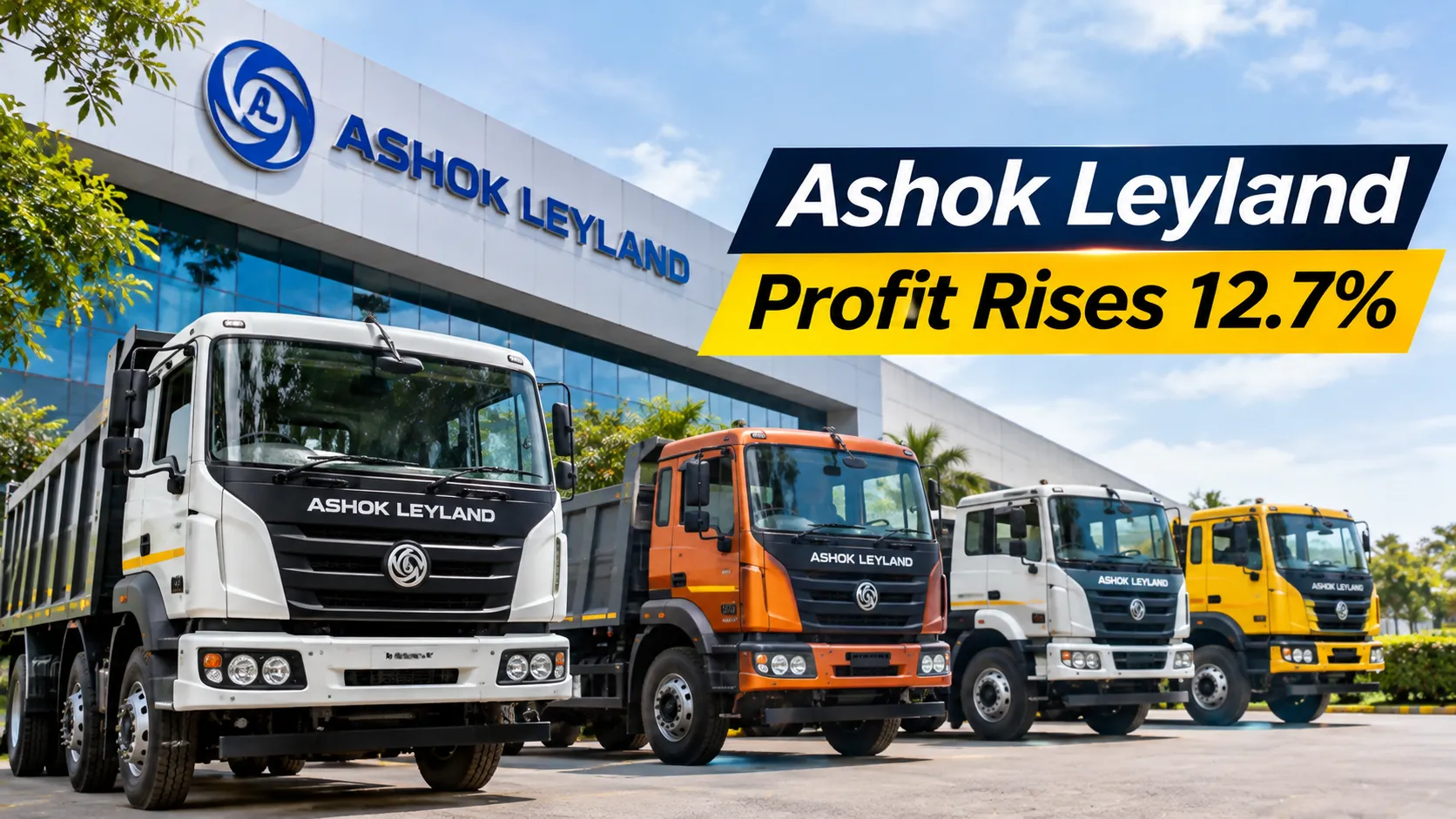
Ashok Leyland reported a 12.7% rise in standalone net profit to ₹869 crore for the September quarter, as revenue jumped 39% to ₹13,364 crore on a 44% increase in medium and heavy commercial vehicle volumes, outpacing industry growth. The Hinduja Group company declared an interim dividend of ₹1 per share, and net cash rose to ₹3,546 crore.

By Shaym Kumar · Author16 November 2026New
Ashok Leyland's Q2 Profit Rises 12.7% to ₹869 Crore as Revenue Jumps 39% on a 44% Surge in Heavy Truck Sales

India's trucking industry is moving into higher gear, and one of its biggest manufacturers is riding the momentum.

Ashok Leyland, the Chennai-based commercial vehicle maker that is part of the Hinduja Group, reported a 12.7% rise in standalone net profit to ₹869.02 crore for the July-September quarter, the second quarter of the 2026-27 financial year, from ₹771.06 crore a year earlier, according to Upstox, which reported the results on November 16.

Revenue from operations rose 39.4% to ₹13,364.28 crore, from ₹9,588.18 crore. EBITDA, a measure of operating profit, rose to ₹1,350 crore from ₹1,162 crore.

Truck sales surge

The revenue jump was driven by strong vehicle sales. Total commercial vehicle volumes rose 32% to 64,677 units, from 49,116 a year earlier, according to Upstox. Sales of medium and heavy commercial vehicles (MHCVs), the company's core segment, rose 44% to 37,958 units from 26,307, outpacing industry growth of 39%. Export volumes rose 7% to 5,102 units.

MHCVs, which include heavy trucks used for long-distance freight and construction, are closely linked to economic activity. Strong sales usually indicate healthy demand for transport of goods, infrastructure construction and mining.

Margins under pressure

While revenue grew sharply, profit grew more slowly. Based on the reported figures, the EBITDA margin was about 10.1%, compared with about 12.1% a year earlier, and the net profit margin was about 6.5%, compared with about 8%. The narrower margins suggest the company faced higher costs, a less favourable product mix or pricing pressure during the quarter.

Commercial vehicle makers have faced rising costs for steel and other raw materials, as well as higher expenses related to new emission and safety regulations.

Cash and dividend

Ashok Leyland's balance sheet strengthened significantly. Net cash rose to ₹3,546 crore, from ₹990 crore a year earlier, according to Upstox.

"Our strong cash position gives us the financial flexibility to invest in future technologies," said Shenu Agarwal, managing director and chief executive. "We are further investing in innovative product platforms and world-class service processes," he added.

The board declared an interim dividend of ₹1 per share for the financial year, with a record date of November 20 and payment on or before December 13. The shares traded slightly higher at about ₹169 in early trade on Monday.

The commercial vehicle cycle

The commercial vehicle industry is highly cyclical, with demand rising and falling with economic growth, freight rates, interest rates and government spending. After a slowdown, the industry has seen a strong recovery in recent quarters, supported by infrastructure spending, mining activity and replacement demand as fleet owners upgrade ageing trucks.

The government's large investments in roads, railways, ports and urban infrastructure have boosted demand for tippers and haulage trucks. Rising e-commerce and consumption have also increased demand for logistics.

However, higher interest rates could affect demand, since many trucks are bought with loans. The RBI raised rates in October and is expected to raise them again in December, which could increase financing costs for fleet operators.

Competition

Ashok Leyland is India's second-largest maker of medium and heavy commercial vehicles, after Tata Motors' commercial vehicles business. The two companies dominate the segment, while players such as Eicher (VE Commercial Vehicles), Mahindra and BharatBenz, owned by Daimler Truck, compete for share.

“Our strong cash position gives us the financial flexibility to invest in future technologies.”
— Shenu Agarwal, MD and CEO, Ashok Leyland

Ashok Leyland has been working to increase its market share in key regions and segments, and its MHCV growth ahead of the industry suggests it has gained ground.

The electric shift

Like other vehicle makers, Ashok Leyland is preparing for the shift to cleaner technologies. Its electric vehicle subsidiary, Switch Mobility, makes electric buses and light commercial vehicles, and the company has been developing trucks powered by alternative fuels such as liquefied natural gas, compressed natural gas and hydrogen.

Electric buses have gained traction in India through government programmes that support their adoption by state transport undertakings. Electric trucks remain at an early stage because of high costs and limited charging infrastructure, but are expected to grow over time.

The company's strong cash position gives it resources to invest in these technologies, as Agarwal noted.

a151fa1f-0ce1-4ff0-8d38-e94fe7d00204.png

Exports

Ashok Leyland has a presence in markets in the Middle East, Africa and South Asia, and has been seeking to expand its international business. Export growth of 7% was more modest than domestic growth, reflecting mixed conditions in overseas markets.

Market context

Auto stocks have been in focus during the earnings season. Eicher Motors rose about 4% on Monday after reporting a 15% rise in quarterly profit, while Tata Motors Passenger Vehicles fell sharply after a large quarterly loss. Commercial vehicle stocks have generally benefited from expectations of continued infrastructure spending.

What it means for investors

For investors, Ashok Leyland's results show strong volume growth and a much stronger balance sheet, offset by narrower margins. The key questions are whether the company can improve profitability as volumes grow, how demand will hold up as interest rates rise, and how effectively it can invest in new technologies.

Bus business and public transport

Ashok Leyland is also one of India's largest bus manufacturers, supplying state transport undertakings, private operators and schools. Demand for buses has been supported by government programmes to modernise public transport fleets and expand electric buses in cities. The company's bus business provides diversification from the more cyclical truck market.

Replacement demand

An ageing truck fleet has supported demand in recent quarters. Many fleet operators delayed purchases during earlier slowdowns, and stricter emission norms and scrappage policies have encouraged them to replace older vehicles. Newer trucks offer better fuel efficiency, which can lower operating costs for fleet owners at a time of high diesel prices.

Analysts will also watch whether Ashok Leyland can sustain its market share gains in the heavy truck segment once industry growth moderates, since competition for large fleet customers is intense and price discounts can erode margins. The company's investments in its dealer and service network are intended to strengthen customer loyalty in a market where uptime and after-sales support are critical to fleet operators.

Investors will also look at the company's guidance on capital spending, including investments in new platforms, electric vehicles and international expansion, to judge how it plans to use its growing cash reserves.

What comes next

Investors will watch monthly sales data, management commentary on demand and pricing, and the company's progress in electric and alternative-fuel vehicles. The outlook for infrastructure spending and interest rates will also shape the commercial vehicle cycle in coming quarters.

TagsAshok LeylandQ2 FY27 resultscommercial vehiclestrucksbusesMHCVShenu AgarwalHinduja Groupdividendnet cashinfrastructurefreightIndian auto industryelectric busesSwitch MobilityTata Motorsauto stocksIndian economyNSEinvestors

Reader reviews

Sign in to rate and review this article.
Loading reviews…

