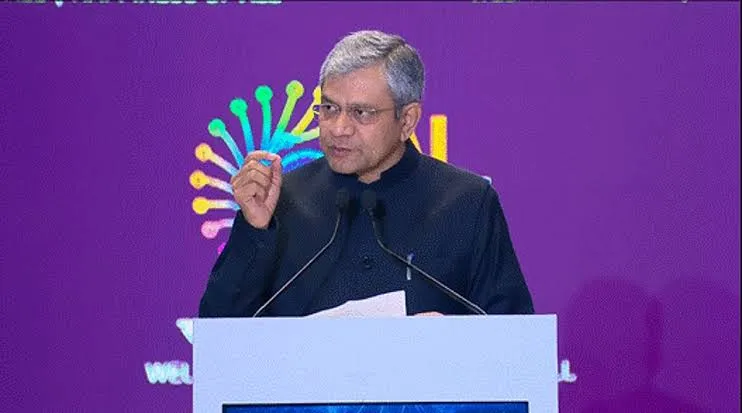
India's Electronics and Information Technology Minister, Ashwini Vaishnaw, has outlined a 20-year vision for the country's fledgling semiconductor industry, cautioning that the progress made so far — after decades of earlier, unsuccessful attempts — represents only an early stage of a much larger undertaking.
In remarks posted on X, Vaishnaw described semiconductors as a foundational industry, noting that chips now underpin products spanning refrigerators, televisions, automobiles, trains, aircraft, computers and mobile phones — a dependency that has turned chip manufacturing capability into both an economic and a strategic policy priority for governments worldwide.
India's current push follows several earlier, largely unsuccessful attempts stretching back decades to establish domestic chip fabrication capacity — efforts that repeatedly stalled amid the enormous capital intensity, technical complexity and long payback horizons associated with semiconductor manufacturing. The current programme, anchored by production-linked incentives and dedicated fabrication and assembly investments, is designed to avoid the false starts of earlier decades by combining sustained policy support with private capital commitments from both domestic and international players.

Government officials have consistently framed the effort in generational rather than electoral terms, arguing that semiconductor self-sufficiency cannot be built within a single policy cycle and requires continuity across successive administrations — a framing Vaishnaw's latest comments reinforced by explicitly setting expectations over a two-decade horizon rather than a near-term milestone.
The stakes extend well beyond domestic manufacturing capacity. As global supply chains for advanced chips remain concentrated in a small number of geographies, and as geopolitical tension periodically disrupts access to leading-edge semiconductor technology, countries including India, the United States and members of the European Union have moved to build sovereign or allied manufacturing capability, treating chip access as a matter of national resilience rather than pure market efficiency.
For India specifically, semiconductor self-sufficiency is also viewed as a prerequisite for realising ambitions across adjacent sectors — from electric vehicles and defence electronics to the artificial intelligence infrastructure buildout that is increasingly dependent on secure, reliable chip supply.
Vaishnaw's comments serve as both a status update and an expectation-setting exercise, signalling to investors, industry partners and the public that India's semiconductor ambitions should be judged over a multi-decade arc rather than against the timeline of any single fabrication plant coming online. Whether that patience holds — among policymakers, investors and the public alike — may prove as decisive to the programme's ultimate success as the underlying engineering and capital challenges themselves.