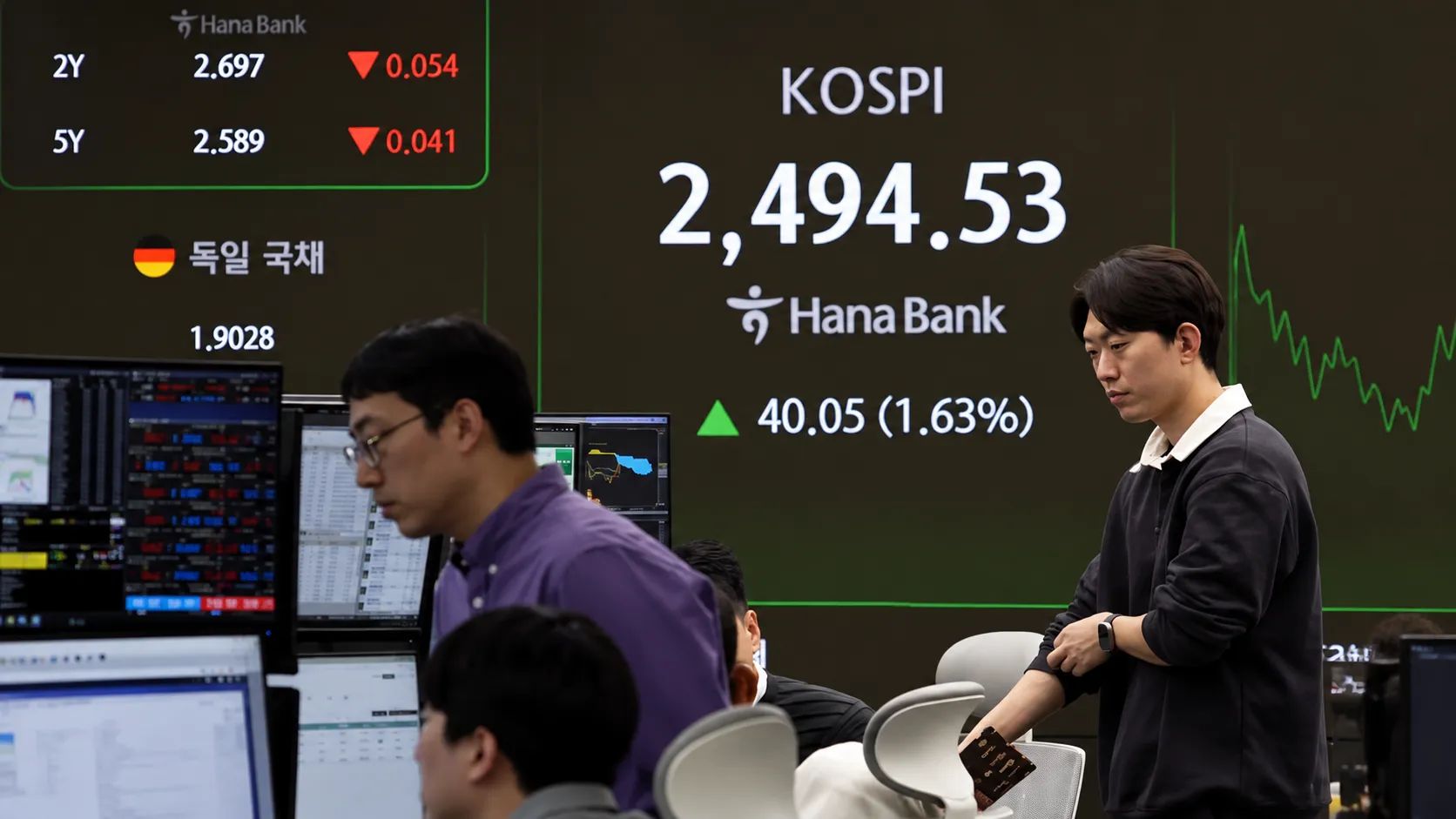

Asian equity markets started the week on the back foot. Most regional benchmarks declined on Monday morning as elevated energy costs clouded the inflation outlook and raised bets that the US Federal Reserve would raise interest rates again. South Korea's Kospi fell 2.07 per cent and mainland China's CSI 300 index dropped 1.24 per cent in early trade, according to Business Standard's market coverage. MSCI's broad gauge of Asian equities opened lower.
The sell-off followed a weekend in which President Donald Trump rejected Iran's proposal to reopen the Strait of Hormuz, sending Brent crude back up by more than 1 per cent, and in which new data from Beijing showed that profit growth at Chinese industrial companies had slowed to its weakest pace of the year.
South Korea gives back gains
The Kospi's decline came after a strong run. South Korean equities had ended the holiday-shortened week of 18 to 23 September on a firm note, with the benchmark rising around 2.7 per cent on renewed interest in technology and semiconductor stocks. South Korea has been one of the main beneficiaries of the global artificial intelligence hardware boom, with memory chip makers enjoying surging demand from data centre builders.
That makes the market particularly sensitive to shifts in global risk appetite. When US rate expectations rise and oil climbs, foreign investors tend to take profits in markets where they have large positions and strong gains. Monday's fall looked like a combination of profit-taking and a repricing of the rate outlook, rather than a change in the underlying technology story.
China: profits lose momentum
In China, the CSI 300's fall coincided with fresh evidence that the industrial recovery is losing steam. Profits at large industrial firms grew 4.2 per cent in August from a year earlier, the National Bureau of Statistics said on Monday. That was the weakest monthly gain this year and a sharp slowdown from 11.2 per cent in July. For the first eight months of 2026, profits rose 15.7 per cent, easing from 17.6 per cent in the January-to-July period, and marking the fourth consecutive month of slowing year-to-date growth from a peak of 24.7 per cent in April.
Economists point to weak consumer demand, rising energy costs and a deepening slump in urban investment as the main drags. Retail sales slowed further in August, while industrial output was supported by exports. Profit growth this year has been heavily concentrated in electronics and semiconductor-related sectors, which have benefited from AI demand. Outside those areas, many manufacturers are contending with price wars and thin margins.
The Chinese yuan held steady in offshore trading, at about 6.7252 per dollar, suggesting that currency markets are not treating the profit data as a signal of broader stress. Many economists expect Beijing to lean more heavily on stimulus to stabilise corporate earnings in the coming months.
Chinese policymakers face a delicate balance. Additional fiscal support for consumption and infrastructure could revive demand, but the government has also sought to curb excess capacity and disorderly price competition in sectors such as electric vehicles, solar panels and batteries. Investors in Chinese equities are therefore watching not only for the size of any stimulus but also for its direction, and whether it targets households rather than further industrial expansion.
Japan steadier, yen soft
Japanese markets were steadier than their neighbours. Benchmarks fluctuated around the flatline in early trade, with some snapshots showing the Nikkei 225 and Topix modestly higher, supported by a weaker yen, which boosts the value of exporters' overseas earnings. The yen weakened about 0.3 per cent to around 157.70 per dollar.
The Bank of Japan remains a key variable. A Bloomberg report over the weekend suggested the central bank could raise interest rates again at its October meeting, earlier than many economists had expected. The BOJ raised rates in September, but two board members, Toichiro Asada and Ayano Sato, voted against the move, which contributed to yen weakness after the decision. September marked the first time the Bank of Japan, the Federal Reserve and the European Central Bank all raised rates in the same month.
Hong Kong's Hang Seng index futures were little changed in early trade. The city's equity market has been buoyed this year by a surge in initial public offerings: listings raised HK$342.4 billion between January and August, up 153.5 per cent from a year earlier, according to exchange data. Several large listings are scheduled for 29 September, including printed circuit board maker Kinwong, which plans to raise about HK$5.1 billion.
The global backdrop
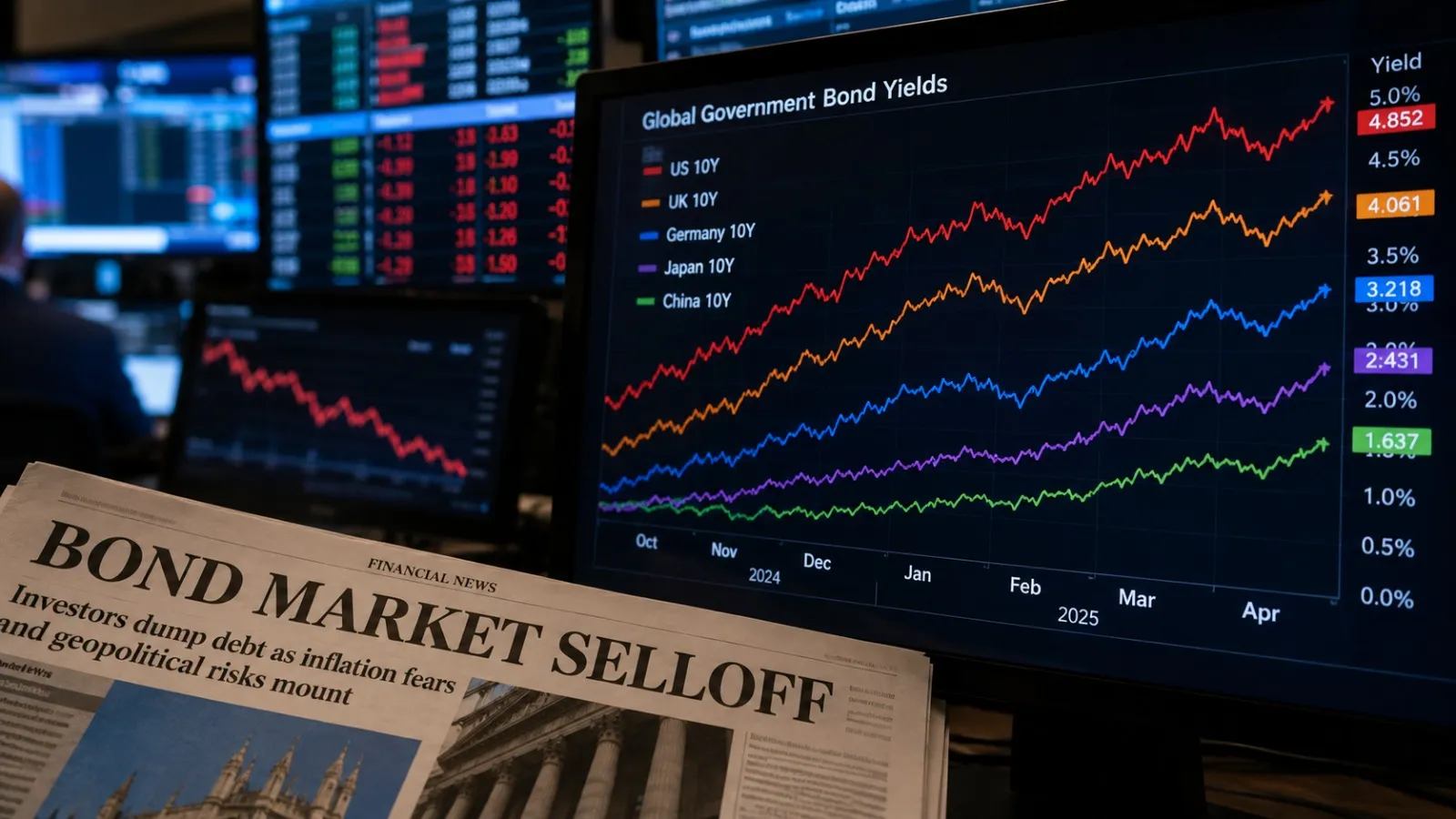
The common thread across Asian markets is the combination of high oil prices and rising global interest rates. Brent crude traded around $105 to $106 a barrel on Monday. Oil-importing economies such as South Korea, Japan, India and China all face higher import bills and inflation pressure when crude remains above $100. At the same time, US 10-year Treasury yields above 5 per cent have raised the bar for investing in riskier assets, prompting outflows from emerging markets.
US stock futures also fell on Monday morning, with Dow Jones and S&P 500 futures down 0.32 per cent and 0.36 per cent respectively, as traders assessed the chances of a US–Iran deal. On Friday, however, Wall Street had closed higher, with the Nasdaq Composite and Nasdaq 100 finishing at record levels on hopes for diplomacy.
India in the regional picture
India's markets are part of the same regional dynamic. GIFT Nifty futures pointed to a lower open, trading around 23,110 to 23,118, down about 70 points. The Nifty 50 has fallen for seven consecutive weeks, its longest losing streak since 2020, as foreign investors have sold heavily. In relative terms, Indian equities have underperformed North Asian markets this year, partly because India has less direct exposure to the AI hardware cycle and partly because it is more sensitive to oil prices.
What to watch
For the rest of the week, Asian investors will be watching three things: the outcome of US–Iran talks, which could move oil sharply in either direction; US inflation and jobs data, which will shape expectations for the Fed; and any signals from Beijing on additional economic support. Asia's markets are caught between an oil shock they cannot control and a rate cycle they did not start. Until one of those pressures eases, volatility is likely to remain elevated, and investors are likely to favour markets and sectors with clear earnings momentum, such as AI-linked technology, over those most exposed to energy costs.