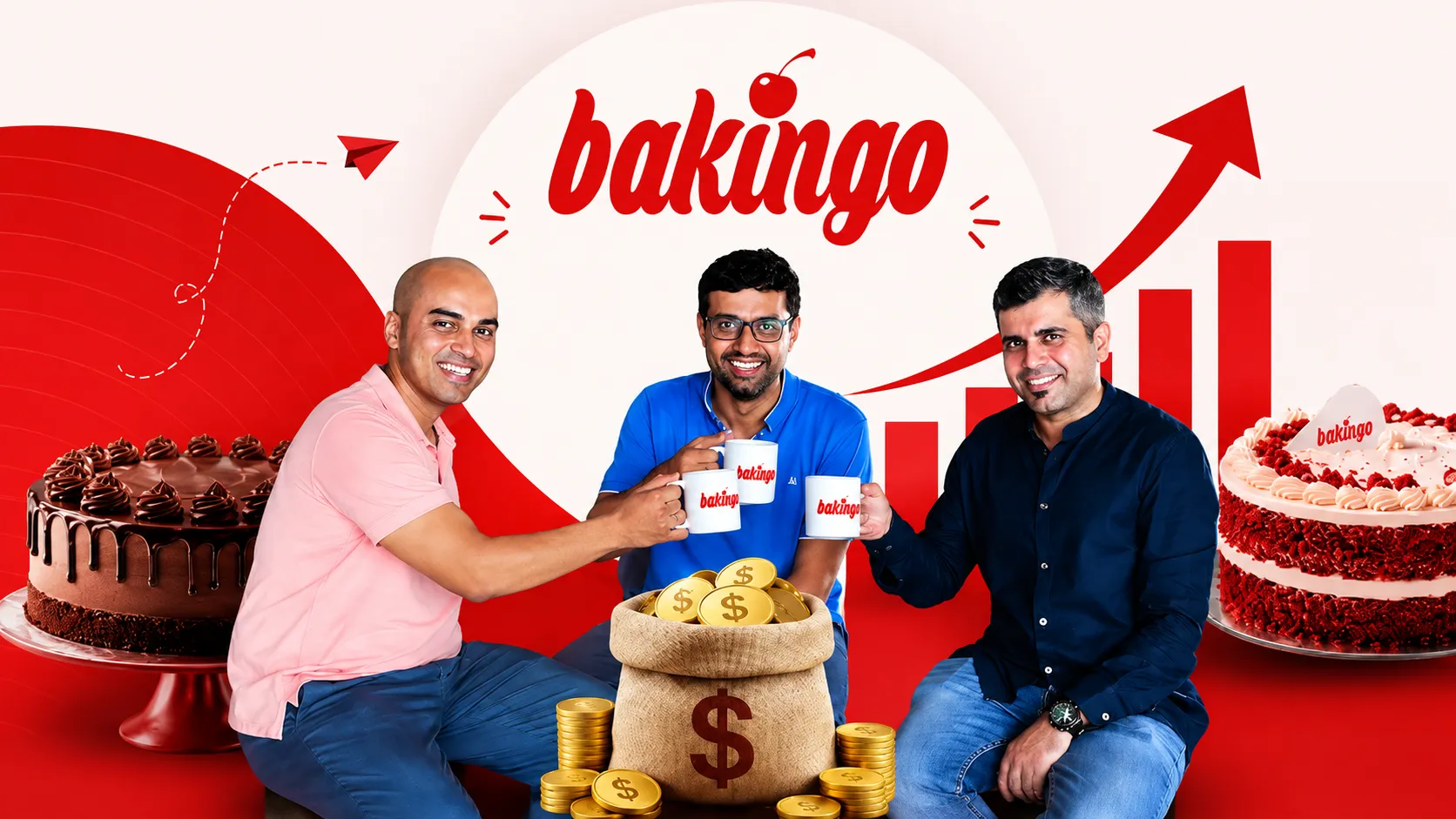
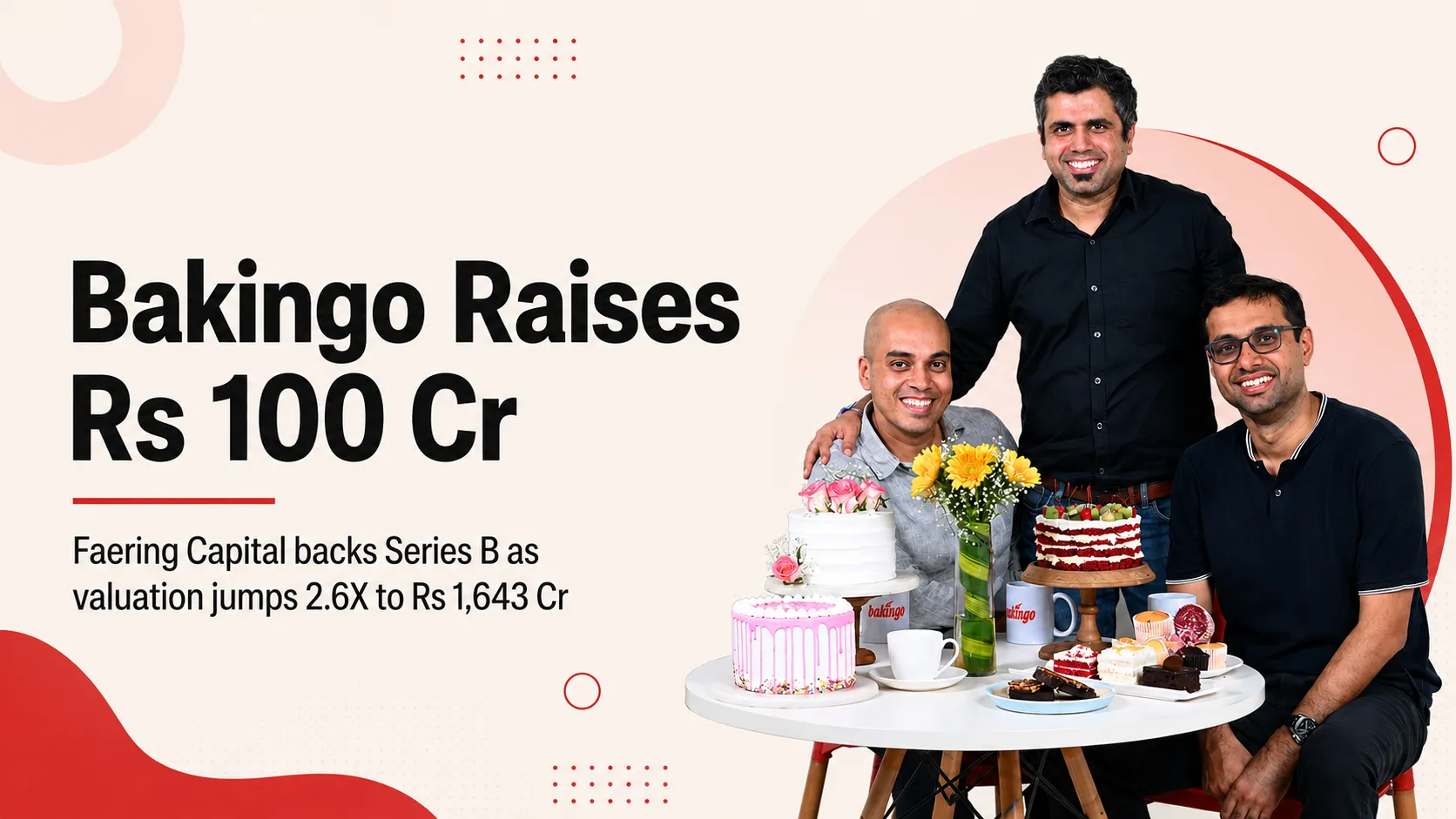
Online bakery brand Bakingo has raised Rs 100 crore, or approximately $10.5 million, in a Series B funding round from existing investor Faering Capital, valuing the Gurugram-based company at roughly Rs 1,643 crore — a 2.6X jump from the Rs 627 crore valuation it commanded at its previous round nearly three years ago. The fresh capital arrives via 7,436 Series B preference shares issued at Rs 1,34,477 apiece, allotted by FA Gifts Private Limited, Bakingo's parent entity, according to a filing with the Registrar of Companies.
The round marks Faering Capital's second consecutive investment in the company, following the roughly $16 million it committed in November 2023. With this round, Bakingo has raised approximately $34 million to date, and Faering now owns 26.31% of the company following the latest allotment.
Founded in 2016 by Himanshu Chawla, Shrey Sehgal and Suman Patra, Bakingo has built its business around a hub-and-spoke kitchen network rather than the traditional bakery storefront model, currently operating more than 100 kitchens across over 30 Indian cities and offering more than 400 distinct cake designs, spanning cheesecakes, gourmet cakes, jar cakes and customised orders for occasions including birthdays and anniversaries. The company has said it will use the fresh capital toward general business requirements, growth and expansion, without disclosing a more granular allocation plan.
Bakingo's financial trajectory shows steady, if not yet profitable, scaling. The company reported Rs 300 crore in revenue from operations in FY25, up from Rs 208.7 crore in FY24 and Rs 145.7 crore in FY23 — a compounding growth pattern that has nonetheless been accompanied by persistent losses, with the company posting a net loss of Rs 16.5 crore in FY25. Bakingo has yet to file its FY26 financial statements with the Registrar of Companies.
The valuation jump lands in what has been a broadly tougher fundraising environment for consumer and direct-to-consumer brands in India through 2026, making Faering's continued, larger-check backing a notable vote of confidence rather than a routine bridge round. As a significant existing shareholder rather than a new entrant, Faering's decision to lead the round again — instead of bringing in a new lead investor to validate the higher valuation independently — is a detail some market watchers may scrutinise, though it also reflects the kind of patient, conviction-led capital that consumer brands with long unit-economics runways often require.
Bakingo operates in an increasingly crowded and competitive online bakery and desserts category, competing against both dedicated D2C rivals and diversified food and beverage players expanding into cakes and desserts. The company has previously articulated ambitions to expand into a quick-service-restaurant-style bakery format across pan-India markets and to deepen its presence in Tier II cities such as Kanpur, Patna and Dehradun, a strategy consistent with the broader playbook Indian D2C food brands have increasingly adopted as metro markets mature and become more heavily contested.
With losses narrowing only marginally between FY24 and FY25 even as revenue climbed, the central question for Bakingo's next phase is whether the fresh Rs 100 crore translates into a credible path toward profitability, rather than simply funding continued top-line growth. For Faering Capital, the near-tripling of Bakingo's valuation across two rounds offers an early marker of returns on a bet made in a category — branded, organised bakery and desserts — that remains structurally fragmented in India relative to more mature consumer categories, leaving the brand considerable headroom if it can convert its kitchen-network model into durable, profitable scale.
Bakingo's hub-and-spoke kitchen model, rather than a traditional retail bakery footprint, is central to how the company has scaled revenue relatively efficiently across more than 30 cities without the capital intensity of a large physical store network — a structural advantage over legacy regional bakery chains, but one that also means Bakingo competes on delivery logistics and freshness consistency as much as on brand or product differentiation. As the round's own dynamics suggest, with an existing investor doubling down rather than a new lead validating the higher price independently, the market for consumer-brand Series B and C rounds in India has grown more selective through 2026, making continuity capital from an already-committed backer an increasingly common feature of later-stage D2C rounds, rather than the new-investor-led financings that were more typical during the sector's earlier growth phase.