Balwaan Krishi, a Jaipur-based maker of low-cost agricultural machinery, has raised ₹100 crore (about $10.4 million) in a Series B round led by First Bridge India Growth Fund Private Equity, with other institutional investors participating. The company announced the round on 28 September 2026.
The raise is modest by the standards of consumer internet or artificial intelligence. It stands out for a different reason: it backs a manufacturing business built entirely around India's smallest cultivators, a group that makes up the overwhelming majority of the country's farmers and has historically been the last to benefit from mechanisation.
VCCircle estimates that the round takes Balwaan's disclosed institutional funding to at least ₹156 crore.
A product line priced for the smallholder
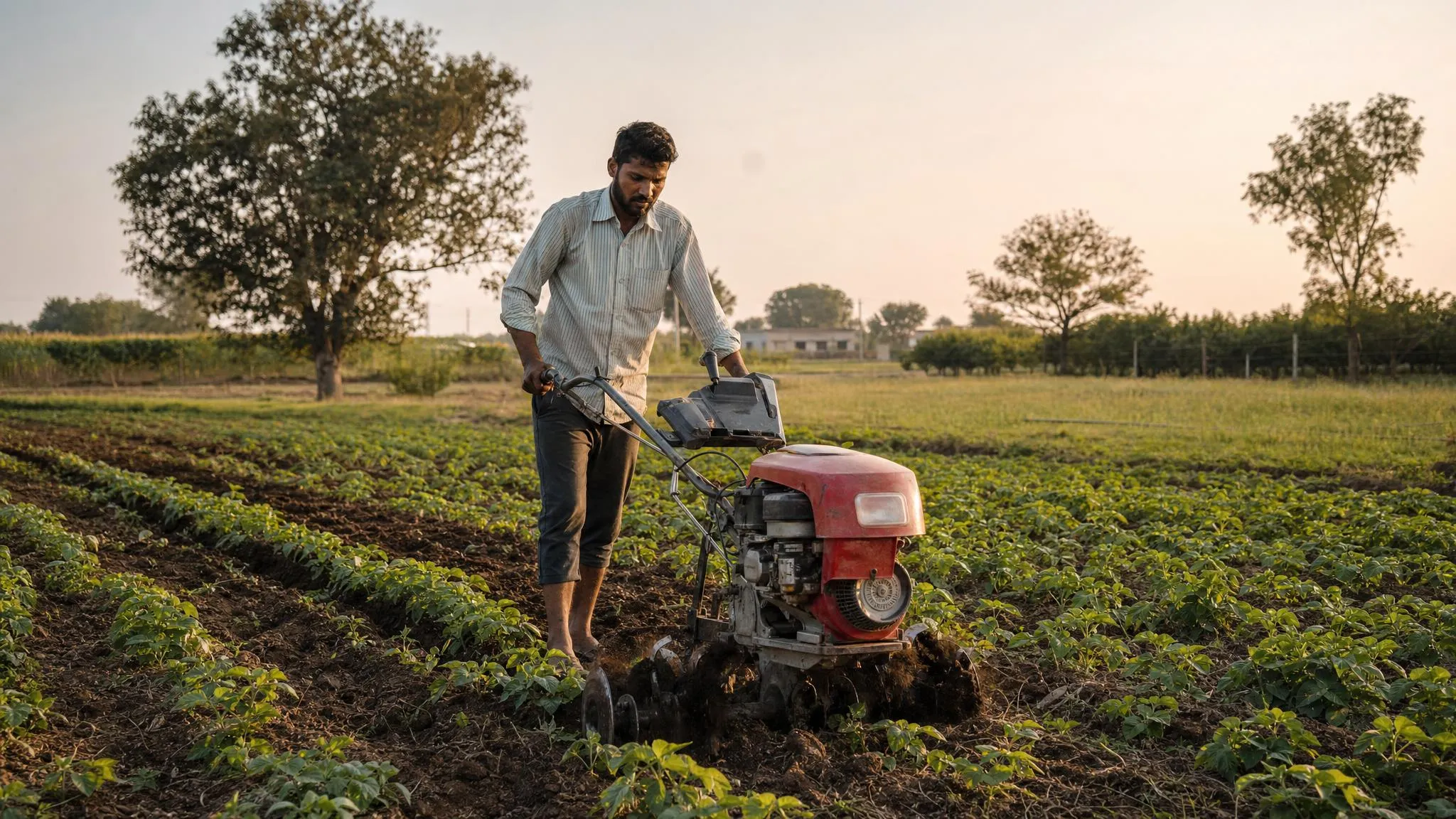
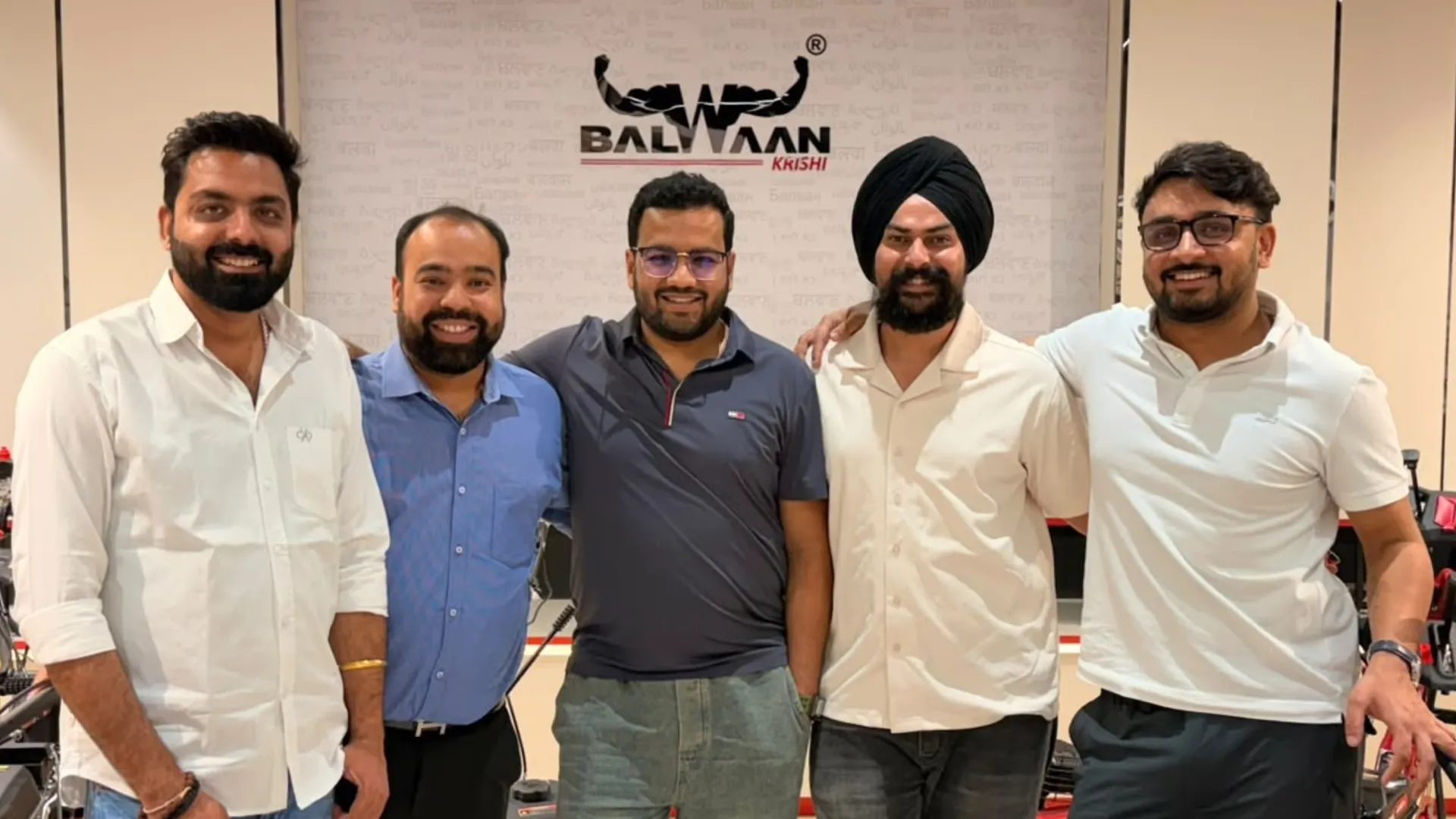
Founded in 2016 by Rohit Bajaj and Shubham Bajaj, Balwaan designs equipment for Indian field conditions rather than adapting machinery built for large farms elsewhere. Its range includes power weeders, battery-operated sprayers and other tools that replace hours of manual labour on a single plot.
Pricing is the core of the strategy. Balwaan's products sell for between ₹10,000 and ₹1 lakh, a band that puts them within reach of households that would never consider a tractor purchase. The company says more than four lakh farmers now use its machines, and it sells through a network of more than 800 dealers across northern India.
That dealer footprint matters as much as the hardware. For a farmer in a Rajasthan or Uttar Pradesh village, a machine is only as useful as the nearest workshop that can repair it before the sowing window closes. Service reach, rather than product features alone, tends to decide which brands survive in rural equipment markets.
Where the ₹100 crore will go
Balwaan has set out three uses for the new capital. The first is domestic manufacturing capacity, which it needs to meet demand without leaning on imported components. The second is its dealer and service network, particularly in southern India, which it has named as its next expansion priority. The third is product development: the company plans next-generation equipment with predictive-maintenance and Internet of Things (IoT) capabilities.
The southern push is a significant shift. Cropping patterns, soil types and labour markets in states such as Karnataka, Tamil Nadu and Andhra Pradesh differ sharply from the wheat-and-mustard belt where Balwaan built its base. Replicating an 800-dealer network in a new region is expensive and slow, and it is where a Series B cheque is most likely to be consumed.
The connected-equipment plan is more speculative but strategically logical. Sensors that flag a failing part before it breaks could cut downtime during critical farming windows. They would also give the company usage data that could, over time, support financing, warranty or rental models.
The economics behind the bet
Rohit Bajaj, co-founder and chief executive, framed the opportunity in terms of a squeeze that many small farmers now feel.
"India's small and marginal farmers are increasingly facing rising labour costs and pressure to improve productivity, yet access to affordable mechanisation remains limited," he said.
According to coverage of the round, about 86 per cent of Indian farmers cultivate less than two hectares. On holdings that size, the maths of buying machinery has long been difficult. A large tractor sits idle for much of the year, and hiring one depends on timing and local availability. Smaller, cheaper tools that one household can own outright avoid both problems.