BCI-Sonics, a Shanghai-based neurotechnology startup known in China as Huachao Shenkong, has raised RMB200 million (about $29.9 million) in a Pre-Series A round to develop a non-invasive brain-computer interface (BCI) that combines focused ultrasound, multimodal brain sensing and artificial intelligence.
The round, reported on 22 September 2026, was co-led by HSG, the firm formerly known as Sequoia China, and Yunqi Capital. Proxima Investment, Yuanhe Holdings, Xuhui Science and Technology Venture Capital and Deshi Investment also participated, while existing investors Matrix Partners China and Delian Capital increased their positions.
The financing brings the company's total funding since its founding in 2025 to nearly RMB300 million, a substantial sum for a company barely a year old.
A different route into the brain
Brain-computer interfaces aim to create a direct communication pathway between the brain and external devices. The most widely publicised efforts, including those of Neuralink, rely on implanting electrodes in or on the brain. Such invasive approaches can capture high-quality neural signals but require neurosurgery, which limits their use to patients with severe conditions and raises questions of long-term safety and cost.
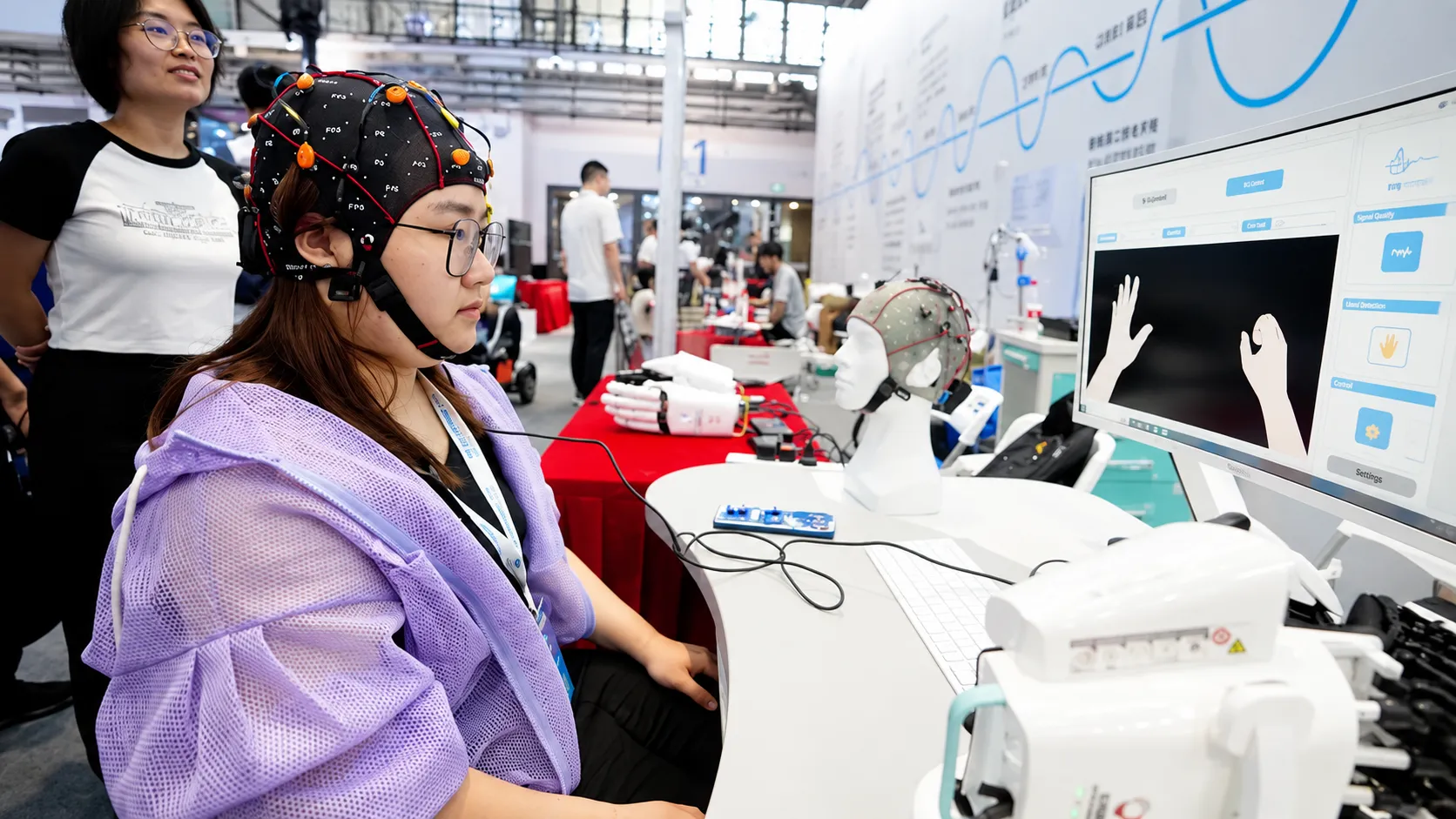
BCI-Sonics is pursuing a non-invasive alternative built around three components. The first is focused-ultrasound neuromodulation, which uses precisely targeted sound waves to influence activity in specific brain regions without surgery. The second is multimodal brain-signal reading, which combines different external sensing methods to capture information about brain activity. The third is AI neural decoding, which interprets those signals.
Together, these components are intended to create a bidirectional system that can both "write" signals into the brain through ultrasound and "read" brain activity through external sensors, forming a closed loop.
The signal-quality challenge
The central difficulty for non-invasive BCIs is signal quality. The skull and surrounding tissues distort and weaken electrical signals from the brain, making them far harder to interpret than signals recorded directly from neurons. That is why invasive systems have historically achieved more precise control of external devices.
BCI-Sonics' thesis is that improved sensing hardware, the combination of multiple data sources and advances in AI decoding can close enough of that gap to make a useful closed-loop system possible. Machine learning models trained on large datasets can extract patterns from noisy signals that would be invisible to traditional analysis, and the use of ultrasound for stimulation offers a way to target deeper brain structures than many other non-invasive techniques.
It is an ambitious bet, and one that will require rigorous scientific validation.
Milestones and plans
The company says two generations of its focused-ultrasound BCI research products have completed development and safety reporting. It plans to move a closed-loop ultrasound BCI into clinical work in the first quarter of 2027. A consumer-oriented closed-loop product is also undergoing batch validation, and the company says it has established a strategic collaboration with a large international pharmaceutical company.
These are company-reported milestones rather than independent evidence of clinical effectiveness. Clinical studies will be needed to demonstrate that the system is safe and produces meaningful benefits for patients, and regulatory approval for medical applications will require extensive data.
Why investors are betting early
Investors are financing BCI-Sonics before clinical validation because the potential upside of non-invasive, bidirectional brain interfaces could be very large. Applications could span neuroscience research, treatments for central nervous system disorders, medical devices and, eventually, consumer products.