StartupsTrending5 MIN READ

Bengaluru Tech Summit Ends With ₹1,050 Crore in Deeptech Pledges From 24 VCs, More Than Double Last Year, and New Pacts With Poland and the UAE

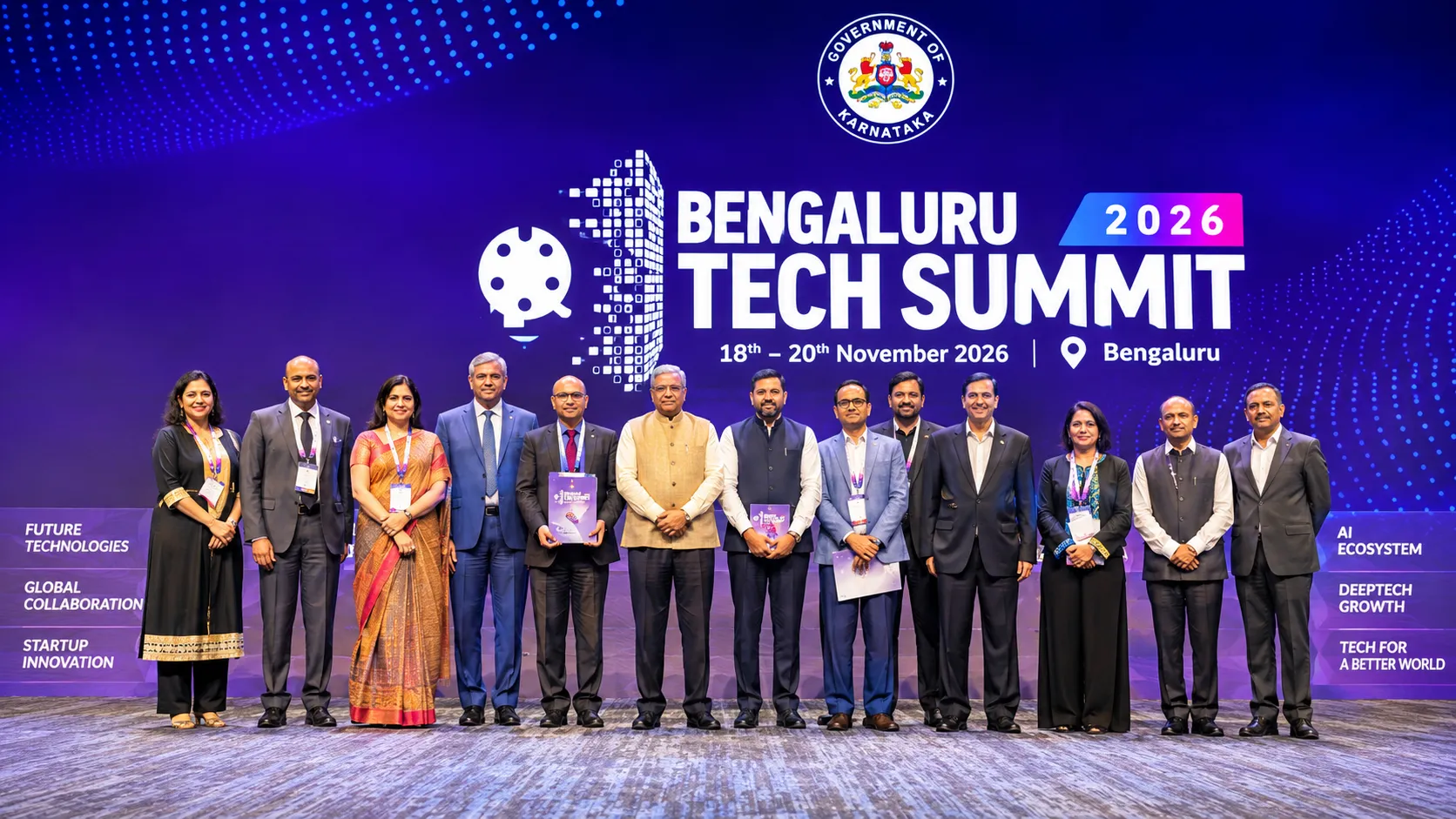
The 29th Bengaluru Tech Summit concluded on November 19 with about ₹1,050 crore in deeptech investment announcements from 24 venture capital firms at the Future Makers Conclave, up from ₹400 crore last year. Karnataka also signed agreements with partners in Poland, the UAE, France, Korea and Taiwan, as IT Minister Priyank Kharge said the state wants to move beyond being a technology services hub.

By Nisha Omkumar · Author20 November 2026New
Bengaluru Tech Summit Ends With ₹1,050 Crore in Deeptech Pledges From 24 VCs, More Than Double Last Year, and New Pacts With Poland and the UAE

India's technology capital wants to be known for inventing technology, not just servicing it, and investors appear willing to back that ambition.

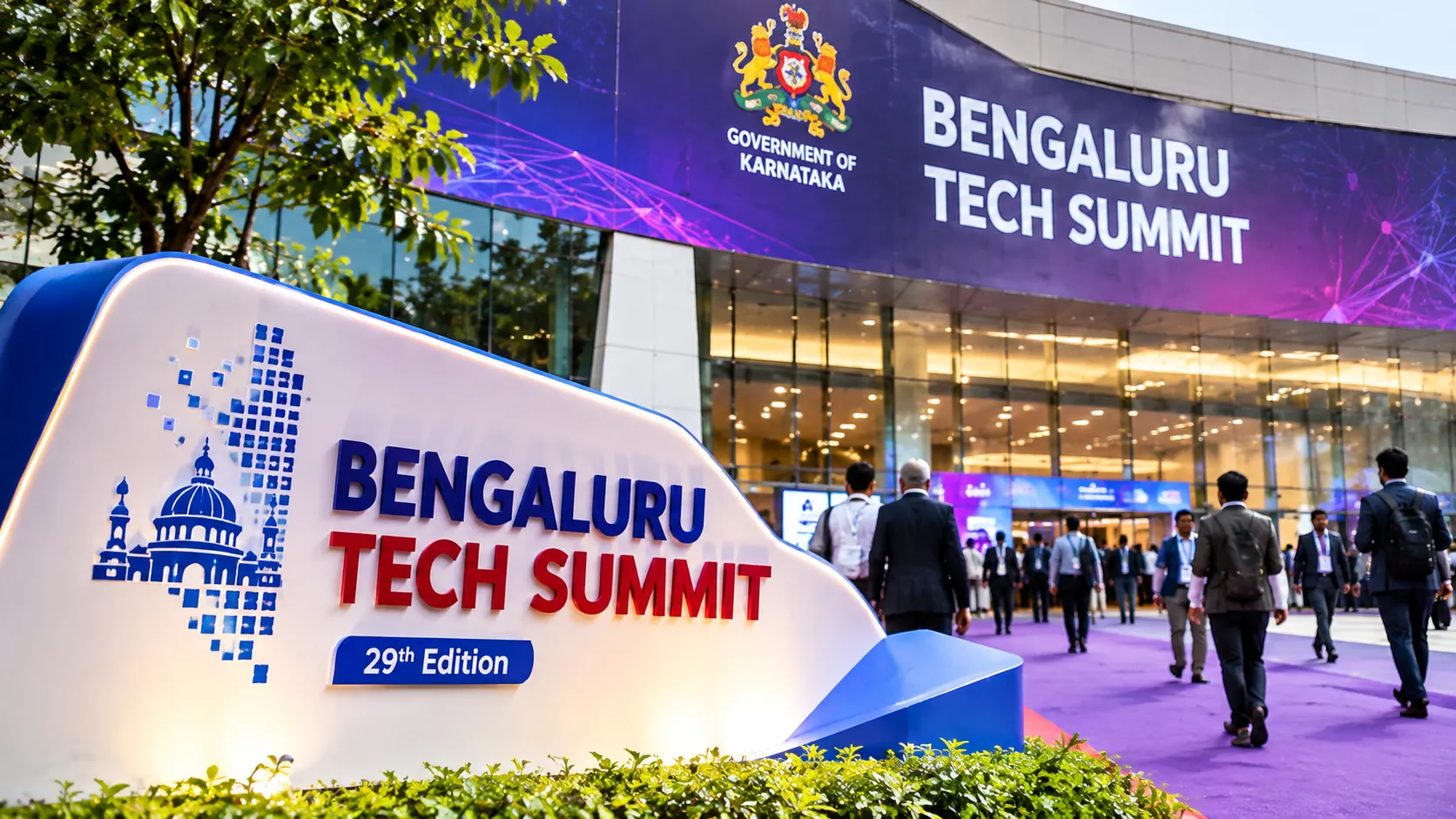
The 29th edition of the Bengaluru Tech Summit concluded on Thursday, November 19, with deeptech investment announcements of about ₹1,050 crore from 24 venture capital firms at the Future Makers Conclave 2026, according to The South First. That compares with ₹400 crore announced at last year's event.

Tech Times put the figure at about $113 million.

From services to deeptech

Karnataka IT Minister Priyank Kharge said the partnerships announced at the summit reflected the state's ambition to "move beyond being a technology services hub to building, developing and commercialising emerging technologies," according to The South First.

He said Karnataka was focused on "ensuring that innovation translates into economic growth, jobs and meaningful societal impact."

Deeptech refers to companies built on significant scientific or engineering innovation, such as semiconductors, artificial intelligence, robotics, space technology, biotechnology, quantum computing and advanced materials. Such companies typically require longer development periods and more capital than software startups, but can create durable competitive advantages.

Global partnerships

The summit produced a series of international agreements, according to The South First.

Karnataka signed a Joint Declaration of Intent with the Regional Chamber of Commerce in Katowice, Poland, and kato.hub, which operates the Shaft K technology hub. Another Joint Declaration of Intent was signed with Dubai CommerCity, focusing on artificial intelligence and applied AI.

The state signed a memorandum of understanding with Carve Startup Labs to expand its Global Innovation Alliance, which includes Germany, Japan and other European countries. It also signed agreements with the Korean and Taiwanese chambers of commerce in Bengaluru.

Life sciences and cybersecurity

Several agreements focused on biotechnology and life sciences. The Bangalore Bioinnovation Centre announced a Centre for Research in Anaerobic Digestion and Industrial Biotechnology at Electronic City with the University of York, and a memorandum with Danaher Corporation for a Beckman Coulter Centre of Excellence, according to The South First.

The Centre for Cellular and Molecular Platforms (C-CAMP) signed an agreement with France's Genopole on life sciences and biotechnology. CySecK, Karnataka's cybersecurity centre of excellence, signed an MoU with the DSN Foundation on cybersecurity awareness, skills, research and startup support.

Bengaluru's global capability centres

Bengaluru's position as a technology hub is underpinned by its concentration of global capability centres (GCCs), the in-house technology and operations hubs of multinational companies. Kharge has said Karnataka hosts 380 of the world's top 2,000 GCCs and accounts for 41% of India's engineering and research and development talent, according to a related report cited by The South First.

GCCs have evolved from back-office operations to centres of innovation, handling product development, AI research and engineering for global companies. They also serve as a talent pipeline for startups, as experienced engineers leave to found or join new companies.

Why the investment pledges matter

The near-tripling of investment announcements suggests growing investor appetite for Indian deeptech. Investors are increasingly backing companies in areas such as semiconductors, space, AI and robotics, encouraged by government programmes such as the India Semiconductor Mission, the IndiaAI Mission and the opening of the space sector to private companies.

Investment announcements at summits are often commitments or intentions rather than completed deals, so the actual flow of capital will depend on individual transactions over time.

Bengaluru's startup ecosystem

Bengaluru is India's leading startup hub, home to a large share of the country's unicorns and venture capital investment. The city's ecosystem includes major technology companies, research institutions such as the Indian Institute of Science, and a deep pool of engineering talent.

“Move beyond being a technology services hub to building, developing and commercialising emerging technologies.”
— Priyank Kharge, IT Minister, Karnataka

Recent funding rounds highlight the city's growing deeptech strength. This week, Bengaluru-based Humyn Labs raised $47 million to supply training data for robotics companies, and the city continues to attract investment in AI, semiconductors and space technology.

The challenges

Despite its strengths, Bengaluru faces challenges, including traffic congestion, infrastructure strain, rising costs and competition from other Indian cities such as Hyderabad, Pune and Chennai, which are also courting technology investment. Deeptech companies also face hurdles in accessing patient capital, specialised manufacturing and global markets.

What it means for the diaspora

For the global Indian diaspora, many of whom work in technology companies abroad, Bengaluru's push into deeptech creates opportunities to return, invest or collaborate. International partnerships signed at the summit could also help Indian startups reach markets in Europe, the Middle East and East Asia.

Karnataka's policy toolkit

Karnataka has used a range of policies to support its technology ecosystem, including startup grants, incubation programmes, innovation hubs and incentives for companies setting up research and development centres. The state has also launched programmes to spread technology investment beyond Bengaluru to cities such as Mysuru, Mangaluru and Hubballi-Dharwad.

The Bengaluru Tech Summit itself serves as a showcase for these efforts, bringing together startups, investors, multinational companies and international delegations each year. Many of the agreements signed at the event are designed to connect Karnataka's startups with partners and markets abroad.

aeaff43d-3f45-4aac-833a-5ba3134f4ed0.png

Why international partnerships matter

Deeptech startups often need access to global customers, specialised manufacturing and research collaborations that are not available at home. Agreements with innovation hubs in Europe, the Middle East and East Asia can help Indian companies find pilot customers, testing facilities and investors in those regions.

The partnerships also work in the other direction, encouraging foreign startups and companies to establish operations in Bengaluru, adding to the city's talent pool and innovation capacity.

The investor perspective

Venture capital firms have increasingly set up dedicated deeptech funds in India, recognising that the country's engineering talent and growing domestic demand create opportunities in hardware, semiconductors and advanced manufacturing. Government co-investment schemes and research grants have also lowered the risk for early-stage investors.

Still, investors say that deeptech companies need longer timelines and more patient capital than consumer internet startups, and that exits through acquisitions or public listings may take longer to materialise.

The talent equation

Bengaluru's greatest asset remains its people. The city is home to hundreds of thousands of software engineers, a growing pool of AI and semiconductor specialists, and a steady flow of graduates from engineering colleges across South India. Many experienced professionals who once moved abroad for opportunities are now choosing to stay or return, drawn by the growth of startups and global capability centres.

Retaining and developing that talent will be essential if Karnataka is to realise its deeptech ambitions. Policymakers and industry leaders have called for closer links between universities and companies, more research funding and better urban infrastructure to keep the city attractive to skilled workers and their families.

What comes next

Investors and policymakers will watch whether the pledges translate into completed investments and whether the international partnerships produce concrete collaborations. Karnataka's ability to nurture deeptech companies from research to commercial scale will determine whether Bengaluru can evolve from a services hub into a global centre of technology innovation.

TagsBengaluru Tech SummitKarnatakaPriyank Khargedeeptechventure capitalFuture Makers ConclavestartupsPolandKatowiceDubai CommerCityGlobal Innovation AllianceBangalore Bioinnovation CentreC-CAMPGenopoleDanaherCySecKGCCsBengaluruinnovationinvestors

Reader reviews

Sign in to rate and review this article.
Loading reviews…

