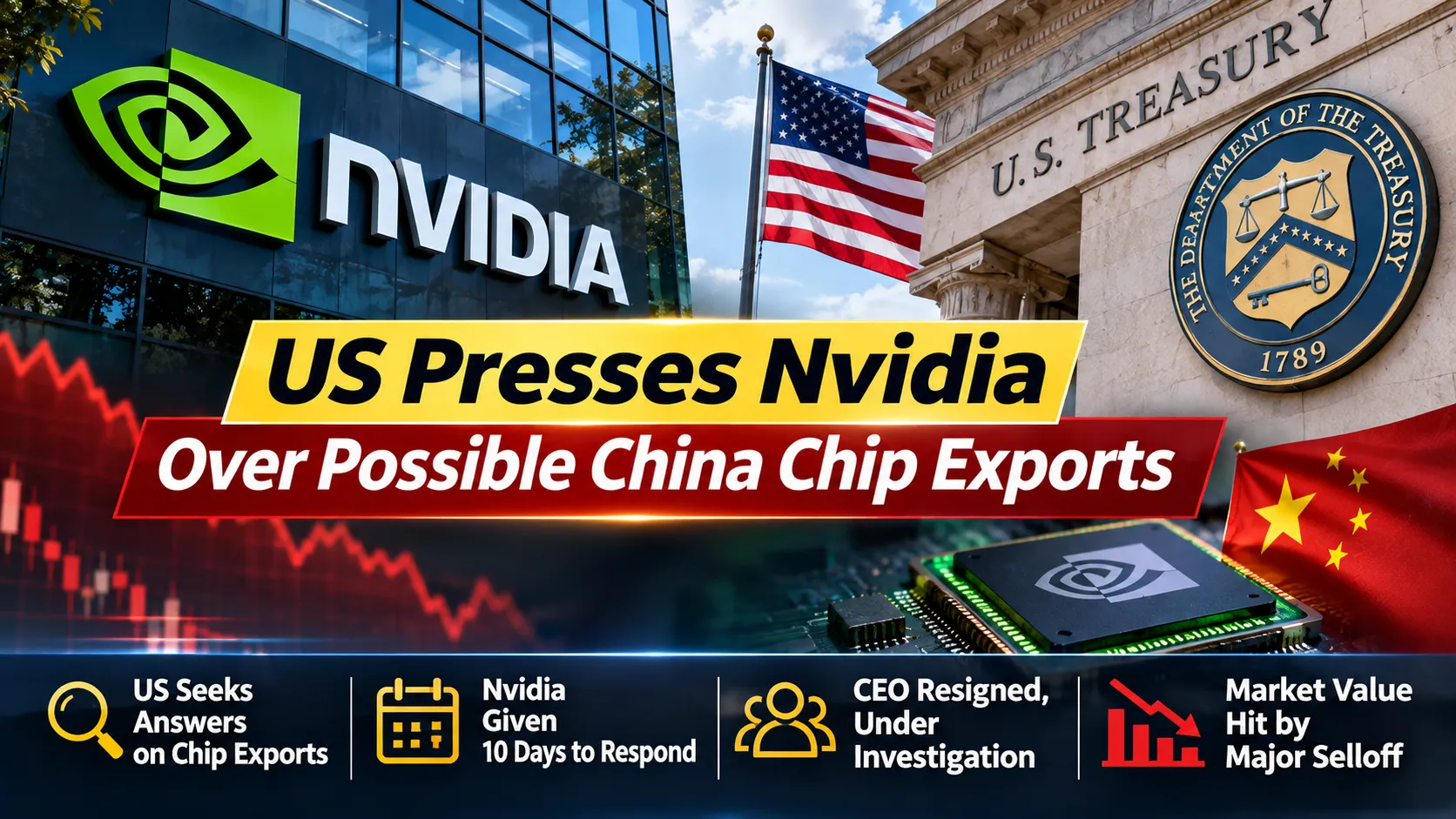
The US government is pressing Nvidia for answers about whether its advanced artificial intelligence chips were diverted to China in violation of export controls. The pressure adds to a crisis that has already cost the chipmaker its chief executive and a large share of its market value.
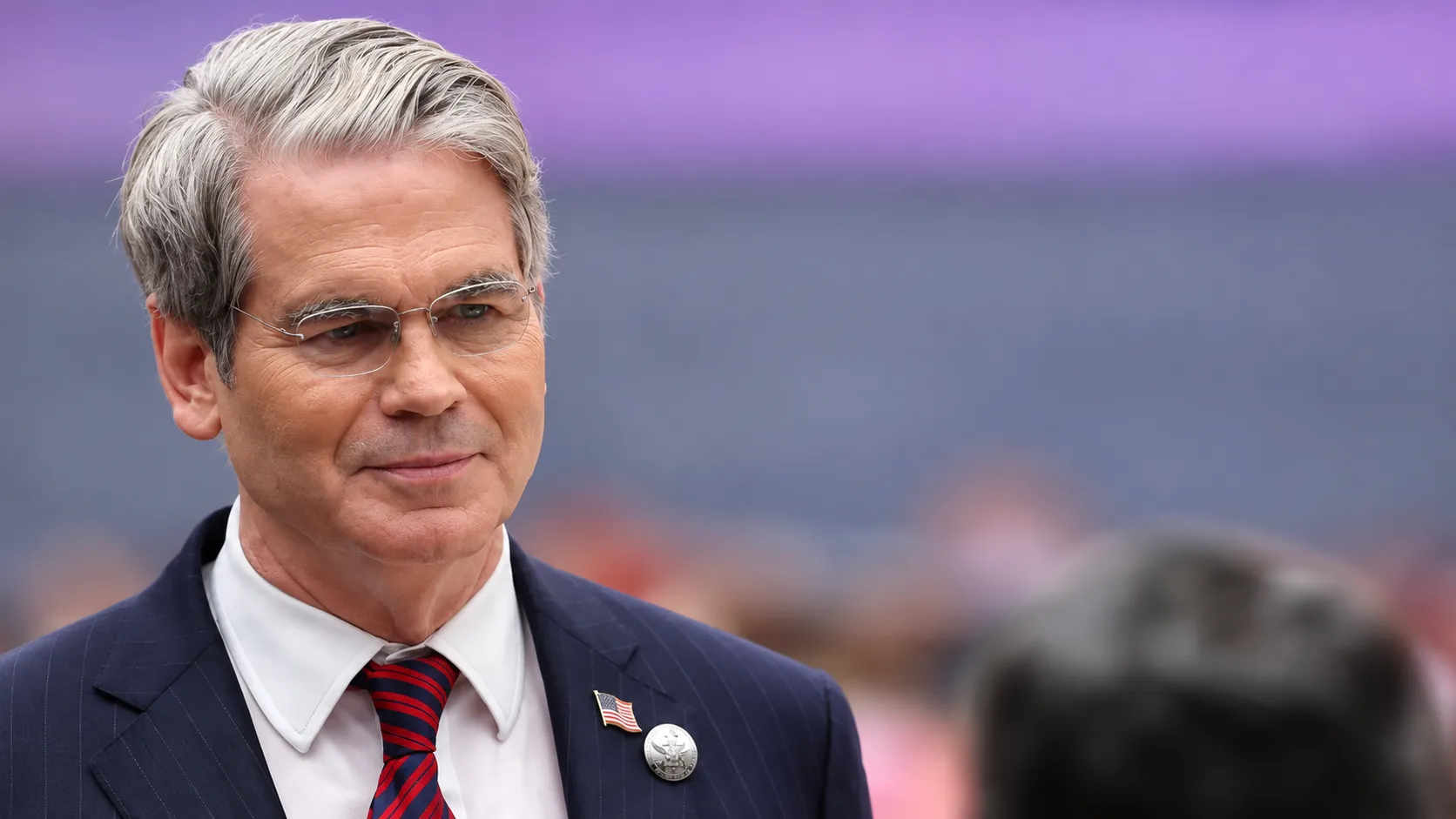
Speaking on CBS's "Face the Nation" on Sunday, November 22, Treasury Secretary Scott Bessent said the administration still lacked answers from Nvidia about whether it had helped send advanced AI chips to China. "We do need answers," he said.
Bessent had earlier told Fox News that Nvidia had ten days to respond to questions about whether shell entities had been used to evade US export controls on AI chips, and about the company's compliance culture. "It behooves Nvidia to move quickly on this," he said.
According to Reuters, Bessent said the United States would investigate who was responsible for compliance at the company. Days after the resignation of Nvidia's former chief executive, the administration also issued a rule further restricting China's access to advanced AI chips.
A company in crisis
The scrutiny over China comes at an extraordinarily difficult moment for Nvidia, which only weeks ago was the world's most valuable company and the defining symbol of the AI boom.
On November 12, co-founder Jensen Huang stepped down as chief executive after 33 years, following reports of extramarital affairs, including one with a woman suspected of being a Chinese spy. Chief Financial Officer Colette Kress was named interim CEO. President Donald Trump said he would like Huang to return, but Nvidia confirmed on its earnings call that it had no plans to reinstate him.
Huang and the company's general counsel have agreed to transcribed interviews with three congressional committees. Separately, Reuters reported that the Securities and Exchange Commission was exploring possible accounting issues at the company, which pushed the stock down further.
Nvidia suffered its worst week since the 2008 financial crisis, extending a long losing streak that has erased trillions of dollars from its market value. The selloff dragged the broader AI trade lower and pushed the S&P 500 into correction territory.
The export control question
The United States has restricted exports of advanced AI chips to China since 2022, citing national security concerns that the chips could support China's military and AI development. The rules have been tightened several times, and Nvidia has designed lower-performance chips specifically for the Chinese market to comply.
Enforcement has been a persistent challenge. Reports have suggested that restricted chips have reached China through intermediaries, shell companies and third countries. US authorities have prosecuted cases of chip smuggling and pressed chipmakers to strengthen controls on their supply chains.
The central question for Nvidia is whether it did enough to prevent its products from being diverted, and whether anyone within the company knowingly facilitated sales that circumvented the rules. Nvidia has not publicly addressed the specific questions raised by Bessent.
Political stakes
The issue has become politically charged. Following the midterm elections, in which Democrats won control of both chambers of Congress, congressional committees have shown increased interest in investigating technology companies. The Huang affair and the China questions have drawn bipartisan concern.
The administration's handling has also attracted attention. Trump's comments supporting Huang's return contrasted with the Treasury's pressure on the company, highlighting competing priorities between protecting a national technology champion and enforcing national security rules.
What it means for investors
For investors, the uncertainty is significant. Potential consequences could include fines, restrictions on sales, changes in management and governance, and reputational damage with customers and governments. The investigation could also affect Nvidia's ability to sell to China at all.
At the same time, demand for AI computing remains strong, and Nvidia's chips remain central to the AI infrastructure being built by cloud providers and AI labs. Interim CEO Colette Kress has guided for strong growth next year. The question for investors is whether the governance and regulatory problems will damage the business or prove temporary.
The stock's valuation has fallen sharply, with Nvidia now trading at a much lower multiple of expected earnings than it did at its peak, according to market commentary.
Implications for the AI supply chain
The Nvidia crisis has wider implications for the global AI industry. Customers that depend on Nvidia chips may accelerate efforts to diversify suppliers, including custom chips from cloud providers and alternatives from AMD and others. Software that makes it easier to move AI models between chips, such as that developed by Decart, which Amazon is reportedly close to acquiring, has become more strategically valuable.
Governments may also increase scrutiny of chip exports and supply chains, adding compliance costs for the semiconductor industry.
The India angle
India has a strong interest in the outcome. Indian companies, research institutions and the government's IndiaAI Mission rely heavily on Nvidia GPUs to build AI infrastructure. Any disruption to Nvidia's operations or changes in US export policy could affect access to chips for Indian buyers.
India has generally been treated as a trusted partner under US export control frameworks, but tighter global controls could add paperwork and delays. Indian policymakers will be watching closely, as will Indian engineers and executives, many of whom work at Nvidia and its partners.
What comes next
The immediate focus will be on whether Nvidia responds to the Treasury's questions within the timeframe set, and what its response contains. Further developments in the SEC probe, congressional interviews and the company's leadership search will also be closely watched.
For The Impactful Global Indian's readers, the Nvidia saga is a striking illustration of how geopolitics, governance and technology have become intertwined. The company that powered the AI revolution now faces questions that go far beyond chips, touching on national security, corporate culture and accountability.
Governance lessons
The Nvidia episode is already being studied as a case in corporate governance. Questions about board oversight, the concentration of power in a founder-CEO and the robustness of compliance systems in fast-growing companies are relevant far beyond Nvidia. Boards of technology companies around the world, including in India, may review their own compliance and succession planning in light of the crisis.


